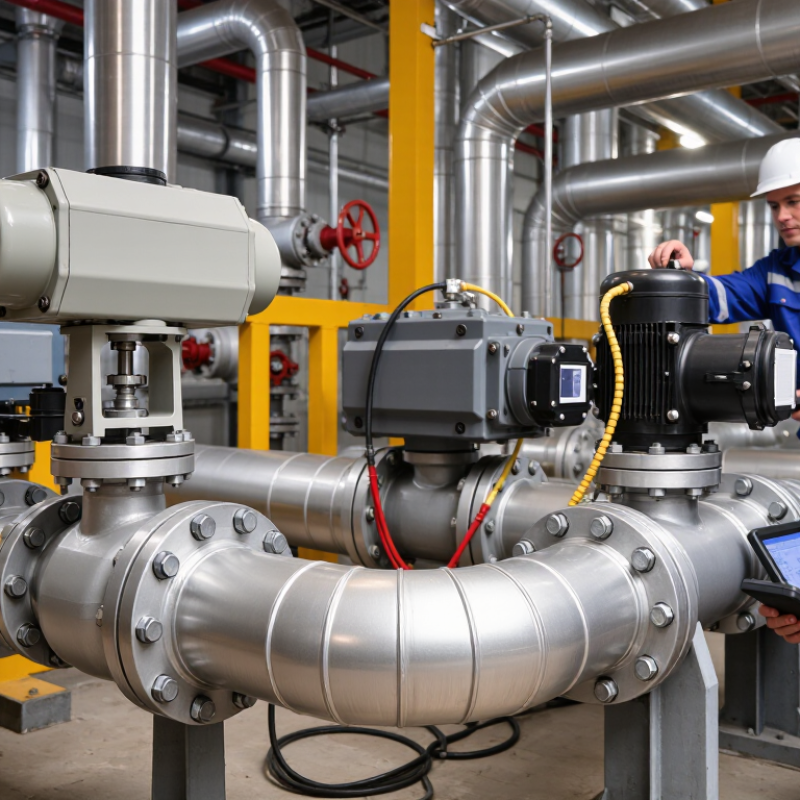
| Electric Rotary | An electric motor drives a gearbox to rotate the valve stem or shaft to a specified position. | Ball, butterfly, plug, and other quarter-turn valves; multi-turn versions can operate gate and globe valves. | Electric power, commonly low-voltage DC or single- or three-phase AC. | On/off, modulating, position control, or network-based control. | Usually stays in position during power loss unless equipped with a spring-return or battery-backed system. | Precise positioning, easy integration with digital control systems, and no instrument-air supply required. | Slower than many pneumatic systems; motor and electronics require suitable environmental protection. | Water treatment, HVAC, utilities, process plants, and applications where electrical control is readily available. |
| Pneumatic Rotary | Compressed air moves a diaphragm or piston to produce rotary torque, generally through a rack-and-pinion or scotch-yoke mechanism. | Primarily ball, butterfly, and plug valves. | Compressed air, commonly supplied through a filter-regulator and control valve. | Fast on/off operation or modulating control with a positioner. | Spring-return designs can fail open or fail closed, depending on actuator and valve arrangement; double-acting designs commonly fail in place. | Fast response, high power-to-weight ratio, and suitability for hazardous areas when correctly configured. | Requires reliable, clean, dry compressed air; air leakage can increase operating cost. | Chemical processing, oil and gas, industrial automation, and emergency shutoff service. |
| Pneumatic Linear | Compressed air moves a diaphragm or piston in a straight line to extend or retract an actuator stem. | Globe, diaphragm, pinch, and other linear-motion valves. | Compressed air. | Modulating control through a positioner or simple open/close control. | Spring-return units can be configured to fail open or fail closed; double-acting units generally require a separate fail-safe arrangement. | Suitable for accurate throttling and provides a straightforward stem force arrangement. | Needs compressed air and may require adequate installation space above the valve. | Steam, water, gas, and process-fluid flow control using globe or diaphragm valves. |
| Hydraulic | Pressurized hydraulic fluid acts on a piston or vane to generate linear force or rotary torque. | Large ball, butterfly, plug, gate, and globe valves, depending on actuator configuration. | Hydraulic fluid supplied by a power unit or hydraulic control system. | On/off or modulating control; remote hydraulic control is also possible. | Can be engineered for fail open, fail closed, or fail in place using springs, accumulators, or other stored-energy systems. | Very high force and torque density; effective for large valves and high-pressure service. | More complex installation, potential fluid leakage, and higher maintenance requirements than many electric solutions. | Large pipelines, hydroelectric facilities, offshore systems, and demanding heavy-duty applications. |
| Electro-Hydraulic | An electric motor drives a hydraulic pump and control system, combining electrical command with hydraulic actuation force. | Large quarter-turn or linear valves requiring high output force and integrated fail-safe capability. | Electric power with stored hydraulic energy where required. | Remote, automatic, on/off, or modulating control. | Can provide fail open, fail closed, or fail in place through an accumulator and control logic. | Combines high thrust or torque with precise electronic monitoring and control. | Higher purchase cost and system complexity; hydraulic maintenance is still required. | Critical pipeline isolation, power generation, marine systems, and remote installations. |
| Manual Gear or Handwheel | An operator turns a handwheel, lever, or gearbox to move the valve without an external power source. | Gate, globe, ball, butterfly, plug, and other manually operated valves. | Human effort. | Local open/close or manual throttling where permitted by the valve design. | No automatic fail action; the valve remains at its last manually established position. | Simple, low-cost, independent of utilities, and easy to inspect. | Not suitable for frequent remote operation, rapid emergency response, or inaccessible valve locations. | Small facilities, maintenance isolation, low-cycle service, and locations without power or air. |

.svg)