FAQ: TPU Filament Stability & 3D Printed Footwear
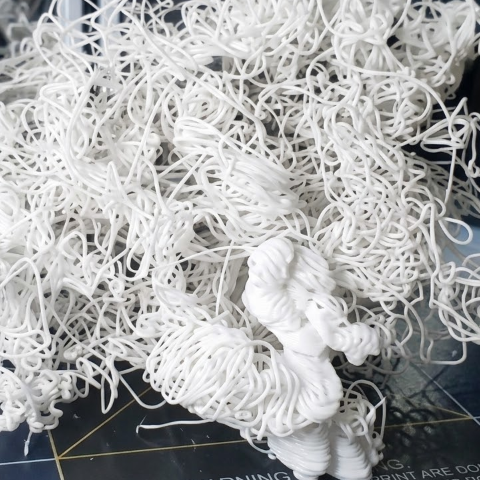
1. How to reduce stringing in TPU filament for 3D printing?
Stringing can be reduced by improving material flow behavior and internal lubrication, not just adjusting printing parameters. Advanced material solutions, such as Si-TPV modified TPU, help achieve cleaner extrusion and more stable print paths.
2. What causes unstable extrusion in TPU filament?
Unstable extrusion is typically caused by: Inconsistent melt viscosity, high friction at the die/nozzle wall, and poor material flow control. This results in diameter fluctuation, surface defects, and yield loss during long production runs.
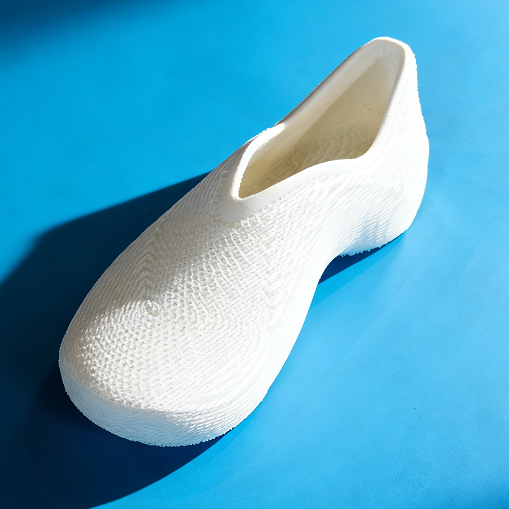
3. How to achieve a matte surface in 3D printed TPU footwear?
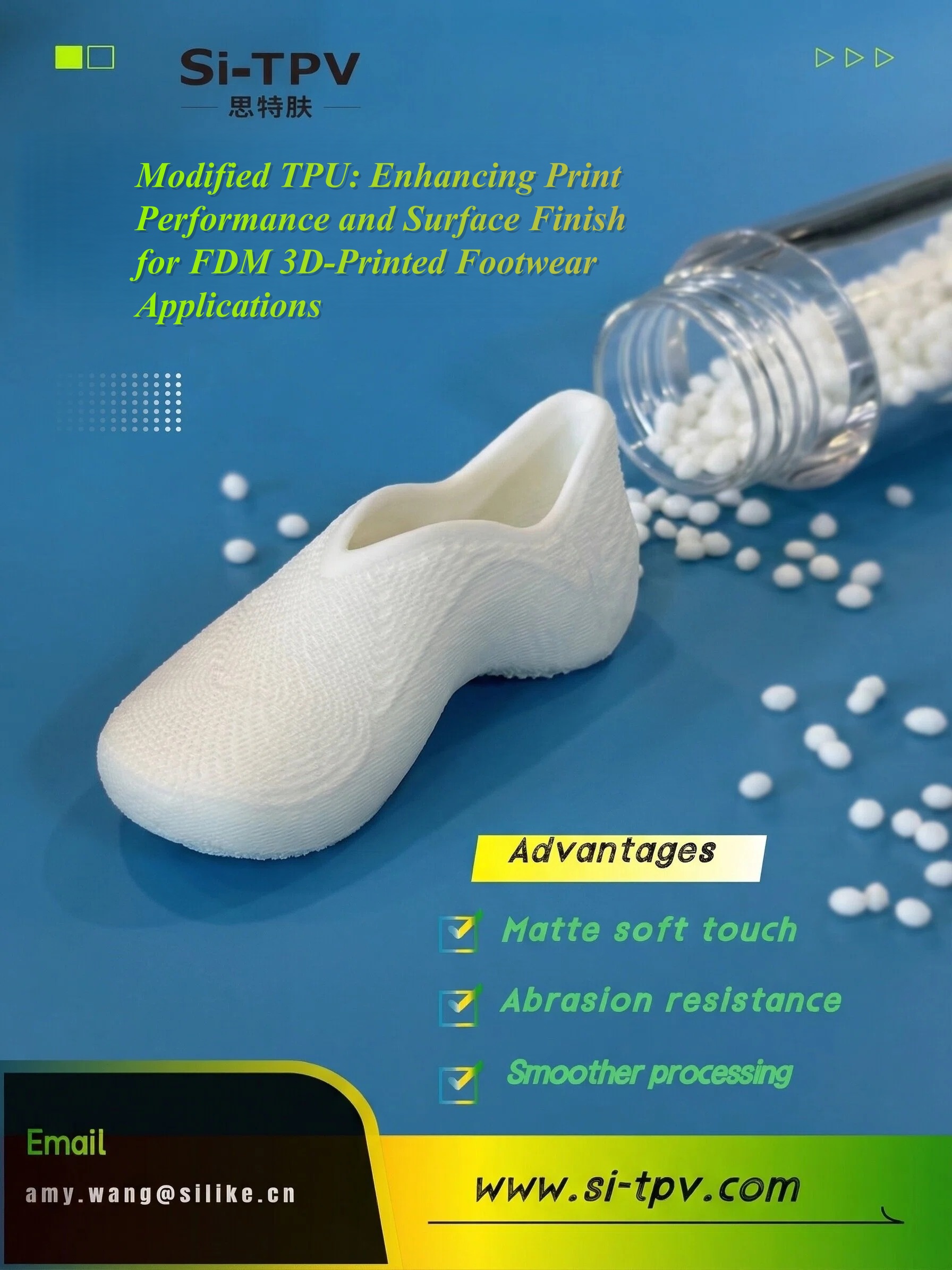
Traditional TPU naturally produces a glossy finish. To achieve a matte TPU surface, manufacturers need material-level modification, such as Si-TPV, which enables intrinsic matte effects without secondary coating.
4. What is the key challenge in scaling 3D printed footwear production?
The biggest challenge is maintaining consistent material behavior during continuous production, not just printability. Stability in extrusion, surface quality, and softness are critical for scaling.
5. What is Si-TPV, and how does it improve TPU filament performance?
Si-TPV (silicone-based thermoplastic vulcanizate elastomer) can be directly used as a soft-touch 3D printing material, and it can be used as a Matte TPU monofilament modifier. This TPU modification technology enhances: Melt flow stability, Surface quality (matte finish), Soft-touch performance, Reduction of stringing and build-up. It enables TPU materials to meet industrial-scale 3D printing requirements.
6. Is Si-TPV suitable for FDM 3D printing applications?
Yes. Si-TPV elastomer modified TPU is particularly suitable for FDM 3D printing, especially in applications requiring: Flexible materials, Soft-touch surfaces, High surface quality, and scalable production stability.
Looking to reduce stringing and build-up? Improve extrusion stability? Seeking a solution for TPU extrusion instability?
Here is a way to upgrade your TPU formulation optimization material strategy and reduce surface defects.
Contact: sale@generalmachinery.org or visit www.si-tpv.com to learn about Si-TPV. As a high-performance TPU modifier, how can it help TPU material suppliers achieve matte and soft-touch finishes in TPU 3D printing?

.svg)