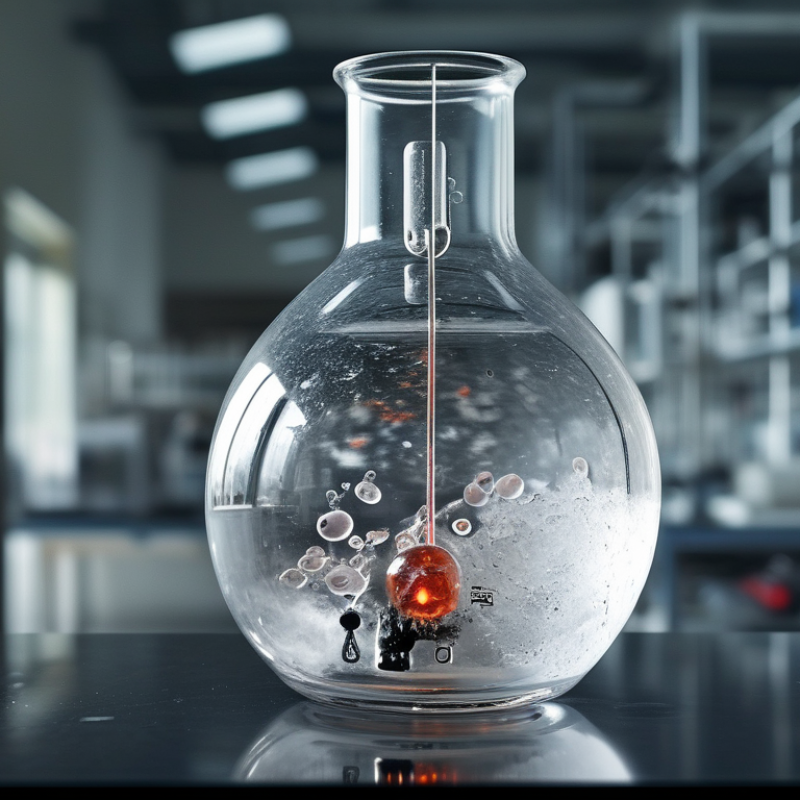
| Basic Definition | A quartz reactor is a reaction vessel, tube, chamber, or insert made primarily from high-purity fused quartz or fused silica. | It provides a chemically resistant and thermally stable environment in which gases, liquids, powders, or solid samples can undergo controlled reactions. | The design may be a single tube, a multi-zone tube, a batch vessel, or a continuous-flow chamber. |
| Main Operating Principle | Reactants are introduced into the quartz vessel, exposed to controlled heat, light, plasma, or another energy source, and then removed or collected as products. | Quartz acts as the reaction boundary while allowing process conditions such as temperature, residence time, pressure, and atmosphere to be controlled. | Gas flow, heating rate, mixing, and cooling must be matched to the reaction chemistry and reactor geometry. |
| Material Composition | High-purity amorphous silicon dioxide, commonly referred to as fused quartz or fused silica. | The material contains very little alkali or metallic contamination compared with ordinary glass, which helps protect sensitive processes. | Purity grade, surface finish, wall thickness, and manufacturing method affect service life and contamination levels. |
| Temperature Capability | Many quartz reactor components can operate continuously at approximately 900–1,100°C, with higher temperatures possible for carefully controlled short-term use. | Quartz retains useful strength and dimensional stability at elevated temperatures and has a relatively low coefficient of thermal expansion. | Actual limits depend on the load, temperature uniformity, atmosphere, wall thickness, support method, and heating and cooling rate. |
| Thermal Shock Resistance | Generally better than common glass because fused quartz expands very little when heated. | Low thermal expansion reduces stress caused by temperature changes and helps the vessel tolerate rapid thermal transitions. | Thermal shock resistance is not unlimited. Local hot spots, scratches, impact, and uneven cooling can still cause cracking. |
| Chemical Resistance | Strong resistance to many acids, water, and numerous solvents under suitable conditions. | The silica network is relatively inert in many laboratory and industrial environments, reducing corrosion and unwanted reaction with the vessel. | Hot concentrated alkalis, hydrofluoric acid, and some high-temperature reactive compounds can attack quartz significantly. |
| Optical Transmission | High-purity quartz can transmit ultraviolet, visible, and near-infrared radiation, with transmission depending on grade and thickness. | Light can pass through the reactor wall to initiate photochemical reactions, ultraviolet disinfection, or light-assisted catalysis. | Surface deposits, impurities, wall thickness, and radiation wavelength can reduce transmission over time. |
| Atmosphere Control | Common process atmospheres include air, nitrogen, argon, hydrogen-containing mixtures, oxygen, steam, and vacuum conditions. | Controlled atmospheres limit oxidation, support reduction or deposition reactions, and improve repeatability. | Gas purity, leak tightness, flow stability, and safe handling of flammable gases are essential. |
| Pressure Range | Many quartz reactors are designed for atmospheric or reduced-pressure operation rather than high-pressure service. | Thin-walled quartz tubes and vessels are well suited to flowing-gas and vacuum processes when properly supported. | Quartz is brittle and should not be treated as a general-purpose high-pressure vessel. Pressure ratings must be established for the specific design. |
| Heating Methods | Typical methods include electric tube furnaces, resistance heaters, infrared heating, induction-assisted systems, and external heating jackets. | External heating allows the reaction zone to be controlled without placing metallic heating elements directly in the process stream. | Temperature gradients should be minimized, especially at the boundaries between hot and cool zones. |
| Batch Operation | Reactants are loaded into the vessel, processed for a defined time, and removed after the cycle is complete. | Batch reactors are useful for laboratory development, small production volumes, heat treatment, and experiments requiring flexible recipes. | Batch processing may provide lower throughput and less uniformity than a well-designed continuous-flow system. |
| Continuous-Flow Operation | Reactants continuously enter the reactor while products and unreacted materials leave through an outlet. | Continuous flow can provide stable residence time, repeatable gas composition, and efficient integration with downstream equipment. | Flow distribution, pressure drop, sealing, and residence-time control become increasingly important as scale increases. |
| Common Application: Semiconductor Processing | Thermal oxidation, diffusion, annealing, chemical vapor deposition, and other high-temperature wafer processes. | The low contamination potential and high-temperature performance of quartz support controlled processing of sensitive materials. | Particle generation, metallic contamination, surface deposits, and thermal uniformity must be monitored carefully. |
| Common Application: Chemical Vapor Deposition | Formation of thin films, coatings, powders, or nanostructured materials from gaseous precursors. | Heated quartz tubes provide a clean reaction zone in which precursor gases decompose or react on a substrate. | Deposits can gradually reduce the internal diameter and optical transmission, requiring cleaning or replacement. |
| Common Application: Photochemistry | Ultraviolet- or visible-light-driven oxidation, reduction, polymerization, and catalytic reactions. | The reactor wall transmits selected wavelengths while containing the reaction mixture and allowing controlled irradiation. | Light intensity, wavelength, optical path length, and fouling of the quartz surface strongly influence performance. |
| Common Application: Water and Wastewater Treatment | Ultraviolet disinfection and advanced oxidation processes using light-sensitive oxidants or catalysts. | Quartz sleeves or chambers transmit ultraviolet radiation to the fluid while separating the lamp from the process water. | Scaling, suspended solids, and organic deposits can reduce ultraviolet transmission and require scheduled cleaning. |
| Common Application: Materials Research | Synthesis and heat treatment of nanoparticles, ceramics, catalysts, thin films, carbon materials, and powders. | Quartz supports controlled heating and gas exposure while minimizing unwanted reaction with the sample. | Sample loading, precursor compatibility, particle deposition, and temperature calibration affect repeatability. |
| Key Benefit: Purity | Low levels of extractable and metallic impurities when an appropriate quartz grade is used. | This helps reduce contamination in electronic, optical, chemical, and analytical processes. | Handling tools, seals, coatings, and upstream gases can still introduce contamination even when the quartz is highly pure. |
| Key Benefit: Visibility | Transparent walls allow visual observation of color changes, condensation, particle movement, and reaction progress. | Operators can inspect the process without opening the vessel or disturbing the controlled atmosphere. | Visibility decreases when the surface becomes coated, etched, fogged, or contaminated. |
| Key Benefit: Low Thermal Expansion | Fused quartz has a very low coefficient of thermal expansion compared with many common glasses and metals. | Low expansion improves dimensional stability and reduces stress during heating and cooling. | Mechanical supports should allow for the small amount of expansion that still occurs and should avoid point loading. |
| Key Benefit: Clean Process Environment | Quartz has a smooth, nonporous surface that is relatively easy to inspect and clean. | A clean inner wall can reduce carryover between process cycles and limit unwanted nucleation sites. | Cleaning chemicals must be compatible with quartz, and abrasive cleaning can create scratches that weaken the vessel. |
| Operating Limitation: Brittleness | Quartz is hard but brittle and can fracture from impact, bending, scratches, or excessive mechanical stress. | Unlike many metals, it does not plastically deform to relieve concentrated stress. | Use padded supports, avoid force during installation, and inspect for chips, cracks, and deep scratches before operation. |
| Operating Limitation: Alkali Attack | Hot concentrated alkaline solutions and vapors can chemically attack silica. | The reaction can roughen the surface, change dimensions, and shorten the service life of the reactor. | Process chemistry should be reviewed for temperature, concentration, contact time, and the presence of alkaline contaminants. |
| Operating Limitation: Hydrofluoric Acid | Hydrofluoric acid and fluoride-containing conditions can etch or dissolve silica. | Etching damages optical clarity and may reduce wall thickness and mechanical reliability. | Quartz should not be selected for direct contact with hydrofluoric acid unless a qualified design specifically addresses the exposure. |
| Operating Limitation: Thermal Gradient | Uneven heating or cooling can create internal stress even though quartz has excellent thermal shock resistance. | Stress concentrates where hot and cold regions meet or where the vessel is constrained by rigid supports. | Use controlled ramp rates, uniform heating zones, and properly designed supports. |
| Maintenance Requirement | Regular inspection, cleaning, leak checks, and replacement of degraded parts are necessary. | Deposits, scratches, devitrification, discoloration, and contamination can affect reaction quality and safety. | Maintenance intervals should be based on temperature, chemistry, operating hours, visual condition, and process sensitivity. |
| Best Selection Criteria | Consider reactor geometry, quartz purity, operating temperature, pressure, chemical exposure, optical wavelength, flow rate, and required capacity. | Matching the vessel design to the process prevents premature failure and improves product consistency. | Engineering review is recommended for pressurized, highly corrosive, rapidly heated, or flammable-gas applications. |

.svg)