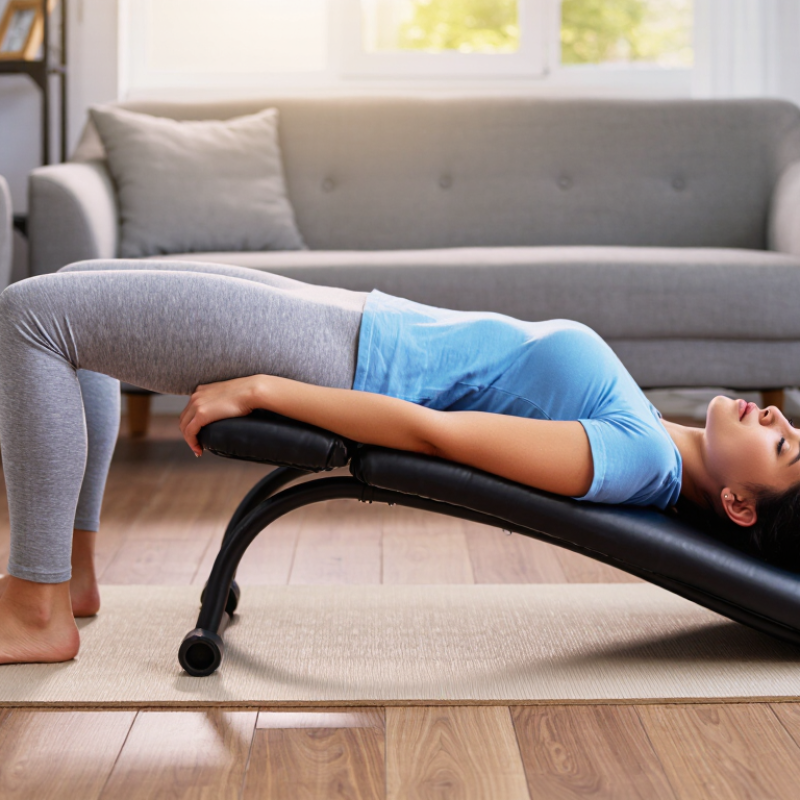
| What It Is | A back stretcher is a contoured support device designed to place the user’s back in a gentle extension position while lying down. | Use it only on a stable, non-slip surface and follow the adjustment instructions supplied with the device. |
| Primary Purpose | It may provide a temporary stretching sensation and support relaxed positioning of the thoracic or lumbar region. | It should be viewed as a mobility or comfort aid, not as a treatment that corrects spinal conditions. |
| How It Supports Stretching | The curved surface supports the back while gravity and body position create a mild extension stretch. It does not actively pull the spine apart. | Begin with the lowest or least-curved setting available. Increase support only if the position remains comfortable. |
| Recommended Starting Position | Lie on your back with knees bent and feet flat, unless a qualified healthcare professional recommends another position. | Keep movements slow. Avoid forcing the lower back into a deep arch or allowing the ribs and pelvis to lose comfortable alignment. |
| Initial Session | A cautious starting point is approximately 1–2 minutes of gentle use. | Stop the session if symptoms increase. If well tolerated, exposure can be increased gradually rather than extended suddenly. |
| Typical Progression | Many users may gradually work toward approximately 5–10 minutes, depending on comfort, device design, and professional advice. | There is no universal ideal duration. More time or stronger curvature is not automatically more effective. |
| Breathing Technique | Slow, relaxed breathing can help reduce unnecessary muscle tension during a stretch. | Do not hold your breath, strain, or use the device during activities that make breathing difficult. |
| Expected Sensation | A mild, even stretch across the back may be acceptable. Some users may notice temporary muscle tightness when first trying the position. | Sharp pain, electric-shock sensations, numbness, tingling, weakness, dizziness, or worsening symptoms are warning signs to stop. |
| Frequency | Use should be guided by comfort and recovery. Short, consistent sessions are generally more cautious than infrequent, prolonged sessions. | Allow symptoms to settle before repeating a session, particularly after the first few uses or after changing the device angle. |
| When to Avoid Self-Use | Extra caution is needed with recent spinal surgery, suspected fracture, severe osteoporosis, significant spinal instability, or a serious neurological condition. | Ask a physician or physical therapist for individualized guidance before using a back stretcher in these situations. |
| Pregnancy Considerations | Pregnancy can change spinal loading, balance, and comfortable positioning. | Obtain advice from a qualified maternity or healthcare professional before using a device that places the spine in extension. |
| Red-Flag Symptoms | Back pain accompanied by new bowel or bladder problems, numbness around the groin, progressive leg weakness, fever, unexplained weight loss, or major trauma requires medical assessment. | Do not use a back stretcher to self-manage these symptoms. Seek urgent medical care when appropriate. |
| Position Changes | The device may be intended for different spinal regions, but changing position alters the pressure and extension applied to the body. | Change positions gradually, keep one hand available for support, and avoid twisting while mounting or leaving the device. |
| Surface and Stability | A firm, level surface helps reduce unexpected movement during use. | Do not use it on a bed, uneven floor, wet surface, or elevated platform unless the device instructions specifically permit it. |
| Combining With Exercise | Stretching alone does not replace strengthening, physical activity, posture changes, or rehabilitation when these are clinically indicated. | Pair back care with gradual movement and professionally recommended exercises rather than relying exclusively on passive stretching. |
| Cleaning and Inspection | Regular cleaning and inspection help maintain hygiene and identify damage that could affect stability. | Check for cracks, loose parts, worn padding, or a slippery surface before each use. Clean according to the manufacturer’s care instructions. |
| Main Safety Principle | A back stretcher should feel controlled and tolerable, with no significant increase in symptoms during or after use. | Use gentle settings, progress gradually, and discontinue use if symptoms persist or worsen after the session. |

.svg)