| Sintered porous metal specialist | Sintered stainless steel powder or fiber, often formed as candles or cartridges | Often offered from submicron ratings to tens of microns; available ratings depend on material and design | Commonly 316L; 304 may be available for less corrosive service | Designed for reusable service; cleaning method depends on retained contaminants and element construction | Request pore-size definition, permeability data, and differential-pressure limits for the exact element |
| Woven wire mesh element producer | Single-layer or multilayer woven mesh, sometimes supported by perforated metal | Broad range, from fine mesh openings to coarse particle screening; opening size is mesh- and weave-dependent | Commonly 304 or 316/316L | Usually washable; backwashing or ultrasonic cleaning may be suitable for some designs | Check nominal versus absolute rating, mesh count, weave, and support-layer details |
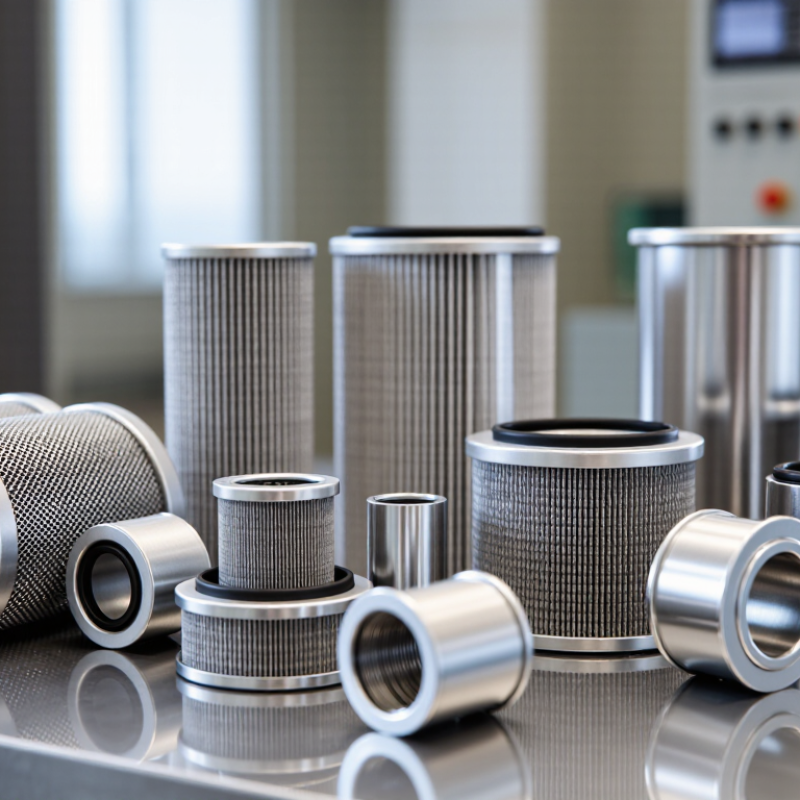
| Pleated metal mesh cartridge supplier | Pleated stainless steel mesh with end caps and a supporting core or cage | Commonly available in ratings from a few microns to hundreds of microns, depending on media and construction | Typically 304 or 316L wetted components | Many designs are cleanable and reusable; service life depends on process conditions | Compare dimensions, seal material, pleat support, flow direction, and replacement compatibility |
| Wedge-wire and screen element fabricator | Profile wire welded to support rods; cylindrical screens, baskets, or other custom shapes | Slot openings are specified by the application and are generally suited to coarse-to-fine screening rather than submicron filtration | Often 304 or 316L; other alloys may be offered for specific environments | Open slot design can support mechanical cleaning and backwashing where the process allows | Provide slot size, flow direction, dimensions, and mechanical-load requirements when requesting a quotation |
| Custom industrial filter element manufacturer | Application-specific combinations of mesh, perforated sheet, sintered media, and welded supports | Specified to the process; achievable rating depends on media selection and element geometry | 304 and 316L are common; confirm material traceability and suitability for the fluid | Cleaning and reuse depend on the selected media, welds, seals, and contaminant type | Share drawings, operating conditions, connection details, and required inspection records before ordering |

.svg)