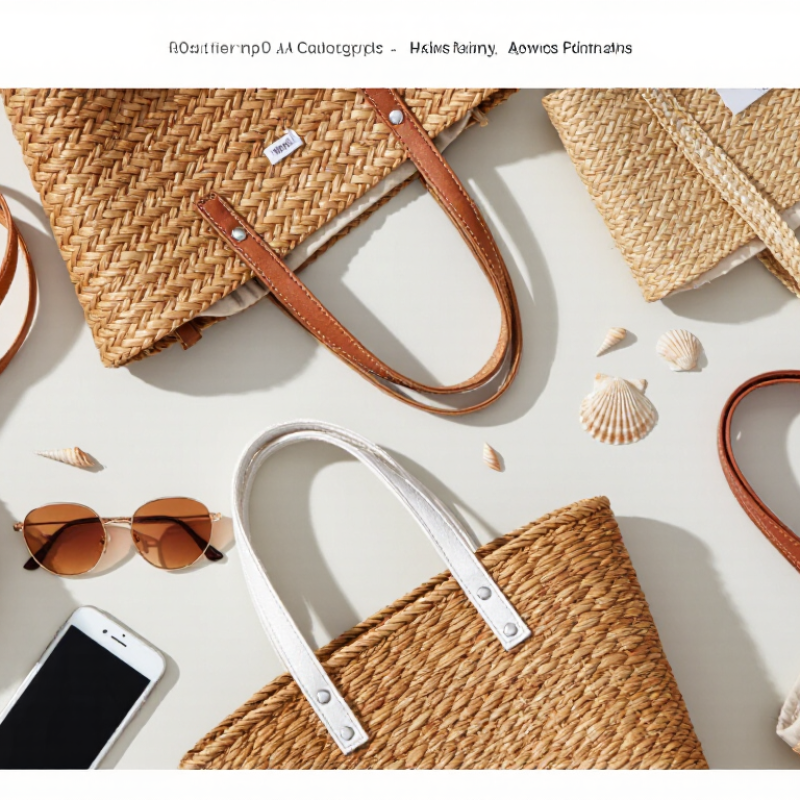
| 1 | Material and Construction | Identify whether the bag is made from paper straw, raffia, seagrass, rush, or another plant-based fiber. Inspect the weave for loose ends, gaps, broken strands, and uneven tension. | The material description, weave pattern, lining, and trim should match the approved sample and purchase specification. | Request a material declaration and approve a sealed reference sample before bulk production. |
| 2 | Size and Capacity | Measure body width, height, depth, handle drop, and usable interior space. Check whether the bag remains stable when filled. | Record dimensions in centimetres and define measurement tolerances, such as ±1 cm for finished dimensions where appropriate. | Use a dimensional drawing and a filled-bag photo to prevent misunderstandings between sampling and production. |
| 3 | Handle Strength | Examine handle attachment points, reinforcement patches, stitching, knots, and areas where the handle joins the woven body. | Define a project-specific static load and duration. A common internal screening target is 5 kg held for 1 hour without tearing or permanent handle separation. | Perform load testing on finished bags, not only on loose handles or fabric swatches. |
| 4 | Color Consistency | Compare body color, trim color, printed areas, and panels under consistent lighting. Natural fibers may show inherent shade variation. | Use approved physical color standards or instrumental color tolerances agreed with the buyer; do not rely on screen images alone. | Inspect production lots under daylight-simulating light and document any accepted natural variation. |
| 5 | Dry Rubbing Colorfastness | Check whether dry contact transfers color from the dyed or printed surface to a white rubbing cloth. | Test according to ISO 105-X12 using a specified rubbing finger, rubbing cloth, pressure, stroke count, and evaluation of staining on the Grey Scale. | Set the pass level in the purchase specification. A frequently used commercial target is Grey Scale grade 4 or higher, unless the product risk assessment requires another level. |
| 6 | Wet Rubbing Colorfastness | Evaluate color transfer when the surface is exposed to moisture, such as wet swimwear, towels, or rain. | Test according to ISO 105-X12 with the rubbing cloth prepared under the selected laboratory procedure. Record the moisture condition because wet and dry results are not interchangeable. | Use a separate wet-rubbing requirement; a practical starting benchmark is Grey Scale grade 3–4 or higher, subject to end-use and buyer approval. |
| 7 | Water and Moisture Response | Observe shrinkage, staining, dye migration, loss of shape, odor, and fiber distortion after controlled exposure to moisture. | Do not claim that a straw bag is waterproof unless it has been specifically designed and tested for water resistance. | Provide care instructions such as keeping the bag dry, wiping spills promptly, and air-drying away from direct heat. |
| 8 | Lining, Closure, and Hardware | Inspect lining seams, zipper or magnetic closure, metal rings, D-rings, snaps, and decorative attachments for sharp edges and weak points. | Closures should operate smoothly, hardware should be securely attached, and all components should match the approved construction. | Check the interior for snagging risks and verify that trims do not stain the lining during rubbing or moisture exposure. |
| 9 | Odor, Cleanliness, and Packaging | Check for mold, excessive chemical odor, loose fibers, dust, insects, moisture marks, and compression damage after packing. | Bags should be dry, clean, odor-free under normal inspection conditions, and protected from moisture during international transport. | Use breathable protective packaging where suitable and include carton humidity protection for long or humid shipping routes. |
| 10 | Inspection Records and Compliance | Confirm that specifications, test reports, labeling, packaging marks, and inspection results are traceable to the relevant production lot. | ISO 105-X12 describes a rubbing colorfastness test method; it does not establish one universal pass/fail grade for every product. | State the test method, dry or wet condition, laboratory result, acceptance grade, sampling plan, and corrective-action process in the order documents. |

.svg)