Food Safety Insights

In Eagle’s Advanced Insights Blog, experts share their know-how by keeping you up-to-date with the latest trends to ensure your inspection equipment keeps your products safe. Eagle is an industry leader when it comes to performance and innovation, and we’ll share the news that’s important to you to enhance your quality assurance program.

Suggest topic you would like to see at:

sale@generalmachinery.org

10 Strength Equipment Buying Tips for Global Buyers?

Buying Strength Equipment across borders is not simply a price comparison. It is a practical decision involving performance, safety, durability, service, and local operating conditions. A rack that performs well in a private studio may fail in a busy hotel gym. Floor loading, ceiling height, humidity, voltage, packaging, and replacement parts all deserve attention before the purchase order is signed.

As strength coach Mike Boyle puts it, “The best program is the one you will actually do.” The same idea applies to equipment. The best machine is not always the most advanced one. It is the unit that users can operate confidently, maintain regularly, and fit into daily training. A smooth cable system, clear adjustment points, and stable welds may matter more than impressive digital features.

This guide presents ten practical buying tips for global buyers. It examines specifications, material quality, certifications, supplier experience, warranty terms, shipping protection, installation, and after-sales support. It also considers regional needs, from compact equipment for urban facilities to corrosion-resistant frames for coastal climates. Small details can become expensive problems. A missing metric label, unclear assembly manual, or delayed spare part may stop a facility from operating.

No checklist is perfect. Buyer priorities can change after real users test the equipment. That is why samples, factory audits, independent inspections, and written service commitments remain valuable. Careful decisions are rarely dramatic. They are usually visible in the details.

10 Strength Equipment Buying Tips for Global Buyers?

Define Your Target Market and Strength Training Needs

10 Strength Equipment Buying Tips for Global Buyers

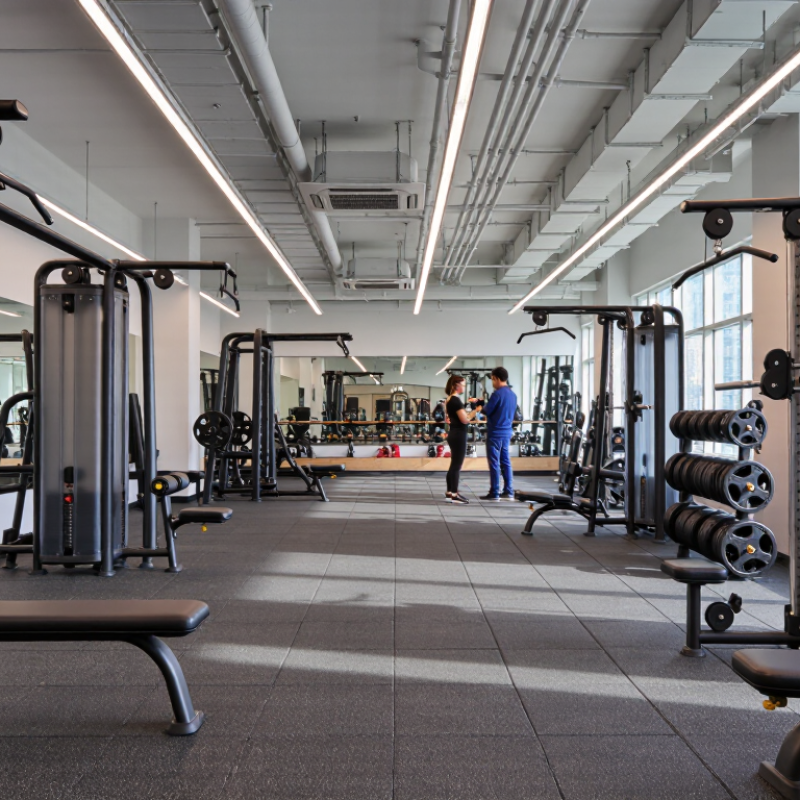
Define your target market before comparing racks, benches, or cable systems. A hotel gym serves short, varied workouts. A strength club needs heavier loads, greater durability, and faster member flow. Home users often value compact storage and quiet operation. These are different buying problems.

The World Health Organization recommends muscle-strengthening activities on at least two days weekly for adults. This supports demand for accessible resistance equipment across age groups, not only serious lifters. The American College of Sports Medicine ranked traditional strength training among the leading global fitness trends in its 2024 survey. Your product mix should reflect local behavior, not internet popularity. Measure user age, training experience, available floor space, climate, and service access. Small details matter. A narrow doorway can cancel an excellent purchase.

For commercial buyers, estimate peak-hour demand rather than average attendance. A facility with 100 members may need several adjustable stations, but perhaps only one lifting platform. Check load ratings, adjustment points, corrosion resistance, noise levels, and replacement-part availability. Regional safety requirements also deserve early review. Ask for test documentation and installation guidance. Reports can inform decisions, but they cannot replace site observation. A spreadsheet may miss crowded walkways or poor ventilation. I would also leave some budget for mistakes; the cheapest layout is rarely the cheapest operation. Sources: WHO Guidelines on Physical Activity and Sedentary Behaviour, 2020; ACSM Worldwide Survey of Fitness Trends, 2024.

Define Your Target Market and Strength Training Needs

Standard Olympic plate denominations support progressive loading for commercial gyms, strength-focused facilities, and home users. Buyers can use this progression to select equipment that matches training intensity, user experience, and available storage capacity.

Check Equipment Quality, Safety Standards, and Certifications

Global buyers should treat safety evidence as a purchasing requirement, not a decorative feature. The WHO Global Status Report on Physical Activity 2022 estimates that 31% of adults, about 1.8 billion people, were insufficiently active in 2022. This growing demand increases the need for reliable home and commercial training equipment.

Inspect the frame, welds, cables, bearings, and adjustment points before discussing price. Ask for load-testing records, material specifications, and batch traceability. ISO 20957 provides safety and performance requirements for stationary training equipment. However, a certificate alone proves little if its scope excludes the exact model purchased. Check the testing laboratory’s accreditation, such as ISO/IEC 17025, and verify the report number independently.

Look closely at moving parts. Guards should prevent finger access, pins should lock firmly, and emergency stops should remain reachable. The U.S. Consumer Product Safety Commission’s incident-reporting data repeatedly identifies falls, unstable equipment, and unexpected movement as common exercise-related hazards. That evidence deserves practical attention. I would also request manuals in the destination market’s language, clear maintenance intervals, and spare-part availability. A CE marking may indicate regulatory conformity, but it is not automatically an independent quality certification. Some suppliers present it too casually. Recheck every claim, especially when documents contain vague laboratory names or mismatched model numbers.

Compare Materials, Features, and Total Purchase Costs

When global buyers compare strength equipment, material quality should be judged beyond appearance. Thick steel frames usually resist flexing, but steel grade, weld depth, and corrosion protection matter more than paint shine. A compact rack may look solid in photos. Ask for tube dimensions, load testing records, and close-up weld images. Stainless or coated components can suit humid gyms, while bare steel may need frequent maintenance. That detail affects labor costs over several years.

Features should match actual users, not a supplier’s longest specification sheet. Adjustable seats, numbered positions, and sealed bearings can improve daily use. However, extra cables, screens, or electronic controls add failure points and replacement costs. During factory reviews, I check adjustment speed, pin fit, handle comfort, and noise under load. A ten-minute trial often reveals more than a polished brochure. I still make mistakes. A feature that helps athletes may slow beginners.

Calculate total purchase cost from factory price to installation. Include packaging, inland transport, ocean or air freight, insurance, import duties, payment fees, spare parts, and local technician time. A lower quote can become expensive after oversized cartons or weak packaging cause damage. Request a written packing list and estimated shipment dimensions. Compare warranty coverage by component, response time, and who pays return freight. Use the same currency and delivery term for every quotation. Keep a contingency reserve. Global costs rarely stay perfectly still.

10 Strength Equipment Buying Tips for Global Buyers? - Compare Materials, Features, and Total Purchase Costs
A practical comparison of construction, specifications, logistics, maintenance, and estimated three-year ownership costs
No. Buying Tip / Equipment Recommended Construction Useful Features to Compare Typical Working Load Indicative Unit Price
(USD)
Estimated Freight, Duty & Insurance
(USD)
Estimated 3-Year Maintenance
(USD)
Estimated 3-Year Total Cost
(USD)
Key Decision Checklist
1 Power Rack
Choose safety and expandability over decorative accessories.
Commercial steel tubing, approximately 3 mm wall thickness; powder-coated finish; bolted or welded frame. Adjustable J-hooks, safety bars or straps, pull-up bar, floor anchors, compatible cable and landmine attachments. Static frame capacity commonly 450–900 kg, depending on design and anchoring. $650–$1,500 $180–$500 $80–$180 $910–$2,180 Verify steel gauge, weld quality, hole spacing, anchor requirements, replacement parts, and packed dimensions.
2 Functional Trainer / Cable Crossover
Compare smooth movement and serviceability.
Welded steel frame, galvanized or stainless cable, sealed pulleys, and cast-iron or steel weight stacks. Independent pulley adjustment, dual handles, ratio options, protective shrouds, and corrosion-resistant cable ends. Common weight stacks of 70–100 kg per side; user load depends on pulley ratio. $1,500–$4,000 $400–$1,200 $180–$450 $2,080–$5,650 Request pulley ratio, cable replacement cost, stack increments, maximum ceiling height, and assembly requirements.
3 Adjustable Training Bench
Prioritize stability, adjustment range, and upholstery.
Heavy-gauge steel frame, high-density foam, abrasion-resistant vinyl, and stainless or zinc-plated adjustment hardware. Flat-to-incline positions, back-pad gap, transport wheels, ladder adjustment, and replaceable upholstery. Typical rated capacity of 250–450 kg, including user and lifted load. $250–$750 $80–$250 $40–$120 $370–$1,120 Check seat stability, maximum angle, upholstery thickness, frame welds, packed volume, and spare-pad availability.
4 Olympic Barbell
Match bar specification to lifting style.
Heat-treated alloy steel shaft, chrome or ceramic coating, and bronze or composite bushings. 28–29 mm shaft, 20 kg standard weight, tensile-strength rating, knurling pattern, sleeve rotation, and corrosion protection. Approximately 600–1,500 kg stated static or test capacity; actual use depends on bar type. $140–$450 $35–$120 $20–$70 $195–$640 Confirm shaft diameter, sleeve length, straightness tolerance, coating warranty, and packaging against bending.
5 Bumper Plate Set
Compare rubber quality, diameter consistency, and odor.
Virgin or recycled rubber plates with stainless or brass-reinforced steel hubs. Standard 450 mm diameter, colored weight coding, raised lettering, calibrated thickness, and low-bounce formulation. Sets commonly range from 100–160 kg; drop suitability varies by floor and plate design. $750–$2,000 per 100–160 kg set $220–$700 $50–$180 $1,020–$2,880 Ask for weight tolerance, hub inner diameter, rebound behavior, odor-control process, and storage temperature limits.
6 Rubber Hex Dumbbell Set
Calculate shipping weight before ordering large quantities.
Solid cast-iron heads with rubber coating and a chrome or stainless steel textured handle. Hexagonal heads, handle knurling, molded end markings, compact rack compatibility, and uniform weight increments. Common commercial sets cover 2.5–30 kg per dumbbell. $1,500–$4,500 per 2.5–30 kg set $450–$1,500 $100–$300 $2,050–$6,300 Compare actual set weight, coating thickness, odor, handle diameter, carton strength, and rack requirements.
7 Leg Press / Hack Squat Machine
Inspect frame engineering and user ergonomics.
Welded structural steel, linear bearings or rollers, reinforced sled, and high-density molded pads. Adjustable backrest, safety stops, footplate angle, weight horns, guide-rail protection, and accessible maintenance points. Common plate-loaded capacity of 300–500 kg, subject to manufacturer testing. $3,000–$8,000 $900–$2,500 $250–$700 $4,150–$11,200 Confirm ceiling height, floor loading, delivery access, bearing replacement process, and user height range.
8 Selectorized Lat Pulldown
Choose consistent resistance and easy adjustments.
Powder-coated steel frame, steel weight stack, nylon-coated cable, sealed pulleys, and molded seat components. Adjustable thigh pads, self-aligning seat, magnetic pin, instructional placard, shrouded stack, and multiple handles. Typical stack range of 70–120 kg; effective resistance depends on pulley ratio. $2,000–$5,000 $500–$1,500 $180–$500 $2,680–$7,000 Check seat adjustment, cable travel, stack increments, minimum ceiling height, user access, and spare-pin availability.
9 Strength Training Flooring
Buy by installed cost, not square-meter price alone.
High-density vulcanized rubber tiles or rolls; interlocking edges or adhesive installation. 15–30 mm thickness, low odor, slip resistance, impact absorption, beveled edges, and easy replacement. Suitable for free-weight zones when subfloor, thickness, and installation are correctly specified. $10–$28 per m² $4–$14 per m² $2–$6 per m² $16–$48 per m² Measure wastage, verify fire and slip ratings, test odor, confirm cleaning chemicals, and include installation labor.
10 Plate and Dumbbell Storage
Use storage to reduce damage, clutter, and handling costs.
Welded steel frame, reinforced weight horns, rubber contact points, and powder-coated or zinc-plated hardware. Vertical or horizontal layout, locking casters, protective saddles, anti-tip design, and modular capacity. Common capacity of 250–600 kg, depending on rack type and floor anchoring. $300–$1,000 $100–$350 $40–$120 $440–$1,470 Match rack footprint to equipment, verify center of gravity, check wheel locks, and confirm maximum shelf or horn load.
Cost reference: Prices are indicative planning ranges in USD for commercial-grade equipment and exclude local sales tax, installation labor, building modifications, and currency fluctuations. Freight, duty, and insurance estimates assume international shipment and commonly represent approximately 15%–35% of the equipment price, but actual charges depend on origin, destination, Incoterms, shipment volume, customs classification, and port conditions. Three-year total cost equals estimated unit price plus logistics costs and routine maintenance; it does not include financing or major misuse-related repairs.

Evaluate Suppliers, Production Capacity, and Customization Options

Global buyers should evaluate a supplier beyond product photos and quoted prices. The Global Wellness Institute reported that the wellness economy reached $6.3 trillion in 2023. That growth increases demand for reliable strength equipment and creates more pressure on factories. Request audited production records, monthly output, equipment lists, and recent export references. Capacity matters.

A factory may claim high volume but outsource welding, coating, or upholstery. Ask where each process occurs. During a factory audit, inspect welding consistency, load-testing equipment, packaging, and spare-parts storage.

Grand View Research estimated the global strength training equipment market at about $14.8 billion in 2023.

Quality systems must grow with demand. Review ISO 9001 certification, inspection sampling, material certificates, and corrective-action reports. Certificates alone are not enough.

Customization should be measured carefully. Confirm whether the supplier can change frame dimensions, cable ratios, padding density, colors, labels, and carton specifications without weakening safety. Request a prototype before mass production. Check its bolt alignment and movement path in person. Small changes can affect biomechanics. I have seen attractive samples fail during repeated testing. That mistake is expensive. Use a written approval process, defined tolerances, production milestones, and independent pre-shipment inspection. Also compare lead times during peak seasons, not only normal months. A supplier that communicates delays early is often more dependable than one promising everything.

Plan Shipping, Import Duties, Installation, and After-Sales Support

Global Strength Equipment Buying Tips: Shipping, Duties, Installation, and Support

International equipment buying is not complete when the container leaves the factory. Ask for carton dimensions, gross weight, pallet count, loading photos, and the correct HS codes. The World Bank’s 2023 Logistics Performance Index evaluates customs, infrastructure, tracking, and delivery reliability across 139 economies. These factors can change your landed cost significantly. Request two freight quotations: port-to-port and delivered-to-site. Confirm insurance, demurrage rules, destination handling fees, and delivery access for trucks or cranes.

Import duties require careful checking. A customs broker should verify classification before payment, not after arrival. Include local taxes, inspection charges, storage fees, and currency movement in your budget. A simple spreadsheet helps, but it can still be wrong. Leave a contingency reserve of 10–15% for unexpected charges. The UNCTAD Review of Maritime Transport 2023 also highlights how disruptions can affect shipping routes, capacity, and freight reliability. Build time into your launch plan.

Installation deserves equal attention. Confirm floor loading, ceiling height, power requirements, anchoring points, and ventilation before purchase. ISO 20957 provides safety requirements for stationary training equipment, but local building and electrical rules still apply. Request bilingual manuals, assembly drawings, spare-part lists, and technician training. After-sales support should specify response times, warranty exclusions, remote diagnosis, and replacement-part availability. Fitness operators often underestimate downtime. A missing cable or damaged bearing can stop one machine for weeks. That is not acceptable. Choose a supplier that provides service procedures in writing, while accepting that real projects may still expose gaps.

Article Source:

Any Questions? We Are Here for You

Contact Us

Contact Us

Request information

Ask us a question
Service Support

Service Support

Available 24 hours a day, 7 days a week.

Get in Touch
Find a representative

Find a representative

Contact your local representative

View Locations