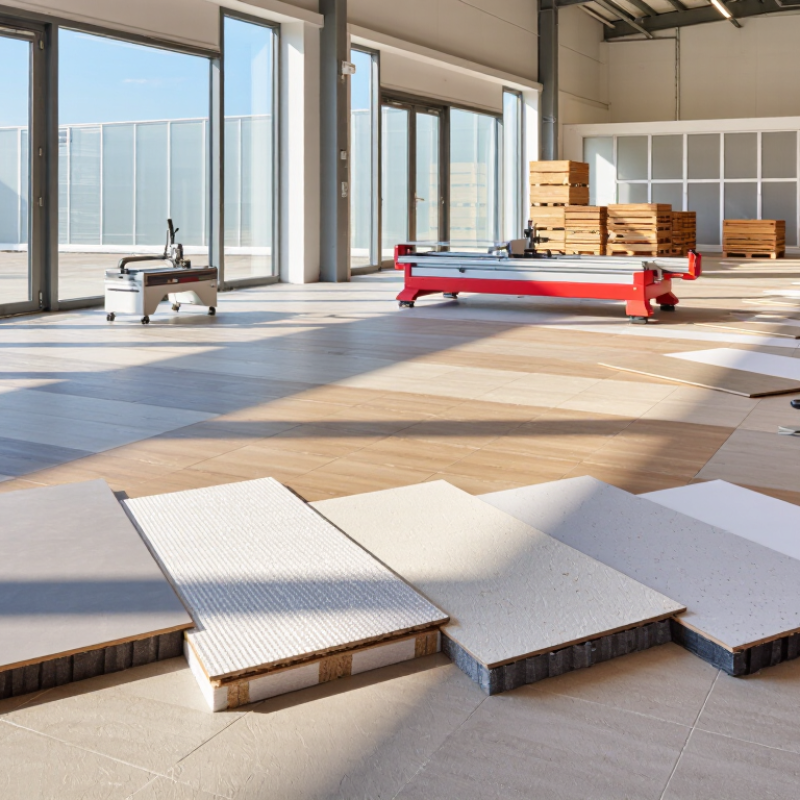
| 1 | Cement-Faced XPS Tile Backer Panel | Extruded polystyrene foam | Polymer-modified cement or glass-fiber-reinforced cement surface | 6–80 mm | 0.029–0.036 | 0.56–0.69 | 200–500 kPa | Closed-cell core; low water absorption when joints and penetrations are sealed | Bathrooms, kitchens, wet rooms, balconies, and underfloor heating systems |
| 2 | Glass-Fiber-Faced EPS Tile Panel | Expanded polystyrene foam | Glass-fiber mesh with cementitious coating | 10–60 mm | 0.031–0.040 | 0.50–0.65 | 100–250 kPa | Resistant to rot; requires a continuous waterproofing system in wet areas | Residential floors, lightweight renovation, and projects requiring low panel weight |
| 3 | PIR Insulation Tile Backer Panel | Polyisocyanurate rigid foam | Aluminium foil, glass-fiber, or cementitious facing | 20–120 mm | 0.022–0.028 | 0.71–0.91 | 120–200 kPa | Low water absorption; edge detailing and compatible adhesive are required | Thin-build floors, energy-efficient renovations, and cold-climate construction |
| 4 | Phenolic Foam Tile Support Panel | Rigid phenolic foam | Mineral-coated glass-fiber or foil laminate facing | 20–100 mm | 0.020–0.025 | 0.80–1.00 | 90–150 kPa | Generally low water absorption; all exposed edges should be protected | Projects requiring high insulation performance at restricted floor build-up |
| 5 | Rigid Mineral Wool Tile Panel | High-density stone wool or glass wool | Cementitious board, mineral coating, or rigid reinforced facing | 20–100 mm | 0.034–0.040 | 0.50–0.59 | 40–150 kPa | Non-combustible mineral core; must be kept dry during installation | Fire-conscious buildings, acoustic floor assemblies, and commercial interiors |
| 6 | Cork Composite Tile Underlay Panel | Expanded natural cork granules bonded into rigid board | Raw cork, wood-fiber, or cement-faced surface | 10–40 mm | 0.037–0.045 | 0.44–0.54 | 100–180 kPa | Moderate moisture tolerance; requires dry installation and moisture control below | Residential floors, acoustic improvement, and projects using bio-based materials |
| 7 | Rigid Wood-Fiber Tile Panel | Compressed wood fibers with hydrophobic treatment | Wood-fiber surface or reinforced cementitious facing | 20–80 mm | 0.038–0.050 | 0.40–0.53 | 80–200 kPa | Moisture-sensitive compared with closed-cell foam; requires careful vapor and water control | Low-energy buildings, timber structures, and bio-based construction systems |
| 8 | Aerogel-Enhanced Floor Insulation Panel | Silica aerogel composite or aerogel blanket laminate | Fiber-reinforced mineral, glass-fiber, or cementitious facing | 5–30 mm | 0.015–0.025 | 0.80–1.33 | Application-dependent; commonly requires a load-spreading board | Low moisture uptake; joints and facing must be protected from abrasion and water | Heritage renovation, narrow thresholds, and ultra-thin insulation upgrades |
| 9 | Foam Glass Tile Insulation Board | Cellular glass made from foamed recycled glass | Factory-finished cellular glass or bitumen-coated surface | 30–120 mm | 0.040–0.055 | 0.36–0.50 | 400–1,600 kPa | Closed-cell, non-absorbent, and resistant to rot and most common pests | Basements, ground-bearing floors, high-load areas, and moisture-prone locations |
| 10 | Cement-Bonded Wood-Wool Insulation Panel | Wood wool strands bonded with cement | Mineral or cementitious surface suitable for a separate tile substrate | 15–75 mm | 0.065–0.090 | 0.22–0.31 | 150–500 kPa | More moisture-tolerant than untreated wood fiber; not a waterproofing layer | Acoustic floor systems, service floors, and assemblies requiring mechanical fixing |

.svg)