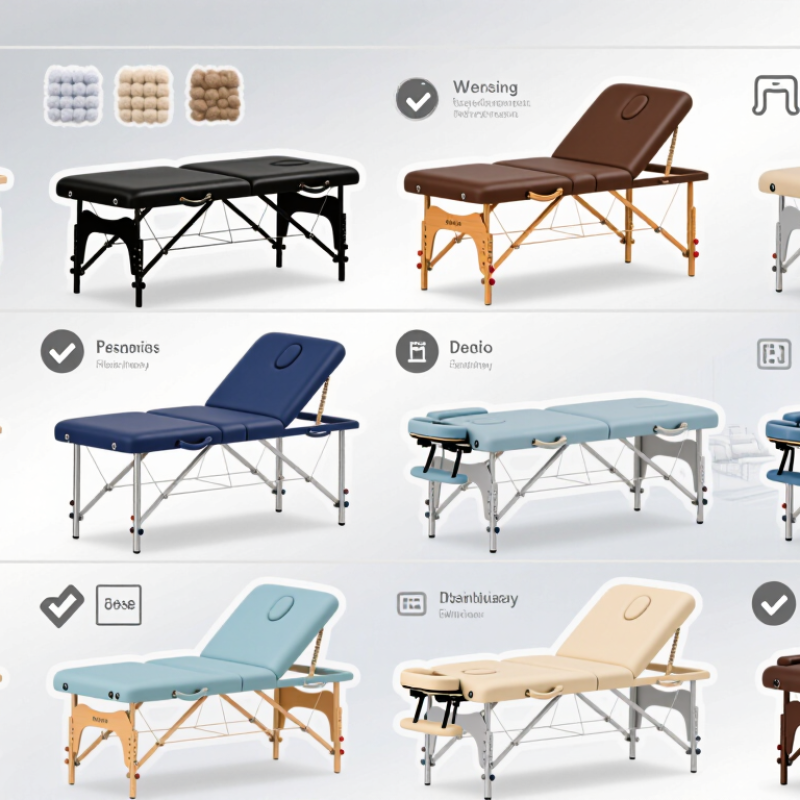
| 1. Product range and intended use | 8% | Whether the supplier offers models suited to the intended setting, such as portable, stationary, manual, or electric tables. | Current product catalogue, model-specific specifications, and sample availability. | Specifications that are identical across different models despite visible design differences. |
| 2. Frame and material details | 12% | Frame material and construction, upholstery type, foam details, finish, and the materials used for key components. | Written bill of materials or specification sheet, material samples, and close-up product photos. | Vague terms such as “premium material” without a specific description or model reference. |
| 3. Load-capacity specifications | 12% | The stated working load and static load, including how each value is defined and which model it applies to. | Model-specific load-test records and a written explanation of the test method and conditions. | A single load figure with no distinction between static and working load or no supporting test information. |
| 4. Stability and safety features | 14% | Table stability, leg or base locking, adjustment mechanisms, pinch-point protection, and safe operation at different heights. | Inspection checklist, operating instructions, demonstration video, and sample testing under intended use conditions. | Locks or controls that are difficult to operate, unexplained movement, or no clear safety instructions. |
| 5. Quality-control process | 12% | How incoming materials, production stages, finished products, and packing are inspected and recorded. | Documented inspection procedures, sample inspection reports, and an agreed pre-shipment inspection plan. | A quality claim with no description of inspection steps or records. |
| 6. Customization and order flexibility | 8% | Available options for dimensions, upholstery color, accessories, packaging, and other requested specifications. | Written customization options, minimum order quantities, sample terms, and confirmed lead times. | Verbal promises that are not reflected in the quotation or approved sample. |
| 7. Destination-market compliance | 10% | Applicable product, labeling, material, and electrical requirements for the destination market and specific model. | Relevant, current test reports or declarations that identify the product model, scope, and issuing organization; confirm requirements with the importer or a qualified compliance professional. | A certificate presented as covering every product or market without matching model and scope details. |
| 8. Production capacity and lead time | 8% | Whether the supplier can meet the required order quantity and schedule, including seasonal capacity and material availability. | A production schedule, confirmed lead time, and updates tied to order milestones. | Guaranteed delivery dates that are not supported by a production plan or written order terms. |
| 9. Export packing and logistics readiness | 8% | Packaging protection, carton dimensions and weight, shipping marks, and the supplier’s ability to prepare export documents as agreed. | Packing specifications, carton measurements, packing photos, and a document checklist confirmed before shipment. | No agreed packing standard or missing carton information needed for freight planning. |
| 10. Warranty and after-sales support | 8% | Warranty duration and coverage by component, exclusions, spare-parts availability, and the process for handling defects or claims. | Written warranty terms, spare-parts list, response process, and confirmation of who pays associated shipping costs. | A broad warranty promise with unclear exclusions, claim steps, or responsibility for replacement parts. |

.svg)