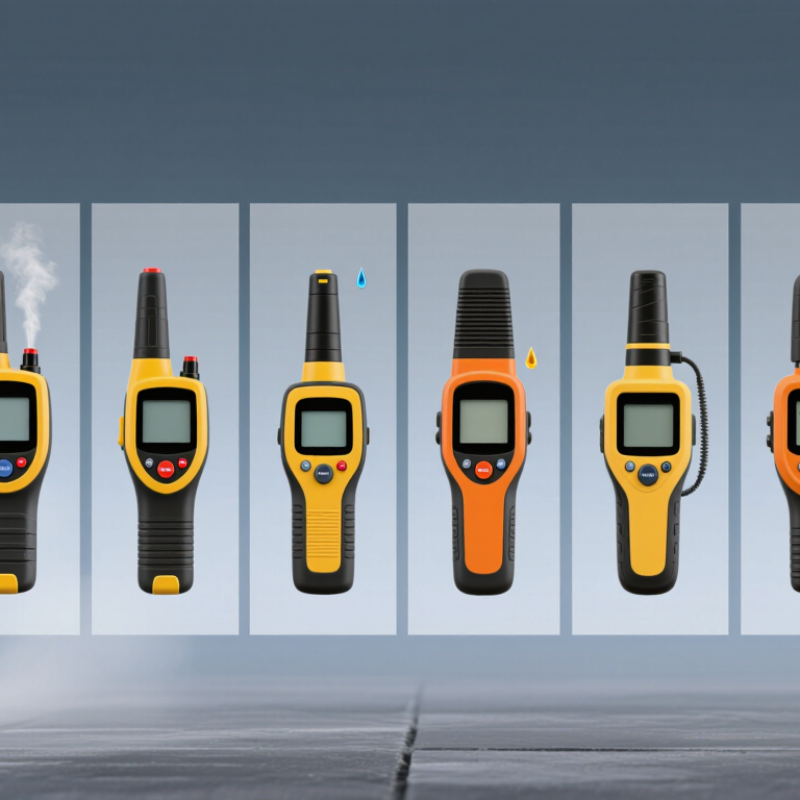
| 1 | Standard 4-Gas Personal Monitor | General industrial work, maintenance, and confined-space entry | O₂ LEL H₂S CO | O₂: 0–30% vol
LEL: 0–100% LEL
H₂S: 0–100 ppm
CO: 0–500 ppm | Typically 12–18 hours per charge | Usually IP65 or IP67 | Visual, audible, and vibrating alarms; high, low, STEL, TWA, and low-battery alerts | You need the widely used basic configuration for routine worker protection |
| 2 | 4-Gas Monitor with Pump | Pre-entry testing and remote sampling in confined spaces | O₂ LEL H₂S CO | O₂: 0–30% vol
LEL: 0–100% LEL
H₂S: 0–100 ppm
CO: 0–500 ppm | Typically 8–16 hours, depending on pump use | Usually IP65 or IP67 | Pump-failure, blocked-inlet, flow, sensor, and gas alarms | You must sample tanks, pits, manholes, or other areas before entry |
| 3 | 5-Gas Monitor with VOC Detection | Petrochemical plants, refineries, tank farms, and hazardous-material work | O₂ LEL H₂S CO VOC | O₂: 0–30% vol
LEL: 0–100% LEL
H₂S: 0–100 ppm
CO: 0–500 ppm
VOC: commonly 0–2,000 ppm | Typically 8–16 hours | Usually IP65 or IP67 | Multi-level gas alarms, STEL/TWA, sensor status, and data logging | Flammable vapors and toxic gases may be present at the same time |
| 4 | Extended 5-Gas Monitor for Sewer and Wastewater Work | Wastewater treatment, sewer inspection, and underground utility work | O₂ LEL H₂S CO CO₂ | O₂: 0–30% vol
LEL: 0–100% LEL
H₂S: commonly 0–100 ppm
CO: commonly 0–500 ppm
CO₂: often 0–5% vol | Typically 10–18 hours | Usually IP65 or IP67 | Audible, visual, and vibration alarms; optional pump and remote sampling | You need carbon dioxide monitoring in addition to oxygen-deficiency and H₂S protection |
| 5 | Low-Level H₂S and CO Personal Monitor | Oil and gas production, wastewater facilities, and process areas | O₂ LEL H₂S CO | O₂: 0–30% vol
LEL: 0–100% LEL
H₂S: low-ppm resolution
CO: commonly 0–500 ppm | Typically 12–18 hours | Usually IP65 or IP67 | Low-level instantaneous alarms, STEL/TWA, peak readings, and event memory | Worker exposure limits for H₂S and CO are a primary concern |
| 6 | Chlorine and Oxidizing-Gas Multi Monitor | Water treatment, chemical processing, and disinfection systems | O₂ LEL Cl₂ SO₂ H₂S | O₂: 0–30% vol
LEL: 0–100% LEL
Cl₂: commonly 0–20 ppm
SO₂: commonly 0–20 ppm
H₂S: commonly 0–100 ppm | Typically 10–16 hours | Usually IP65 or IP67 | Toxic-gas alarms, STEL/TWA, sensor fault, calibration due, and battery alerts | The worksite uses chlorine, sulfur dioxide, or other toxic oxidizing gases |
| 7 | Ammonia-Focused Multi-Gas Monitor | Refrigeration plants, fertilizer facilities, and food-processing sites | O₂ LEL NH₃ CO H₂S | O₂: 0–30% vol
LEL: 0–100% LEL
NH₃: commonly 0–100 ppm or 0–500 ppm
CO: commonly 0–500 ppm
H₂S: commonly 0–100 ppm | Typically 10–18 hours | Usually IP65 or IP67 | Toxic exposure alarms, STEL/TWA, peak concentration, and calibration reminders | Ammonia leakage is a credible occupational or process hazard |
| 8 | Combustion and Boiler-Room Multi Monitor | Boiler rooms, heating plants, engine rooms, and combustion maintenance | O₂ LEL CO H₂S NO₂ | O₂: 0–30% vol
LEL: 0–100% LEL
CO: commonly 0–500 ppm
H₂S: commonly 0–100 ppm
NO₂: often 0–20 ppm | Typically 10–18 hours | Usually IP65 or IP67 | Combustible, oxygen, toxic-gas, STEL/TWA, and sensor-life alerts | Combustion products and fuel-gas leaks are both possible |
| 9 | Rugged Outdoor and Emergency-Response Monitor | Fire services, emergency response, outdoor utilities, and rescue operations | O₂ LEL CO H₂S VOC | O₂: 0–30% vol
LEL: 0–100% LEL
CO: commonly 0–500 ppm
H₂S: commonly 0–100 ppm
VOC: commonly 0–2,000 ppm | Typically 10–18 hours | IP67 is preferred for dust and temporary water exposure | High-output audible and visual alarms, vibration, motionless alarm, and data logging | The detector may be exposed to rain, dust, impact, or rapidly changing conditions |
| 10 | Connected Multi-Gas Monitor with Wireless Data Transfer | Large industrial sites, contractor management, and centralized safety monitoring | O₂ LEL H₂S CO Optional toxic gas or VOC | Common 4-gas ranges plus an optional sensor selected for the site hazard assessment | Typically 10–18 hours, depending on wireless use | Usually IP65 or IP67 | Local alarms, wireless status transmission, man-down alert, lone-worker monitoring, and event records | Supervisors need real-time worker status or centralized exposure records |

.svg)