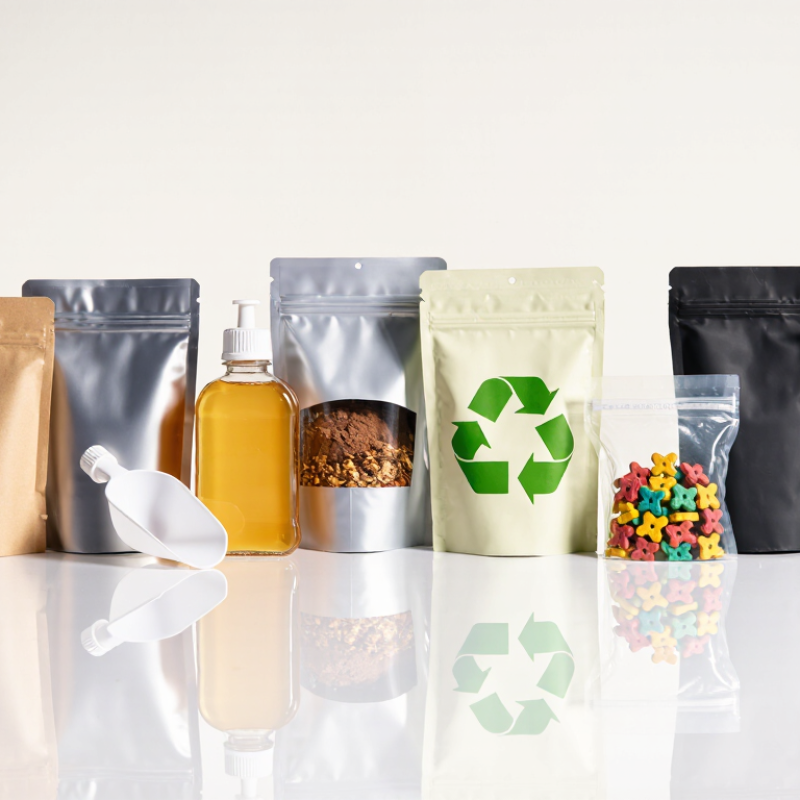
| 1. Standard zipper pouch | Flexible laminate with a bottom gusset and press-to-close zipper; often supplied with a separate top seal. | The laminate can be selected for moisture, oxygen, or light protection. The zipper supports repeated closure but is not a substitute for the initial heat seal. | Stands upright on shelves and is easy to open and reclose after first use. | Snacks, dried foods, powders, and pet treats. | Check zipper performance, seal width, fill volume, and whether the product needs a tear notch. |
| 2. Spouted pouch | Flexible pouch with a fitment and screw cap, usually positioned at a top corner or center. | Suitable laminate and well-made fitment seals help contain liquids. Compatibility with the product and filling process is essential to reduce leakage risk. | Allows controlled pouring or dispensing and can be recapped between uses. | Sauces, purees, beverages, and liquid detergents. | Test fitment-seal integrity, cap compatibility, dispensing rate, and leak resistance in transport. |
| 3. Window pouch | Stand-up pouch with a transparent panel or window within an otherwise printed or opaque structure. | The window may allow more light exposure than an opaque barrier layer. Protection varies with window size, material, and the rest of the laminate. | Lets shoppers see the product without opening the package. | Pasta, grains, confectionery, and visually appealing dry goods. | Confirm the window material and size meet the product’s light and shelf-life requirements. |
| 4. Retort pouch | Heat-resistant, multilayer flexible structure designed for a validated retort process. | Can be used for commercially sterilized foods when the pouch, seals, and scheduled thermal process are properly validated together. | Lightweight packaging that can provide a ready-to-heat format; opening features may be added. | Shelf-stable meals, soups, sauces, and some pet foods. | Require process validation, retort-compatible seals, and testing for flex cracking and delamination. |
| 5. Foil high-barrier pouch | Laminate incorporating an aluminum foil layer, often combined with polymer sealing layers. | Intact foil provides a strong barrier to light, oxygen, and moisture; pinholes, folds, and seal defects can reduce package performance. | Suitable when strong protection is more important than visibility of the contents. | Coffee, powdered products, and light- or oxygen-sensitive dry goods. | Ask for barrier data for the finished structure and assess puncture resistance and disposal requirements. |
| 6. Kraft-look pouch | Paper outer layer combined with inner polymer layers; some versions use a foil or other barrier layer. | Paper alone is not a reliable moisture or oxygen barrier. Protection comes from the inner layers and the quality of the seals. | Offers a paper-like appearance and can be printed; zipper and tear-notch options are common. | Tea, coffee, dry snacks, and specialty dry foods. | Check the actual layer composition, barrier data, and local recycling or disposal options. |
| 7. Clear high-barrier pouch | Transparent multilayer film, sometimes using coated or high-barrier polymer layers instead of foil. | May provide enhanced oxygen or moisture control while remaining transparent, but performance varies by material and does not necessarily block light. | Combines product visibility with a stand-up format. | Dried fruit, nuts, snacks, and products where appearance matters. | Compare oxygen and water-vapor transmission data and check whether light protection is needed. |
| 8. Child-resistant pouch | Stand-up pouch fitted with a closure designed to meet an applicable child-resistance test standard. | Product protection depends on the pouch laminate and seals; child-resistant closure performance is a separate safety consideration. | Can help provide restricted access while remaining usable by adults when properly designed and tested. | Products subject to child-resistant packaging rules in relevant markets. | Verify applicable local regulations, independent testing, labeling, and reclosure performance. |
| 9. Shaped pouch | Pouch cut into a custom outline while retaining a bottom gusset or other stand-up base. | Uses the selected laminate for barrier protection; unusual edges and shapes can affect seal layout and usable fill volume. | Distinctive shelf presentation and potential ergonomic or product-specific handling features. | Confectionery, personal-care products, and promotional formats. | Review stability, seal area, packing-line compatibility, and the impact of shape on shipping efficiency. |
| 10. Flat-bottom stand-up pouch | Pouch with a broad, flat base and side or bottom gussets that create a box-like shape. | Protection is determined by the laminate and seal construction. Additional folds and corners should be considered during seal and distribution testing. | Stable on shelves and can provide a broad front panel for product information. | Coffee, dry foods, pet food, and larger retail packs. | Check filled-pack stability, usable capacity, case packing, and fit with the filling equipment. |

.svg)