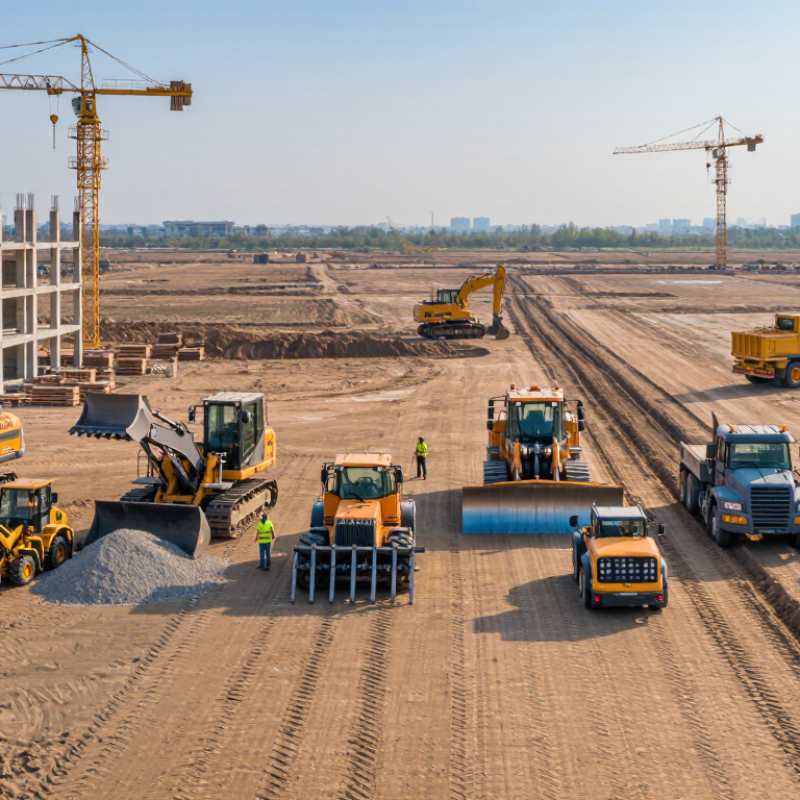
| 1 | Crawler Excavator | Hydraulic digging, trenching, loading, and material removal using a boom, stick, and bucket. | 10–80 metric tonnes | Approx. 6–12 m maximum digging depth | 0.2–4.5 m³ bucket | Deep foundations, utility trenches, quarrying, demolition, and mass excavation. | Tracked undercarriage provides stability and low ground pressure on uneven terrain. |
| 2 | Mini or Compact Excavator | Small-scale digging and precise trenching in confined or sensitive work areas. | 1–8 metric tonnes | Approx. 2–5.5 m maximum digging depth | 0.02–0.35 m³ bucket | Landscaping, residential foundations, drainage, cable installation, and utility repairs. | Compact tail-swing options can work close to buildings, walls, and other obstacles. |
| 3 | Backhoe Loader | Combines a rear hydraulic excavator with a front loader for digging, loading, and backfilling. | 7–12 metric tonnes | Approx. 4–6 m rear digging depth | Rear bucket: 0.1–0.3 m³; front bucket: 0.8–1.5 m³ | Road maintenance, farm work, drainage, small foundations, and general utility construction. | Rubber tires allow relatively fast travel between nearby work locations. |
| 4 | Bulldozer | Pushes, spreads, grades, and rips soil, rock, and construction debris. | 8–70 metric tonnes | Approx. 0.3–1.5 m ripping depth with a rear ripper | Blade width: about 2.5–6 m | Site clearing, road formation, rough grading, land reclamation, and stockpile management. | High tractive effort and tracked stability suit rough, muddy, or steep ground. |
| 5 | Wheel Loader | Loads, transports, and places loose soil, aggregate, sand, and demolition material. | 8–35 metric tonnes | Limited shallow penetration; optimized for loading rather than deep digging | 1.5–6.5 m³ bucket | Quarries, aggregate yards, loading trucks, stockpile handling, and site cleanup. | Fast travel and high production on firm, prepared surfaces. |
| 6 | Skid-Steer Loader | Performs light excavation, grading, loading, and material handling with interchangeable attachments. | 2.5–5 metric tonnes | Shallow excavation, generally under 1 m per pass | 0.25–0.8 m³ bucket | Small construction sites, landscaping, demolition cleanup, and utility preparation. | Zero-radius skid steering provides excellent maneuverability in tight spaces. |
| 7 | Compact Track Loader | Carries out light digging, grading, dozing, and site preparation with tracked traction. | 3–6 metric tonnes | Shallow excavation, generally under 1 m per pass | 0.3–1.0 m³ bucket | Soft ground, landscaping, grading, brush clearing, and residential site work. | Tracks provide low ground pressure and improved traction compared with wheeled loaders. |
| 8 | Trencher | Cuts narrow, continuous trenches for pipes, cables, drainage, and irrigation systems. | 0.5–15 metric tonnes | Approx. 0.3–2.4 m trench depth | Typical trench width: 75–300 mm | Telecommunications, electrical cables, water lines, gas lines, and agricultural drainage. | Produces consistent narrow cuts with less spoil than a conventional excavator. |
| 9 | Dragline Excavator | Uses a suspended bucket and long boom to remove material from deep or extended-radius excavations. | 100–2,000+ metric tonnes for large mining units | Approx. 10–60 m working depth, depending on configuration | 1–100 m³ bucket | Surface mining, overburden removal, large borrow pits, and deep-waterway excavation. | Very long reach and large-scale production from a fixed operating platform. |
| 10 | Motor Scraper | Cuts, collects, hauls, and spreads soil over medium-to-long distances in large earthmoving projects. | 15–70 metric tonnes | Approx. 0.15–0.4 m cutting depth per pass | 8–40 m³ bowl capacity | Highway construction, airport sites, reservoirs, dams, and large-scale grading. | Combines excavation and hauling, reducing the need for separate loading equipment. |

.svg)