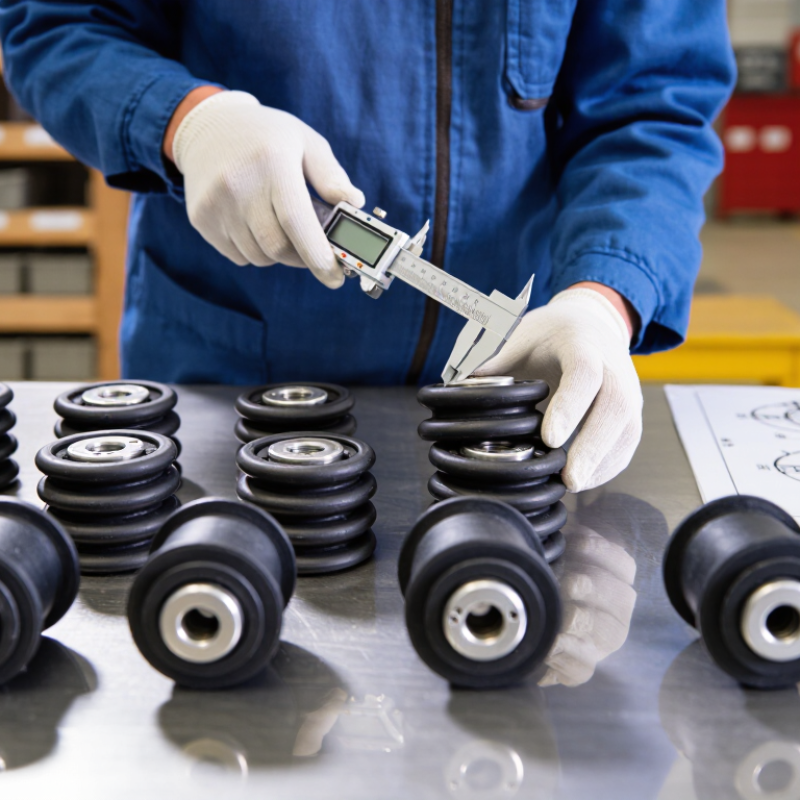
Before placing an order for rubber bushes, global buyers should inspect more than product photographs. Request a technical drawing with dimensions, tolerances, hardness, and rubber compound details. Ask whether the bush uses natural rubber, EPDM, nitrile, or another material. Each option performs differently under heat, oil, moisture, and vibration. Small details matter. Confirm the intended vehicle or machine application, expected load, movement angle, and service temperature. A supplier should explain why its specification fits those conditions, not simply promise “high quality.”
Request production samples before approving mass production. Measure the outer diameter, inner sleeve position, wall thickness, and rubber hardness with suitable equipment. Review test data for compression set, tensile strength, aging, ozone resistance, and bonding strength. The report should identify the sample batch and test method. Verify that any quality certificates are current and relevant to the actual factory. Factory experience matters more than a polished certificate. Ask for process photographs, inspection records, and material traceability. Do not guess.
Commercial checks deserve equal attention. Confirm tooling ownership, minimum order quantity, packaging, lead time, replacement terms, and delivery responsibilities in writing. Use moisture-resistant packaging when sea transport is expected. Agree on pre-shipment inspection criteria before payment. A third-party inspection can reveal uneven bonding or incorrect dimensions. However, inspection cannot replace a clear specification. I have seen orders delayed because buyers approved a sample without checking its operating temperature. That mistake is easy to repeat. Leave room for technical review before signing the final purchase order.

.svg)