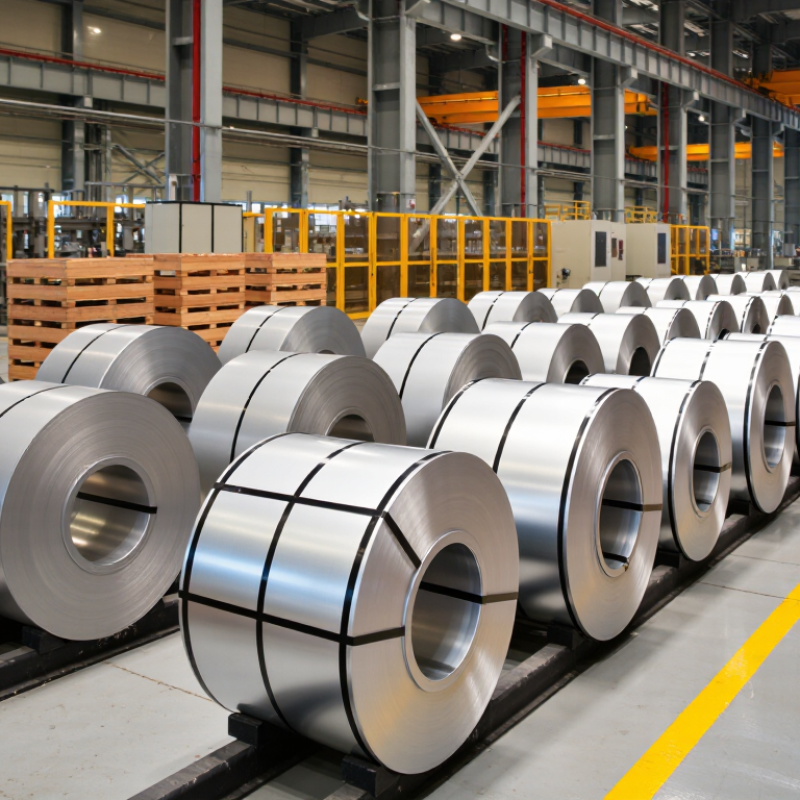
| Custom Coil Slitting | Master coils converted into narrower strips with specified widths, edge conditions, inner diameters, and outer diameters. | 301, 304, 304L, 316, 316L, 409, 430 | ASTM A480/A480M; EN 10088-2 | Provides material in production-ready widths while reducing in-house cutting and material waste. |
| Precision Thickness and Width Control | Thickness and width manufactured according to the purchase order, with inspection against agreed dimensional tolerances. | Cold-rolled and hot-rolled stainless steel coil products | ASTM A480/A480M; ASTM A240/A240M | Supports stable forming, stamping, welding, and automated assembly operations. |
| Surface Finishing | Common finishes include 2B, BA, No. 1, No. 3, No. 4, and brushed finishes, subject to grade and processing route. | 304/304L, 316/316L, 430, and other commercial grades | ASTM A480/A480M; EN 10088-2 | Matches appearance, cleanability, reflectivity, and corrosion-resistance requirements for the application. |
| Edge Conditioning | Mill edge, slit edge, deburred edge, or other agreed edge conditions for downstream processing. | Stainless steel strip and precision slit coil | Defined by purchase specification and quality agreement | Helps improve handling safety and reduces interference during stamping, roll forming, and assembly. |
| Annealing and Pickling | Heat treatment and surface cleaning used to restore ductility and remove scale generated during hot processing. | 304L, 316L, 321, 347, and other austenitic grades | ASTM A240/A240M; ASTM A480/A480M | Improves formability and produces a cleaner surface suitable for fabrication and corrosion-service applications. |
| Material Certification | Mill test certificates commonly identify chemical composition, mechanical properties, heat number, dimensions, and applicable specification. | All grades supplied under a recognized material specification | EN 10204 Type 3.1; ASTM A240/A480 | Provides traceability and documentation for quality systems, audits, and regulated projects. |
| Mechanical and Chemical Testing | Tensile strength, yield strength, elongation, hardness, chemical analysis, and dimensional inspection when specified. | 304, 316, 409, 430, precipitation-hardening, and specialty grades | ASTM A370; ASTM E8/E8M; ASTM E18 | Confirms that supplied material meets required performance and manufacturing criteria. |
| Forming and Stamping Support | Grade selection and delivery in conditions suited to deep drawing, bending, roll forming, or progressive stamping. | 301, 304, 304L, 316L, 409, and 430 | ASTM A240/A240M; ASTM A666 where applicable | Helps manufacturers select suitable strength, ductility, and work-hardening characteristics. |
| Packaging and Export Preparation | Moisture-resistant wrapping, protective paper or film, steel or wooden skids, coil eye orientation, and marked packaging. | Cold-rolled, hot-rolled, slit, and polished coil products | Packaging requirements defined by contract and destination regulations | Reduces the risk of moisture staining, surface damage, deformation, and identification errors during transport. |
| Inventory and Scheduled Supply | Stock programs, blanket orders, scheduled releases, minimum-order planning, and repeat-order coordination. | Frequently used grades such as 304/304L, 316/316L, and 430 | Customer-specific supply agreement and inspection plan | Improves production continuity and can reduce the need for customers to hold large inventories. |
| Supplier Evaluation Criteria | Relevant certifications, traceability, processing capability, dimensional control, testing resources, lead time, and documented quality procedures. | Selected according to corrosion, forming, temperature, hygiene, and strength requirements | ISO 9001; ASTM, EN, or customer-specific specifications | Helps buyers compare qualified suppliers based on measurable technical and service capabilities rather than price alone. |

.svg)