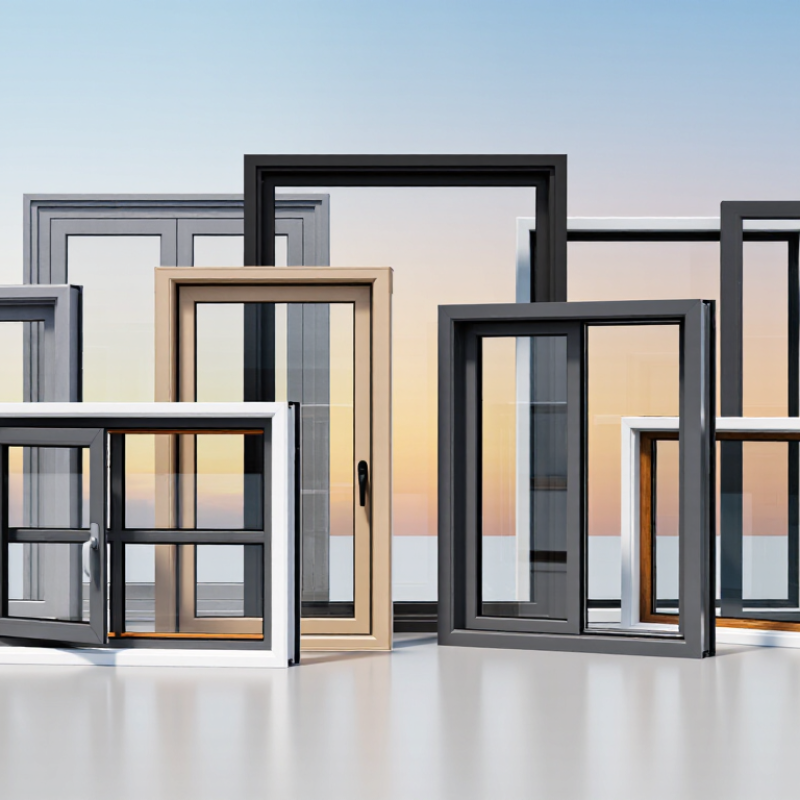
| 1 | Thermally broken triple-glazed casement window | Polyamide thermal barrier, insulated frame cavities, compression seals, and low-conductivity spacers | Triple insulating glass; two low-emissivity coatings; argon fill; warm-edge spacer | 0.75–1.10 W/m²·K | 0.30–0.45 | 0.55–0.70 | Cold, alpine, and heating-dominated climates | Three glass layers and a thermally separated frame reduce conductive and radiant heat transfer. |
| 2 | Thermally broken double-glazed tilt-and-turn window | Continuous thermal break, multi-point locking, and compression gaskets on the opening sash | Double low-e insulating glass; argon fill; warm-edge spacer | 1.10–1.50 W/m²·K | 0.35–0.50 | 0.55–0.75 | Mixed climates and energy-efficient residential buildings | The compression closure generally provides better air control than a sliding opening of similar size. |
| 3 | Thermally broken low-solar-gain casement window | Insulated aluminum sections, thermal-isolator zones, and high-performance perimeter seals | Double or triple low-e solar-control glass; argon fill | 1.00–1.45 W/m²·K | 0.25–0.35 | 0.45–0.65 | Hot climates and façades with strong solar exposure | Low solar heat gain reduces cooling demand while the thermal break limits heat flow through the frame. |
| 4 | Thermally broken fixed picture window | Thermal-break frame with minimal operating hardware and continuous perimeter sealing | Double or triple low-e insulating glass; argon or krypton fill | 0.70–1.20 W/m²·K | 0.30–0.50 | 0.55–0.75 | Large glazed areas in passive or low-energy buildings | Fixed windows have fewer moving joints, helping reduce air leakage and improve whole-window performance. |
| 5 | Thermally improved aluminum lift-and-slide door window | Insulated sliding tracks, thermal break, interlocking meeting stiles, and brush or compression seals | Double or triple low-e safety glass; argon fill; warm-edge spacer | 1.20–1.80 W/m²·K | 0.30–0.45 | 0.50–0.70 | Warm and mixed climates requiring wide openings | Thermal separation improves performance, while appropriately designed seals limit leakage around large sliding panels. |
| 6 | Thermally broken awning or hopper window | Insulated aluminum frame, compression seals, and a sash that closes tightly against the gasket | Double low-e insulating glass; argon fill; warm-edge spacer | 1.10–1.55 W/m²·K | 0.30–0.50 | 0.55–0.75 | Mixed climates, basements, bathrooms, and controlled ventilation areas | Compression hardware and gasket contact can provide good air tightness when correctly installed and adjusted. |
| 7 | Thermally broken horizontal sliding window | Insulated frame, interlocking sash profiles, drainage design, and replaceable weather seals | Double low-e insulating glass; argon fill; warm-edge spacer | 1.40–2.00 W/m²·K | 0.30–0.50 | 0.50–0.70 | Moderate climates and projects prioritizing space-saving operation | The thermal break reduces frame conduction, although sliding systems usually require careful seal and track design. |
| 8 | Thermally broken skylight or roof window | Insulated aluminum curb or frame, thermal separators, moisture drainage, and robust compression gaskets | Double or triple laminated low-e glass; argon fill; solar-control option | 1.00–1.60 W/m²·K | 0.25–0.45 | 0.45–0.65 | Daylighting applications, subject to roof orientation and solar exposure | Low-e glazing controls heat transfer and solar gain; correct flashing and installation are essential to avoid thermal bridges. |
| 9 | Thermally broken narrow-frame commercial curtain-wall window | Thermally improved mullions, pressure-equalized drainage, insulated back pans, and sealed glazing pockets | Double or triple low-e insulating glass; argon fill; warm-edge spacer | 1.20–1.80 W/m²·K | 0.25–0.45 | 0.45–0.70 | Office buildings and large glazed commercial façades | Thermal improvements at mullions, spandrels, glass edges, and interfaces reduce repeating thermal bridges. |
| 10 | Recycled-aluminum thermally broken window | Thermally separated frame made with a high recycled-content aluminum alloy, insulated cavities, and durable seals | Double or triple low-e insulating glass; argon fill; warm-edge spacer | 1.00–1.70 W/m²·K | 0.30–0.50 | 0.50–0.75 | Projects combining operational energy efficiency with lower embodied carbon | Recycled content primarily reduces embodied energy; the operational performance depends on the thermal break, glazing, seals, and installation. |

.svg)