| Ingredient Preparation | Gelatin or pectin hydration | Hydration temperature: 20–60 °C, depending on the gelling system | Uniform hydration with no visible lumps | Visual inspection, mixing-time record, and viscosity check | Incomplete hydration can cause weak gel structure, surface defects, and higher rejection rates. |
| Sugar Syrup Cooking | Soluble-solids concentration | Approximately 75–82 °Brix before final adjustment | Consistent °Brix for every batch | Calibrated refractometer at a controlled sample temperature | Low solids may produce sticky candy and poor demolding; excessive solids may create hard texture and shrinkage. |
| Syrup Cooking | Cooking temperature | Approximately 105–125 °C, formulation dependent | Use the validated temperature profile for the selected recipe | Sanitary temperature probe with batch-record logging | Overheating can darken the syrup and damage flavor; undercooking increases residual moisture and reduces shelf stability. |
| Gel Addition | Gelatin or pectin addition temperature | Commonly about 60–90 °C, depending on the gelling agent | Low enough to protect the gel system but high enough for complete dispersion | In-line or batch temperature measurement | Excessive heat can reduce gel strength, while insufficient heat may create unmixed particles and inconsistent texture. |
| Color and Flavor Mixing | Mixing uniformity | Typically 3–10 minutes after ingredient addition | No visible color streaks or flavor concentration zones | Color comparison, sensory inspection, and periodic sampling | Uniform mixing improves visual consistency and reduces batches rejected for shade or flavor variation. |
| Depositing | Deposit temperature and viscosity | Often about 70–95 °C for cooked gummy masses | Stable flow without premature setting or excessive stringing | Temperature log, deposit-weight check, and nozzle inspection | Incorrect viscosity affects cavity filling, piece weight, tip definition, and mold-to-mold consistency. |
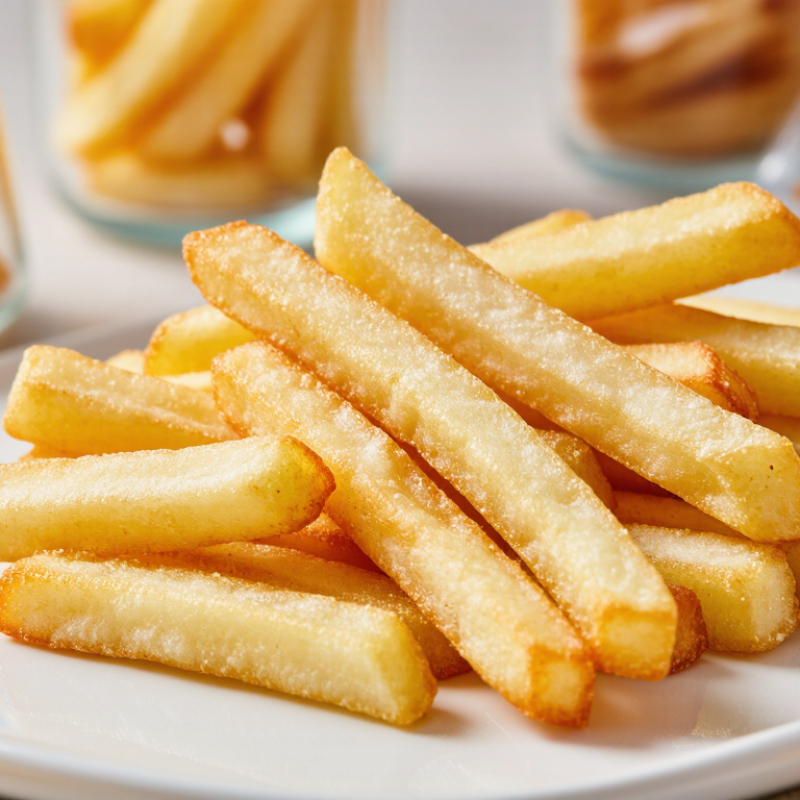
| French-Fry Shape Molding | Cavity fill accuracy | Target fill level generally within ±2–5% of the cavity volume | Complete filling of the fry-shaped cavity without overflow | Visual cavity inspection and filled-piece weight measurement | Underfilling causes short or incomplete pieces; overfilling creates flash, sticking, and trimming losses. |
| Molding Accuracy | Finished piece dimensions | Typical dimensional tolerance: approximately ±1–2 mm for small molded pieces | Consistent length, width, thickness, and end shape | Caliper measurement using a defined sampling plan | Dimensional control supports recognizable French-fry geometry and reduces visual rejects during inspection. |
| Setting and Cooling | Setting temperature and time | Approximately 10–25 °C for 30 minutes to several hours, depending on formulation and mold type | Firm gel structure before demolding | Room-temperature and product-core temperature checks; texture test | Insufficient setting increases deformation and breakage; excessive exposure can cause moisture loss and surface hardening. |
| Demolding | Piece release rate | Common production target: at least 98% clean release | Minimal tearing, sticking, or shape distortion | Count released pieces and classify defects by type | Poor release directly lowers first-pass yield and may require rework or disposal of damaged pieces. |
| Drying or Conditioning | Moisture content and water activity | Moisture and water activity are recipe-specific; many gummy products are controlled near aw 0.60 or below | Validated water activity that supports the intended shelf life and texture | Moisture analyzer and calibrated water-activity meter | High water activity increases stickiness and microbial risk; excessive drying causes hard, brittle texture and weight loss. |
| Surface Finishing | Oil, sugar, or sour-coating coverage | Typically controlled by coating weight gain, often about 1–5% depending on the finish | Even coating with no exposed wet patches or heavy agglomeration | Before-and-after weight measurement and visual inspection | Uneven coating affects appearance, flavor distribution, package cleanliness, and saleable yield. |
| Final Inspection | Piece-weight variation | Common internal control limit: approximately ±5% from nominal weight | Stable average weight within the approved specification | Random weight checks using a calibrated scale | Weight variation can indicate inconsistent depositing and may create net-weight compliance concerns. |
| Packaging | Finished-product yield | Typical overall first-pass yield: approximately 85–95%, depending on recipe, equipment, and rework policy | Track material yield, saleable yield, and rework separately | Batch mass balance from cooked mass to packed finished product | Mass-balance tracking identifies losses from transfer, trimming, sticking, drying, rejects, and packaging-line spillage. |

.svg)