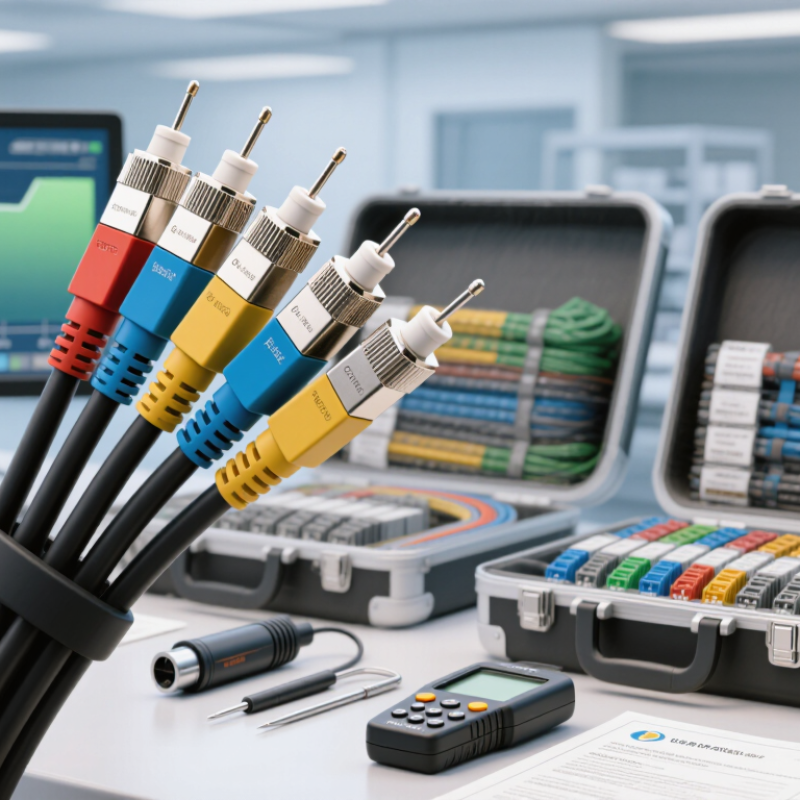
When comparing ten MPO cable manufacturers, start with test evidence, not a polished specification sheet. Ask whether each assembly receives insertion-loss and return-loss testing, and whether results are recorded by channel. A multichannel trunk should be checked for polarity, fiber mapping, and connector-face condition. Request sample reports tied to serial or lot numbers. Small details matter. A clean-looking connector can still have contamination under magnification.
Use the same test conditions when comparing results. Check the reference cords, wavelength, launch method, and acceptance limits. Manufacturers may quote different limits or use different setups, so headline figures are not always comparable. Ask how they verify performance after mating cycles, temperature exposure, or cable flexing when these tests match your installation. Do not assume every supplier runs every test. That is worth checking.
Quality control also shows up in the process. Look for documented calibration, operator training, incoming-fiber checks, and corrective-action records. Verify that compliance documents identify the exact cable construction and applicable market requirements; generic certificates prove little. If your project has specific fire, material, or environmental criteria, confirm the scope in writing before ordering. Compare lead-time promises with capacity, traceability, and change control. One awkward point: a low-loss sample may not represent routine production. Ask for production-lot data, then review it independently when the project’s risk justifies the effort.

.svg)