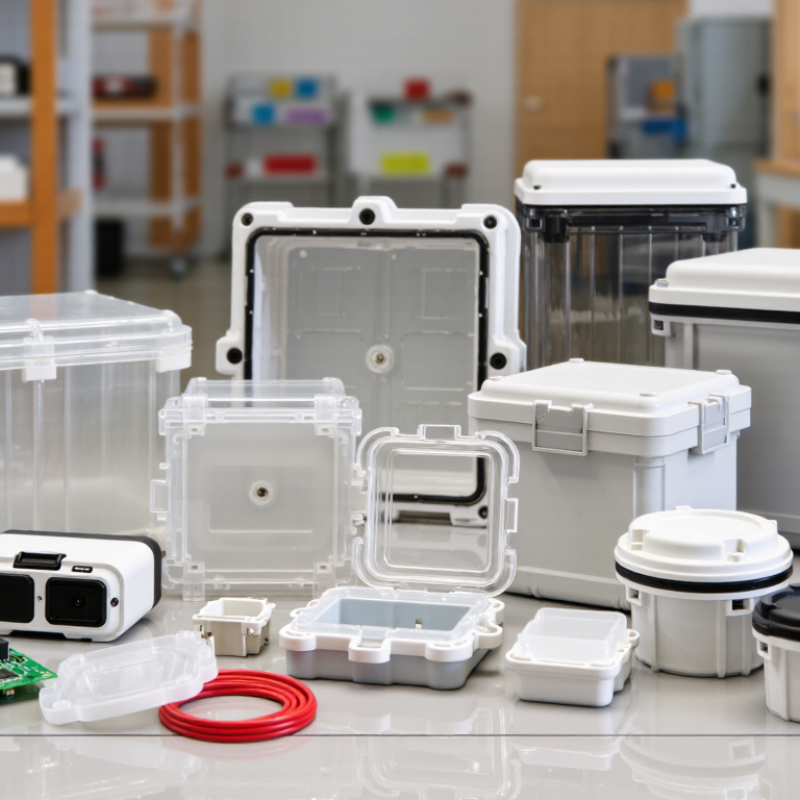
| Manufacturing Process | Injection molding, compression molding, CNC machining, or vacuum forming | Injection molding is commonly used for repeat production; CNC machining is suitable for prototypes and low volumes | The process affects tooling cost, surface quality, production volume, and unit price | Process capability statement, sample parts, and production photographs |
| Material Selection | Material grade, flame rating, UV resistance, chemical resistance, and operating temperature | ABS, polycarbonate, PC/ABS, polypropylene, and nylon are widely used enclosure materials | Material properties determine mechanical strength, insulation, durability, and environmental performance | Material datasheet, resin traceability, and compliance documentation |
| Ingress Protection | Protection against dust and water under the intended installation conditions | Typical requirements range from IP54 for limited protection to IP65 or higher for demanding outdoor applications | A suitable IP rating helps protect electronics from dust, moisture, and water jets | Test report or certification based on IEC 60529, when required |
| Flammability Performance | Flame-retardant grade and application-specific safety requirements | UL 94 classifications include HB, V-2, V-1, and V-0; the appropriate level depends on the product design | Flammability performance can be important for electrical, industrial, and enclosed electronic equipment | Current material certification and a clear indication of the tested material thickness |
| Dimensional Capability | Part tolerances, wall thickness control, flatness, hole position, and assembly fit | Required tolerances depend on material, geometry, tooling, and the relevant engineering drawing | Consistent dimensions reduce assembly problems and improve interchangeability | Inspection report, drawing review, gauges, and first-article approval process |
| Customization Range | Custom geometry, mounting features, vents, windows, hinges, latches, inserts, and cable glands | Customization may require new tooling, tool modification, or secondary operations | A broader capability can reduce the need for additional assembly or machining suppliers | Capability matrix, engineering review, and representative customized samples |
| Surface Finish | Texture, gloss level, color consistency, printing, laser marking, painting, and coating | SPI and comparable mold-texture references are commonly used to define molded surface appearance | Surface requirements influence product appearance, scratch visibility, and brand presentation | Approved color samples, finish standards, and documented visual inspection criteria |
| Tooling and Development | Tool design, mold-flow review, prototype method, tool ownership, and engineering change control | Prototype validation before mass production is a standard risk-reduction practice | Structured development reduces late design changes, tooling rework, and launch delays | Development schedule, design review records, prototype approval, and tool-maintenance plan |
| Quality Management | Inspection procedures, process controls, corrective actions, and lot traceability | ISO 9001 is a commonly recognized framework for quality management systems | Documented controls improve consistency and support corrective action when defects occur | Valid certificate, control plan, inspection records, and nonconformance procedure |
| Production Capacity | Available molding machines, number of cavities, shift pattern, and capacity allocation | Capacity should be assessed against forecast demand, peak demand, and backup requirements | Adequate capacity helps protect delivery performance during demand changes | Capacity plan, equipment list, utilization data, and contingency plan |
| Lead-Time Planning | Tooling lead time, sampling time, production lead time, and shipping time | Lead times vary by tooling complexity, order quantity, material availability, and inspection requirements | Accurate planning supports inventory control and reliable product launches | Written quotation with milestone dates, production assumptions, and escalation contacts |
| Global Logistics | Export packaging, shipping terms, documentation, palletization, and delivery destinations | Incoterms such as EXW, FOB, CIF, and DDP define different cost and risk responsibilities | Clear logistics responsibilities help prevent unexpected freight costs and customs delays | Incoterms-based quotation, packaging specification, commercial invoice, and packing list sample |
| Regulatory Compliance | Applicable requirements for electrical safety, restricted substances, chemicals, and market access | Requirements may include RoHS, REACH, CE-related technical documentation, or other market-specific rules | Compliance documentation supports legal sale and customer qualification in target markets | Declaration of conformity, test reports, substance declarations, and technical files where applicable |
| Commercial Evaluation | Unit price, tooling charge, minimum order quantity, payment terms, warranty, and total landed cost | The lowest unit price is not always the lowest total cost after tooling, inspection, freight, rejects, and inventory are included | A total-cost comparison supports better long-term supplier decisions | Itemized quotation, payment terms, warranty conditions, quality-cost assumptions, and reference calculations |

.svg)