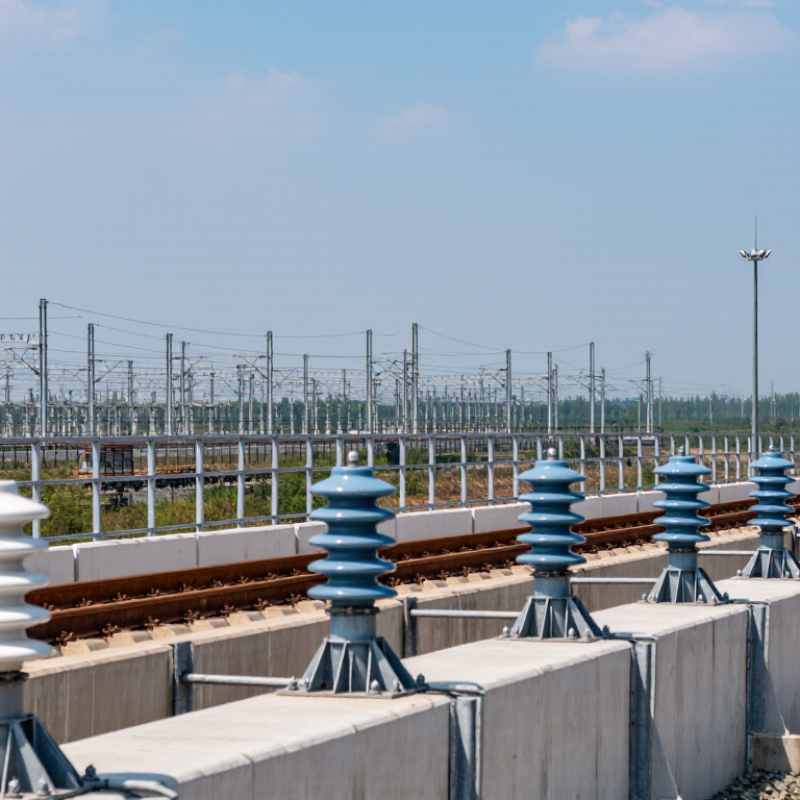
| Third-rail support insulator | Porcelain or polymer composite | Between the third rail and its supporting brackets or sleepers | Supports the conductor rail and electrically isolates it from the track structure | System voltage, mechanical load, clearance, contamination, moisture, and mounting arrangement |
| Overhead contact-line insulator | Porcelain, toughened glass, or polymer composite | Contact-line supports, cantilevers, and suspension assemblies | Separates energized overhead conductors from poles and other grounded structures | Electrical rating, creepage distance, mechanical strength, weather exposure, and fitting compatibility |
| Section insulator | Insulating polymer or ceramic components with conductive fittings | At boundaries between electrically separated overhead contact-line sections | Allows a pantograph to pass while maintaining electrical separation between sections | Line voltage, pantograph compatibility, operating speed, alignment, and wear performance |
| Traction substation support insulator | Porcelain or polymer composite | Busbars, switchgear, and other equipment in traction substations | Supports energized conductors while insulating them from grounded equipment or structures | Rated voltage, short-circuit forces, installation environment, dimensions, and connection hardware |
| Disconnect-switch insulator | Porcelain or polymer composite | Traction power switching and isolation equipment | Insulates and supports switch components under normal operating and specified fault conditions | Voltage and current ratings of the assembly, mechanical loading, pollution level, and interface dimensions |
| Feeder and cable termination insulator | Polymer composite or porcelain, depending on the equipment design | Connections between traction feeders, cables, and overhead or third-rail equipment | Provides electrical insulation and mechanical support at conductor or cable interfaces | Cable or conductor type, voltage rating, creepage distance, sealing, and installation conditions |

.svg)