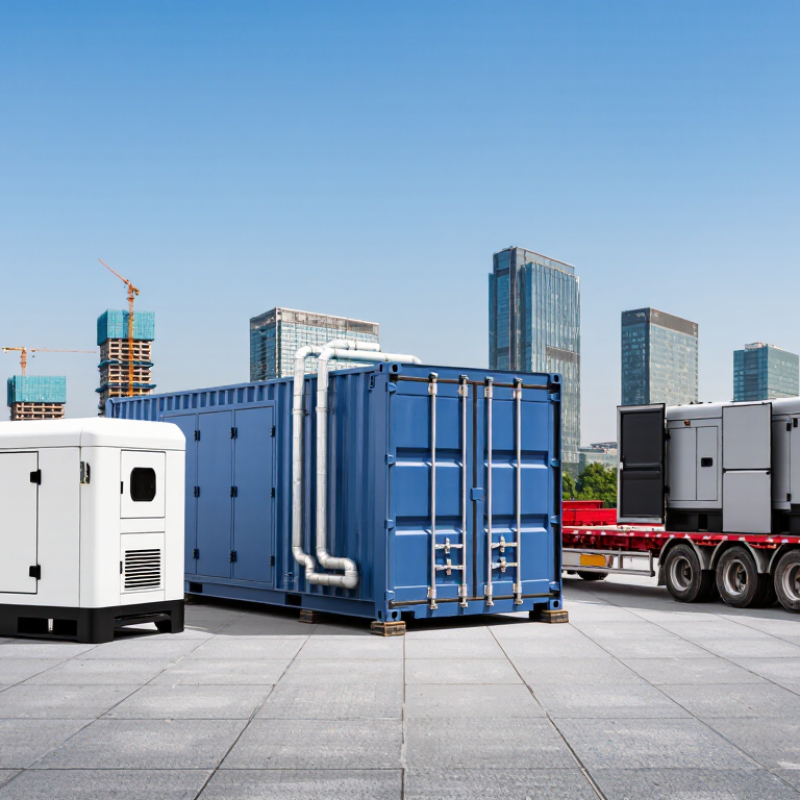
| Portable silent diesel set | Approximately 5–20 kW for many compact models; actual ranges vary by design. | Compact, generally moved by hand or vehicle. Usually needs a level surface, safe outdoor placement, and suitable electrical connections. | Many sound-attenuated models are designed for roughly 65–75 dB(A) at 7 m; check the specific model’s test conditions. | Small worksites, outdoor events, temporary retail, farms, and backup for selected household or small-business loads. | Easy to transport and deploy; relatively small footprint; useful where power needs are temporary or modest. | Lower output and fuel capacity than larger sets; runtime depends on tank size and load; not all models include road-ready towing equipment. |
| Trailer-mounted silent diesel set | Approximately 20–500 kW across common rental and temporary-power applications. | Mounted on a towable trailer for relocation by a suitable vehicle. Requires a safe parking area, access for delivery, and correctly rated cables. | Sound-attenuated versions are often specified around 65–75 dB(A) at 7 m, but enclosure, load, and measurement method affect results. | Construction sites, roadworks, emergency response, temporary facilities, and events requiring higher-capacity mobile power. | Combines substantial output with easier relocation; often available with larger fuel tanks and practical service access. | Needs towing and maneuvering space; transport rules and site access may apply; typically larger and heavier than portable units. |
| Stationary silent diesel set | Approximately 10–3,000 kW or more, depending on the installation and duty rating. | Installed at a fixed site, commonly on a prepared base with permanent fuel, exhaust, ventilation, and electrical provisions. | Enclosed models may be engineered for low-noise operation; published levels vary widely by enclosure and installation, so compare model-specific ratings. | Building standby power, data and communications facilities, hospitals, industrial sites, and continuous or prime-power applications. | Supports larger loads and permanent integration; can be configured for automatic standby operation and site-specific noise control. | Higher installation and civil-work requirements; relocation is difficult; ventilation, exhaust routing, fuel storage, and maintenance access need planning. |
| Comparison note: Capacity figures are indicative market ranges, not guaranteed limits. Generator ratings, runtime, and acoustic performance depend on the model, duty rating, load, enclosure, distance, and test method. Sound levels shown at 7 m are approximate reference values where stated; verify the manufacturer’s rating and local noise requirements before selection. |

.svg)