Top 10 Steel Framework Suppliers Worldwide for Global Buyers
Global construction depends on steel that can carry weight, resist weather, and arrive on schedule. The World Steel Association’s World Steel in Figures 2024 reports approximately 1.89 billion tonnes of crude steel production in 2023. That enormous output supports buildings, warehouses, bridges, factories, and infrastructure across every major market.
Yet production volume does not guarantee dependable Steel Framework performance. The OECD Steel Committee has repeatedly highlighted persistent global excess capacity and changing trade conditions. These pressures can affect quotations, lead times, certifications, and material availability. Global buyers therefore need more than a low unit price. They must examine engineering capability, welding controls, traceability, corrosion protection, packaging, and export experience.
This guide reviews the Top 10 Steel Framework Suppliers Worldwide for Global Buyers through those practical criteria. It considers manufacturing scale, documented quality systems, project experience, customization, delivery coordination, and communication. References include World Steel Association statistics, OECD steel industry analysis, and internationally recognized standards such as ISO 9001 and EN 1090. These sources provide useful context, although supplier data is not always measured consistently.
No ranking removes every uncertainty. A supplier may present impressive factory images yet lack reliable site support. Another may offer excellent engineering but struggle with urgent production. Buyers should verify certificates, inspect samples, clarify tolerances, and request recent project references before signing contracts. That extra work matters. Steel Framework is not merely a fabricated product; it is a structural decision with long-term safety, cost, and maintenance consequences.
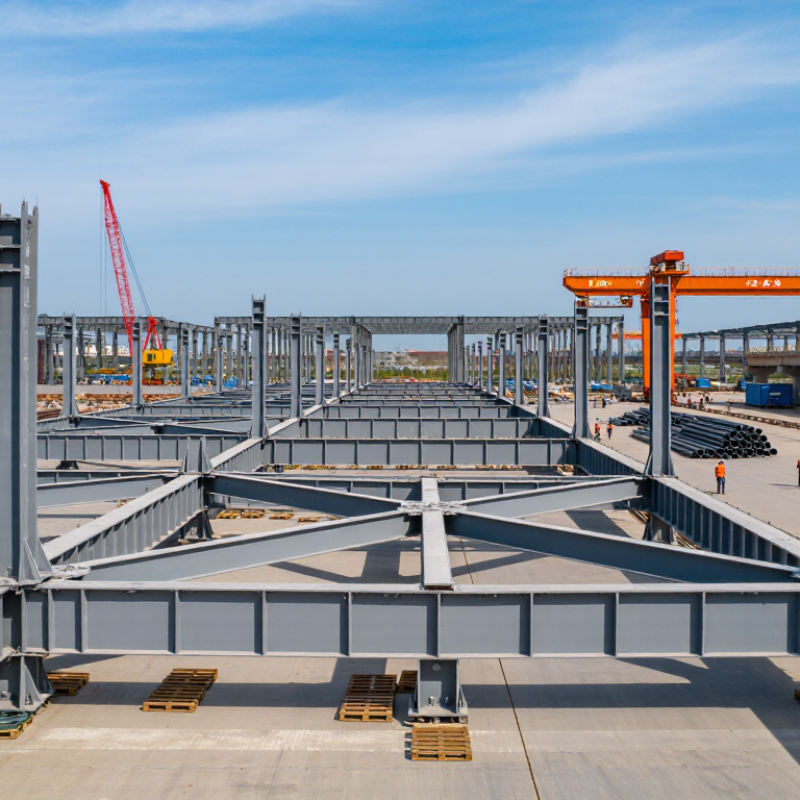
Definition and Scope of Steel Framework Suppliers
Steel framework suppliers are companies that engineer, manufacture, and deliver load-bearing steel systems for construction projects. Their work may include columns, beams, trusses, portals, modular frames, and connection plates. Some also provide detailing, surface treatment, factory inspection, and site assembly. The definition is broader than “steel fabricator.” A fabricator may only cut and weld components, while a full-service supplier manages design coordination, production, logistics, and installation.
The scope covers suppliers serving warehouses, industrial plants, commercial buildings, bridges, stadiums, and temporary structures. It also includes firms producing standardized sections and those delivering custom-engineered frames. According to World Steel Association’s World Steel in Figures 2024, global crude steel output reached about 1.89 billion tonnes in 2023. This scale supports a wide supplier base, but production volume alone does not prove project capability. A smaller specialist may handle complex connections better. That distinction matters.
Global buyers should examine certified welding systems, traceability records, dimensional tolerances, and delivery performance. ISO 3834 supports quality requirements for fusion welding, while EN 1090 addresses execution controls for structural steelwork in relevant markets. The International Energy Agency has reported that steel production contributes roughly 8% of global energy-related emissions. Therefore, supplier scope increasingly includes recycled content, energy records, and emissions reporting. These claims need evidence, not attractive wording. The boundary is not always clean. Some suppliers outsource fabrication, which can weaken traceability unless responsibilities are clearly documented.
Top 10 Steel Framework Suppliers Worldwide for Global Buyers
Definition and Scope of Steel Framework Suppliers
This chart uses 2023 crude steel production by country as an objective indicator of steel supply capacity. Steel framework suppliers include manufacturers, fabricators, and exporters that provide structural steel components for construction, industrial, infrastructure, and commercial projects. Production figures are reported in million metric tonnes and are used as a country-level market proxy rather than company-level supplier data.
Regional Overview of the Top 10 Steel Framework Suppliers
The top ten steel framework suppliers serve different regional strengths and project needs. East Asian suppliers often combine high-volume fabrication with automated welding lines. Their facilities commonly produce columns, trusses, and modular frames for warehouses and industrial plants. Quality records can be strong, but communication delays may affect urgent revisions.
European suppliers usually emphasize engineering documentation, traceability, and energy-efficient production. Many support complex commercial buildings, transport facilities, and retrofit projects. North American suppliers often focus on rapid delivery, local code knowledge, and heavy structural systems. In the Middle East, several leading suppliers provide corrosion-resistant frames for hot, dusty environments. South Asian manufacturers can offer competitive pricing and flexible fabrication, although inspection capacity may vary between factories. That difference matters.
Tips: Compare suppliers by regional experience, not price alone. Request mill certificates, weld inspection reports, coating specifications, and recent project references. Confirm design responsibility before signing. A clear approval process prevents expensive changes later. Buyers should also check port access, local erection support, and spare material allowances. Small omissions can disrupt a large schedule. An independent engineer can review loading assumptions and connection details. This step may feel slow, yet it often exposes weak tolerances, incomplete drawings, or unrealistic delivery promises. Supplier rankings are useful guides, but actual performance depends on factory discipline, project supervision, and honest technical communication.
Product Capabilities, Certifications, and Project Experience
Top 10 Steel Framework Suppliers Worldwide for Global Buyers
Product capabilities, certifications, and project experience should guide every serious supplier comparison. A strong supplier can produce hot-rolled frames, welded assemblies, light-gauge sections, and modular steel units. Some also provide CNC cutting, drilling, blasting, and protective coating. These services reduce coordination between design and fabrication teams.
Ask for measurable evidence. Review ISO 9001 quality systems, ISO 14001 environmental practices, and relevant welding qualifications. EN 1090, AWS D1.1, or equivalent standards may suit different project regions. Certification alone is not enough. Check its scope, validity, and issuing body. Request mill certificates, weld inspection records, coating reports, and bolt traceability documents.
Project experience reveals practical ability. Examine completed warehouses, industrial plants, bridges, or multi-level commercial structures with similar spans and loads. Detailed shop drawings, BIM files, load calculations, and delivery schedules show stronger control. Site photographs help, but independently verified references are more useful. A supplier should explain how it managed tight tolerances, damaged coatings, or late design changes.
A ranking can still mislead. A large factory may struggle with a small custom order. A smaller workshop may lack export logistics. I would compare production capacity, response time, inspection procedures, and after-sales support together. Ask difficult questions. Good answers are usually specific. Some supplier documents look impressive but contain outdated project data, so every claim deserves careful verification.

.svg)


