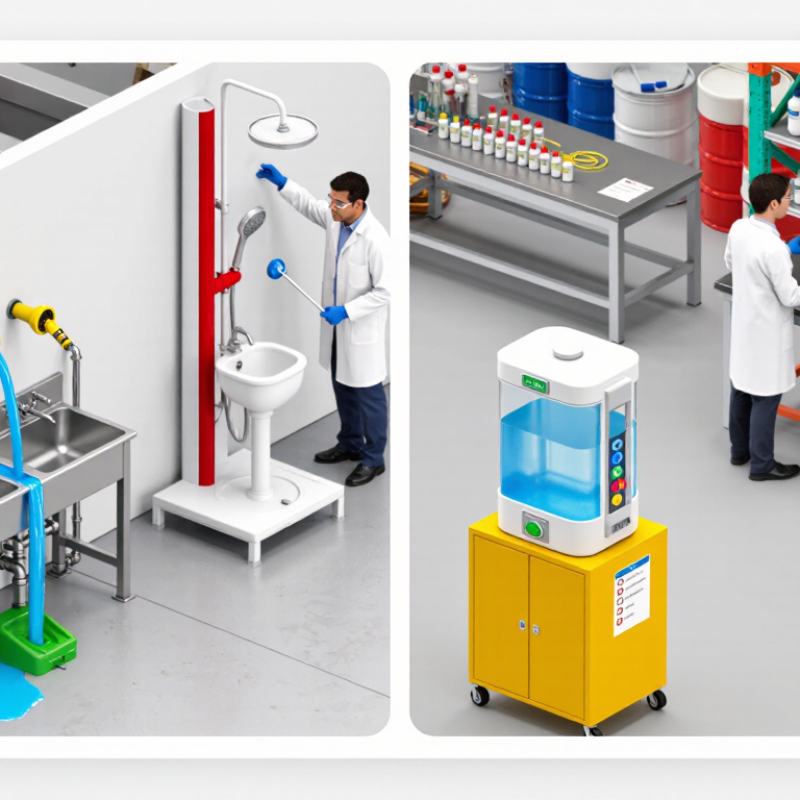
| Floor-Mounted Plumbed Combination Station | A safety shower and eyewash are installed together on a floor-mounted assembly. | Connected to a reliable potable-water supply and drainage arrangement as required by the site. | Fixed work areas where chemical exposure is a foreseeable risk and plumbing is available. | Keep the route clear and the unit readily accessible. Confirm water supply, temperature, drainage, and installation requirements for the selected equipment. |
| Wall-Mounted Plumbed Combination Station | An eyewash and overhead shower are mounted on or supported near a wall. | Connected to a fixed water supply. | Laboratories, production spaces, and other locations where a wall installation suits the layout. | Check that the wall and surrounding area allow unobstructed access and that the shower and eyewash can be operated as intended. |
| Recessed or Enclosed Combination Station | Some or all of the equipment is set into an enclosure or wall recess. | Typically connected to fixed plumbing. | Indoor facilities where space, equipment protection, or a tidier installation is important. | Ensure doors, covers, or enclosures do not delay access or interfere with operation. Include the unit in inspection and maintenance routines. |
| Freeze-Protected Plumbed Combination Station | A combination unit designed for locations where freezing conditions may affect exposed water lines or components. | Fixed plumbing with a freeze-protection approach appropriate to the installation, such as protected piping or a suitable heated enclosure. | Outdoor or unheated areas exposed to low temperatures. | Choose equipment and protection based on local conditions and the installation design. Verify that the unit remains ready for use during cold weather. |
| Self-Contained Tank-Fed Combination Station | A shower and eyewash supplied by a dedicated stored-water tank rather than a continuous plumbing connection. | Onboard tank; capacity and usable duration depend on the specific model and setup. | Sites without a dependable water connection or temporary work areas where a suitable stationary installation is not practical. | Requires scheduled inspection, cleaning, water replacement or treatment as specified by the manufacturer, and confirmation that the available supply is adequate for the hazard assessment. |

.svg)