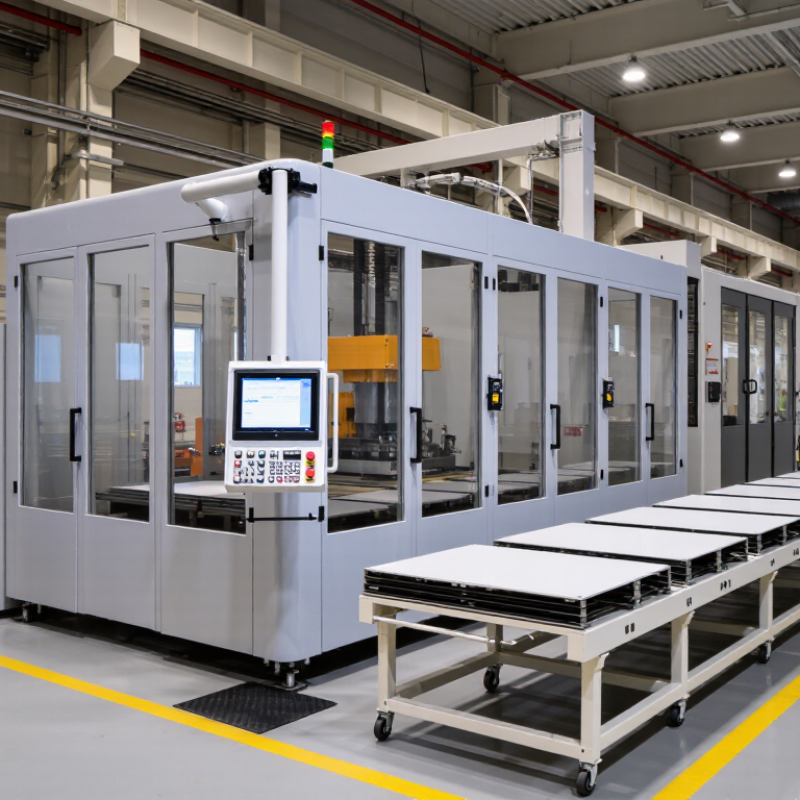
| Machine Function | Integrated U panel cutting, sewing, webbing attachment, top and bottom assembly, and inspection | Designed for multi-step production of flexible intermediate bulk container panels | Combining related operations can reduce material handling, alignment errors, and production interruptions. | ★★★★★ |
| Bag Construction | U panel body with separate side, top, bottom, lifting loop, and discharge components | Suitable for common 4-panel and U panel bulk bag structures | U panel construction can provide reliable load distribution and is widely used for industrial bulk packaging. | ★★★★★ |
| Compatible Materials | Woven polypropylene fabric, coated or uncoated fabric, webbing, thread, and optional liner materials | Material selection depends on bag design, safe working load, coating, and end-use requirements | Material compatibility affects seam quality, fabric feeding, machine wear, and finished-bag performance. | ★★★★★ |
| Production Capacity | Automatic or semi-automatic production line matched to the required bag design | Common practical output is approximately 80–250 bags per shift, depending on product complexity, labor, and automation level | Output should be evaluated using the buyer’s actual bag dimensions, sewing operations, shift length, and changeover frequency. | ★★★★★ |
| Working Width | Adjustable fabric and panel handling area | Often configured for fabric widths of approximately 800–1,600 mm, subject to machine design | A suitable working width helps accommodate different bag sizes without excessive fabric folding or rework. | ★★★★☆ |
| Sewing Capability | Heavy-duty lockstitch, chain-stitch, or combination sewing units with adjustable stitch settings | Typical stitch density is approximately 3–8 stitches per inch, depending on seam design and fabric | Correct stitch selection supports seam strength, appearance, production speed, and compliance with bag specifications. | ★★★★★ |
| Safe Working Load Support | Configuration selected for standard industrial bulk bags and reinforced lifting-loop structures | Many FIBC designs are specified for safe working loads of approximately 500–2,000 kg | Machine capability must match the required seam strength and the finished bag’s certified load rating. | ★★★★★ |
| Automation Level | Servo-driven feeding, programmable positioning, automatic thread trimming, and sensor-based fabric detection | Manual, semi-automatic, and fully automatic configurations are available | Higher automation can improve repeatability and reduce dependence on operator experience, but usually increases investment. | ★★★★☆ |
| Changeover Flexibility | Recipe storage and adjustable guides for different bag dimensions and attachment layouts | Changeover time varies widely; efficient systems can complete routine adjustments within approximately 15–45 minutes | Fast changeover is important for buyers producing multiple bag sizes or serving diverse export markets. | ★★★★★ |
| Electrical Compatibility | Control cabinet configurable for the destination market | Common industrial supplies include 380–415 V, three-phase, 50 Hz; local electrical specifications must be confirmed | Correct voltage, frequency, phase, and safety components help prevent installation delays and electrical faults. | ★★★★★ |
| Compressed Air Requirement | Pneumatic clamps, cutters, fabric guides, or lifting-loop positioning units where required | Typical requirement is approximately 0.6–0.8 MPa clean, dry compressed air | Stable air pressure is necessary for consistent pneumatic movement and reliable automatic operation. | ★★★★☆ |
| Quality Control | Seam inspection, fabric alignment checks, stitch monitoring, and final dimensional verification | Quality checks should cover dimensions, stitching, lifting loops, seams, closures, and visible defects | Consistent inspection reduces leakage, load failure, customer complaints, and export rejection risks. | ★★★★★ |
| Safety Features | Emergency stops, needle guards, belt covers, interlocked access points, and overload protection | Safety design should follow applicable machinery and workplace safety requirements in the destination market | Good guarding and emergency controls protect operators and support safer long-term production. | ★★★★★ |
| Energy Efficiency | Servo motors, automatic standby mode, efficient drive systems, and optimized pneumatic usage | Energy consumption depends on motor count, sewing speed, automation level, and operating hours | Lower idle consumption can reduce operating costs for plants running multiple shifts. | ★★★★☆ |
| Installation Footprint | Modular layout with accessible maintenance and material-loading areas | Overall space commonly ranges from approximately 20–80 m² for the machine and operator access, depending on line length | Floor planning must include fabric storage, work-in-process movement, inspection, and safe operator clearance. | ★★★★☆ |
| Maintenance Requirements | Routine cleaning, needle and thread checks, lubrication, belt inspection, sensor cleaning, and calibration | Daily operator checks plus scheduled preventive maintenance are generally required | Preventive maintenance helps preserve stitch quality, reduce downtime, and extend the service life of moving components. | ★★★★★ |
| Operator Training | Touchscreen controls, visual work instructions, stored recipes, and guided fault messages | Basic operation can often be learned in several days; advanced maintenance requires additional technical training | Clear controls shorten the learning curve and improve consistency when operators or production lines change. | ★★★★☆ |
| Export Readiness | Multilingual manuals, standard electrical documentation, spare-parts lists, and remote troubleshooting support | Documentation should include machine specifications, wiring diagrams, maintenance schedules, and safety instructions | Complete documentation simplifies customs clearance, installation, staff training, and after-sales service. | ★★★★★ |
| Best-Fit Buyer Profile | Manufacturers producing medium or high volumes of woven polypropylene bulk bags with repeatable designs | Most suitable where standardized U panel products justify dedicated equipment | Buyers should compare automation and capacity with actual order volume rather than choosing the most complex configuration. | ★★★★★ |
| Selection Principle for 2026 | Choose the configuration that balances output, seam quality, flexibility, safety, serviceability, and total operating cost | No single machine is optimal for every bag size, construction, material, or production volume | A needs-based assessment provides a more reliable result than comparing purchase price alone. | ★★★★★ |

.svg)