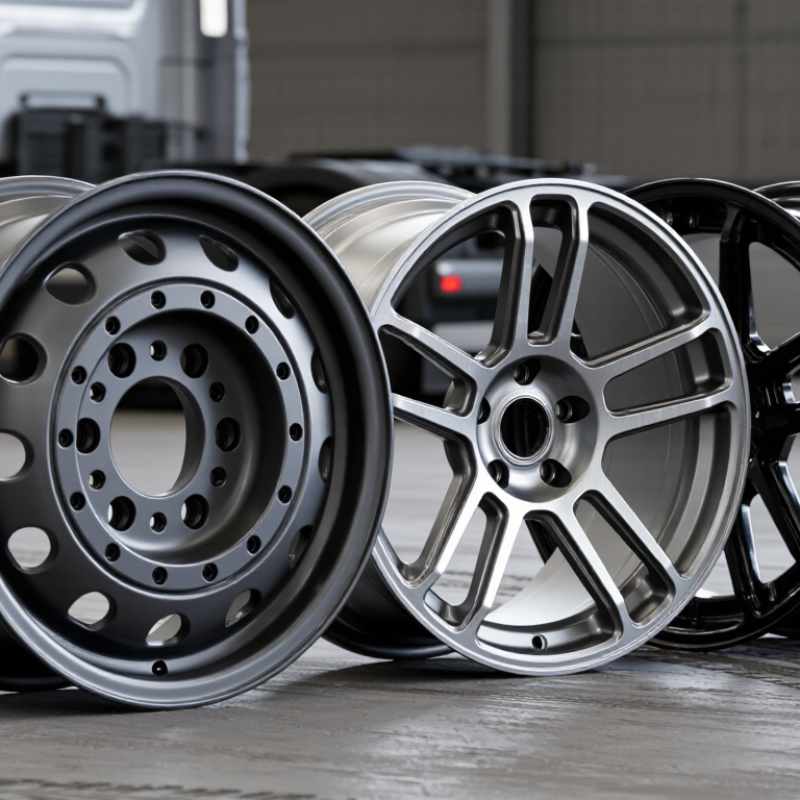
| Stamped steel | Formed steel components joined into a wheel assembly. | Work trucks, fleet vehicles, and many heavy-duty applications. | Generally cost-effective; often repairable; bends may be easier to identify than cracks. | Usually heavier than comparable aluminum wheels and can corrode if the finish is damaged. Confirm load rating and corrosion protection. | Durability, replacement cost, and practical fleet service matter more than minimizing weight. |
| Cast aluminum alloy | Molten aluminum alloy poured into a mold and finished to specification. | Light-duty and many medium-duty trucks, pickups, and road-focused vehicles. | Typically lighter than steel and available in a wide range of designs and sizes. | Impact damage can require replacement rather than repair. Load capacity varies by wheel; check the marked rating and application approval. | You want lower wheel weight and a broader choice of styles while staying within the truck’s rated requirements. |
| Forged aluminum alloy | Aluminum alloy shaped under high pressure, then machined and finished. | Applications where reduced wheel mass or high strength-to-weight performance is important, when a suitable rated wheel is available. | Can offer high strength relative to weight; may reduce unsprung mass compared with a heavier wheel of similar fitment. | Often costs more. Forging alone does not establish suitability; verify the specific wheel’s load rating, dimensions, and approved use. | Weight reduction is a priority and the wheel’s documented capacity meets the truck’s loads. |
| Beadlock-style off-road wheel | Uses a clamping ring to mechanically secure the tire bead on the specified side of the wheel. | Specialized off-road vehicles operating at low tire pressures, if the wheel and tire are designed for that use. | Helps retain the tire bead in certain low-pressure off-road conditions. | Requires correct assembly and maintenance. Road-use legality and inspection rules vary by jurisdiction; confirm before use on public roads. | The truck has a specific off-road need and the wheel is approved for the intended terrain and use. |
| Dual-wheel setup | Two wheels are fitted on each side of the rear axle; the wheels may be steel or aluminum. | Trucks designed for higher rear-axle capacity, such as some heavy-duty pickups and commercial vehicles. | Provides the tire and wheel configuration specified for many higher-capacity rear axles. | Not an interchangeable wheel material type. Requires compatible axle, wheel offset, tire size, spacing, and approved load ratings. | The truck was engineered for dual rear wheels and its intended loads call for that configuration. |

.svg)