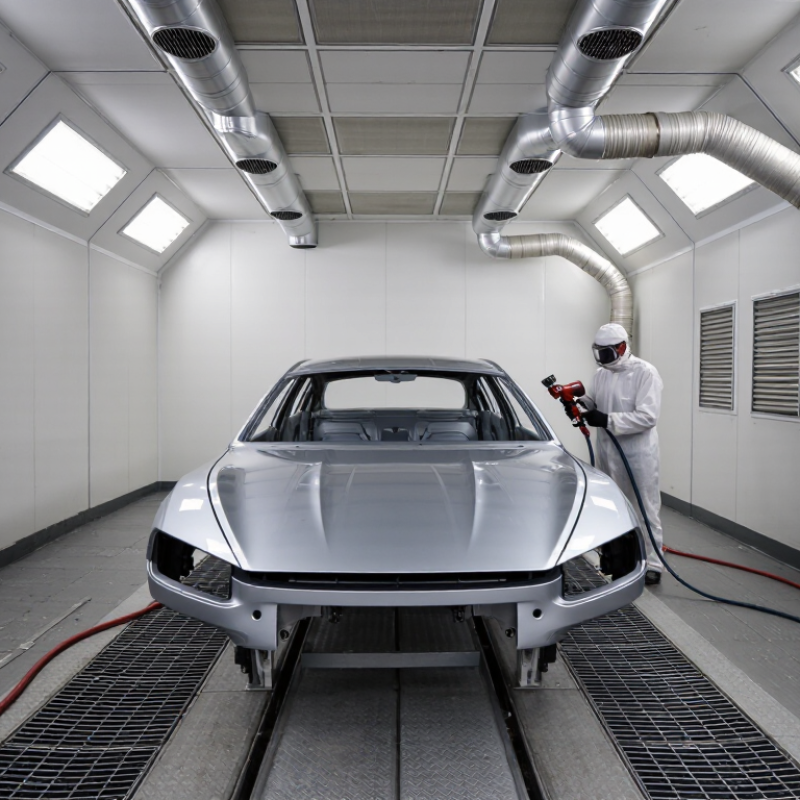
| Primary Function | A vehicle spray booth is an enclosed or semi-enclosed workspace designed for applying automotive coatings under controlled conditions. | It controls airflow, overspray, temperature, lighting, and contamination while directing coating vapors away from workers and ignition sources. | Use the booth only for compatible vehicle refinishing operations and approved coating materials. | Improves finish quality and reduces exposure to hazardous vapors. |
| Airflow Direction | Common configurations include crossdraft, downdraft, side-downdraft, and semi-downdraft airflow systems. | Clean air enters through filtered areas, passes across or down over the vehicle, and exits through exhaust filters and ductwork. | Verify airflow direction before use and investigate any noticeable turbulence, dead zones, or reverse flow. | Poor airflow can increase overspray, vapor accumulation, and coating defects. |
| Air Movement | Many vehicle booths operate with airflow velocities commonly measured around 0.3–0.6 m/s, depending on booth design and applicable requirements. | Controlled air movement carries overspray and solvent vapors toward the exhaust system without disturbing the coating pattern. | Measure and document airflow according to the booth manufacturer’s design specification and local regulations. | The correct value is system-specific; airflow should not be adjusted solely by appearance. |
| Filtration System | Typical systems use intake filters to remove dust and exhaust filters to capture paint particles before air is discharged. | Filters protect the painted surface, reduce contamination of fans and ducts, and limit particulate emissions. | Inspect filters regularly; replace them when loaded, damaged, wet, or when pressure drop exceeds the specified limit. | Clean filters support stable airflow and reduce fire and contamination risks. |
| Exhaust Ventilation | The exhaust fan and ductwork remove solvent vapors, paint mist, and contaminated air from the booth. | Exhaust air is discharged to a suitable location through a dedicated, maintained ventilation route. | Inspect fan blades, belts, bearings, duct joints, and discharge points at scheduled intervals. | Never operate a spray booth with a failed or obstructed exhaust system. |
| Temperature Range | Automotive coatings are often applied within approximately 18–27°C, subject to the coating technical data sheet. | Temperature affects viscosity, atomization, drying time, gloss, and final film performance. | Check booth temperature before spraying and follow the coating manufacturer’s specified application range. | Stable temperature reduces runs, dry spray, solvent popping, and curing problems. |
| Relative Humidity | Many coating processes perform best at moderate humidity, frequently around 40–70% relative humidity, depending on the product. | Humidity influences flash-off, drying, adhesion, blushing, corrosion risk, and static charge behavior. | Monitor humidity with a calibrated hygrometer and apply product-specific limits. | Excessive humidity may cause poor appearance or curing defects. |
| Lighting | Uniform, sealed, low-glare lighting is used to identify surface imperfections, color variation, and coating coverage. | Even illumination helps operators maintain consistent spray distance, overlap, and film coverage. | Clean light panels routinely and replace damaged or unsealed fixtures immediately. | Lighting fixtures must be suitable for the hazardous environment where flammable vapors may be present. |
| Coating Application | Spray guns atomize liquid coating into droplets that are carried toward the vehicle surface by booth airflow. | The operator controls gun distance, travel speed, overlap, pressure, fluid delivery, and spray pattern. | Follow the coating technical data sheet and keep the spray gun clean and correctly adjusted. | Correct technique reduces overspray, waste, and unnecessary vapor generation. |
| Personal Protective Equipment | Typical PPE may include a properly selected respirator, protective clothing, chemical-resistant gloves, eye protection, and safety footwear. | PPE provides protection against inhalation, skin contact, eye exposure, and contamination from coatings and cleaning solvents. | Conduct a workplace hazard assessment, maintain PPE, and fit-test tight-fitting respirators where required. | PPE does not replace effective ventilation, safe work practices, or exposure controls. |
| Respiratory Protection | Respirator selection depends on coating chemistry, exposure assessment, oxygen levels, and applicable workplace rules. | Some coatings may release solvent vapors or hazardous components that require specific respiratory protection. | Use only a respirator program managed by a competent person, including medical evaluation, fit testing, and cartridge control. | Air-purifying respirators must not be used in oxygen-deficient or immediately dangerous atmospheres. |
| Ignition Control | Open flames, smoking, hot work, unapproved electrical equipment, sparks, and static discharge must be controlled. | Many coatings and solvents can form flammable vapor-air mixtures during spraying and cleaning. | Maintain designated no-smoking areas, control hot work, bond and ground conductive equipment, and inspect electrical systems. | Ignition control is essential during spraying, mixing, waste handling, and solvent cleaning. |
| Grounding and Bonding | Metallic booth components, spray equipment, containers, and conductive workpieces may require bonding or grounding. | These measures reduce the accumulation of static electricity that could ignite flammable vapors. | Inspect connections and continuity as part of the electrical and booth maintenance program. | Use methods appropriate for the booth design and local electrical requirements. |
| Fire Protection | Fire protection may include suitable portable extinguishers, emergency shutdown controls, automatic suppression, and clear escape routes. | These systems help control a fire involving coatings, solvents, filters, or contaminated residues. | Inspect fire equipment at required intervals and keep access unobstructed. | Workers should know emergency shutdown, alarm, evacuation, and reporting procedures. |
| Booth Cleaning | Overspray should be removed from floors, walls, grates, lighting panels, exhaust areas, and other accessible surfaces. | Accumulated overspray can reduce airflow, contaminate finishes, increase cleaning difficulty, and add combustible loading. | Clean after each work period or according to production volume; use approved non-sparking tools and methods where required. | Do not use incompatible solvents or create dust clouds during cleaning. |
| Paint Sludge and Waste | Used filters, solvent rags, sludge, and coating containers may be hazardous or combustible waste. | Improper storage can cause vapor release, spontaneous heating, environmental contamination, or fire. | Place waste in closed, compatible containers and remove it according to local hazardous-waste procedures. | Never leave solvent-soaked rags or waste in open piles inside the booth. |
| Daily Inspection | Check booth cleanliness, filters, airflow indication, lighting, doors, emergency controls, spray equipment, and visible duct conditions. | Daily checks identify unsafe conditions before spraying begins. | Complete a documented pre-use checklist for every operating shift or workday. | Do not use the booth if a critical safety or ventilation defect is found. |
| Weekly or Periodic Inspection | Inspect fans, belts, motors, electrical connections, pressure gauges, seals, ductwork, and grounding points. | Mechanical wear and filter loading can gradually reduce booth performance without obvious visual warning. | Use a written preventive-maintenance schedule based on operating hours and risk assessment. | Document findings, corrective actions, and the person responsible for completion. |
| Airflow and Pressure Testing | Airflow, booth pressure, and filter pressure drop should be checked using suitable calibrated instruments. | Measurements confirm that the booth is operating within its intended design range. | Test at commissioning and at intervals required by the equipment design, workplace program, or local authority. | Visual airflow alone is not a reliable substitute for measurement. |
| Emergency Response | Workers should be trained to stop spraying, activate emergency controls, leave the area, and report fires, spills, or ventilation failures. | Fast, coordinated action limits exposure and reduces the chance of fire escalation. | Post procedures, conduct periodic drills, and keep emergency contacts accessible. | Emergency controls must remain visible, accessible, and clearly labeled. |
| Operational Principle | Air enters through the filtered supply path, moves across the vehicle, captures overspray and vapors, passes through exhaust filtration, and exits through the exhaust system. | This controlled air path separates the painting environment from surrounding work areas and supports consistent coating quality. | Maintain doors, seals, filters, fans, ducts, and controls so the designed airflow path is preserved. | A spray booth is safe and effective only when ventilation, ignition control, housekeeping, and maintenance operate together. |

.svg)