What Is a Hydraulic Seal and How Does It Work?
A Hydraulic Seal is a precision component that controls fluid movement inside hydraulic equipment. It prevents oil from escaping while keeping dirt, air, and moisture away from sensitive internal parts. You can find it in cylinders, pumps, valves, excavators, presses, and lifting platforms. The part may look small, yet its working conditions are severe. Pressure can exceed hundreds of bar. Temperatures may change quickly. Rods can move at high speed across rough or contaminated surfaces.
Dr. Robert Flitney, a recognized sealing specialist and author of Seals and Sealing Handbook, stated, “The primary function of a seal is to prevent leakage.” This simple observation explains the seal’s central role. A Hydraulic Seal usually works by creating controlled contact between two surfaces. Its elastomeric material deforms slightly, filling microscopic gaps around a piston or rod. Hydraulic pressure can strengthen that contact, but excessive pressure may also damage the seal. Design is never one-dimensional.
Material choice matters. Polyurethane often handles abrasion well, while PTFE offers low friction and strong chemical resistance. Installation matters just as much. A scratched groove, twisted O-ring, or blunt tool can create failure before operation begins. In practice, technicians should inspect surface finish, lubrication, pressure, temperature, and fluid compatibility together. A seal can be correctly sized and still fail early. That is the uncomfortable part.
This guide explains how a Hydraulic Seal works, why leakage develops, and how selection affects service life. It also examines common assumptions that deserve a second look. A perfect seal does not exist. Reliable sealing comes from careful engineering, clean installation, and realistic operating limits.
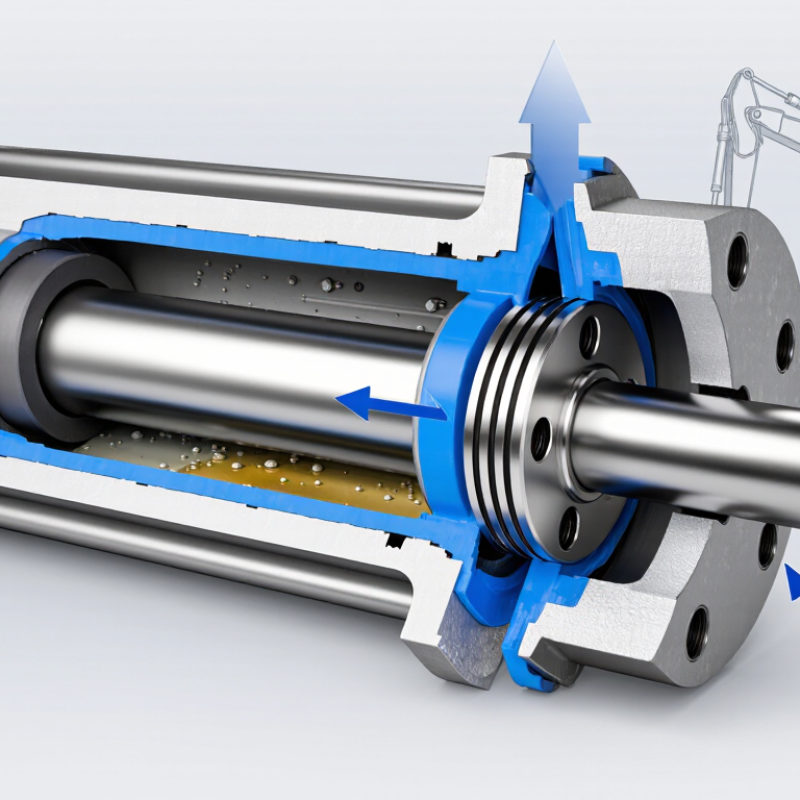
Hydraulic Seal Definition and Its Role in Fluid Power Systems
What Is a Hydraulic Seal and How Does It Work?
A hydraulic seal is a precisely shaped component that controls fluid movement inside hydraulic equipment. Its main role is simple: keep pressurized oil where it belongs. Seals also prevent air, dust, and moisture from entering the system. They support reliable force transmission in cylinders, pumps, and valves.
Most hydraulic systems use static and dynamic seals. A static seal works between surfaces that do not move, such as a flange connection. A dynamic seal works around moving parts, including piston rods and pistons. During operation, hydraulic pressure pushes the seal against a surface. This contact closes microscopic gaps without stopping movement completely. The result is controlled sealing with limited friction.
Small details matter. Seal material must match the fluid, pressure, temperature, and sliding speed. Polyurethane often handles wear well. PTFE can reduce friction in demanding applications. Elastomers may perform effectively across common temperature ranges. Still, material choice is not always obvious. I have seen premature leakage blamed on poor seals when misalignment caused the real damage. Installation marks matter too. A scratched groove, twisted seal, or contaminated surface can shorten service life quickly. Excessive heat, pressure spikes, and rod scoring create similar problems. During inspection, look for cuts, swelling, hardening, uneven wear, and fluid tracks around the seal. These clues can reveal whether the failure came from installation, operating conditions, or unsuitable design.
What Is a Hydraulic Seal and How Does It Work?
A hydraulic seal prevents fluid leakage and keeps contaminants out while allowing components such as pistons and rods to move under pressure. The chart shows accurate pressure conversions commonly used when discussing fluid power systems.
Key Components and Materials Used in Hydraulic Seals
A hydraulic seal prevents fluid from escaping while separating pressure zones inside a cylinder, pump, or valve. Its main components include the sealing element, housing groove, backup ring, and sometimes a guide ring. The sealing element contacts the moving rod or piston. Pressure then pushes its lip against the surface, improving contact during operation. A small leak can still develop when installation, alignment, or surface finish is poor.
Material choice controls service life. Polyurethane offers strong abrasion resistance for dynamic rods and pistons. Nitrile rubber performs well with petroleum-based hydraulic fluids and moderate temperatures. Fluorocarbon rubber tolerates higher heat and aggressive fluids, but it may cost more. PTFE provides low friction and chemical resistance, although it needs careful energizing support. ISO 3601 defines dimensional requirements for O-rings, while ASTM D2000 helps classify rubber performance. A 2024 Grand View Research analysis estimated the global hydraulic seals market at approximately USD 3.2 billion in 2023. That growth reflects wider equipment use, but market expansion does not remove basic installation risks.
Tips: Check fluid compatibility before selecting a seal. Measure the groove, rod diameter, and surface roughness. Avoid twisting during installation. Keep the seal clean. In field inspections, technicians often find scratches hidden beneath apparently acceptable surfaces. That detail is easy to miss. A seal can look correct and still fail early. My own design preference is conservative: choose the simplest material that meets pressure, temperature, speed, and chemical requirements. Over-specification sometimes adds cost without improving reliability.
Common Types of Hydraulic Seals and Their Applications
What Is a Hydraulic Seal and How Does It Work?
Hydraulic seals prevent fluid leakage between moving or stationary machine parts. They also block dirt from entering hydraulic equipment. Inside a cylinder, pressure pushes oil against the seal’s sealing lip. The lip then presses against the rod or bore. This contact creates a controlled barrier while allowing movement.
Common types serve different working conditions. Rod seals sit around moving rods and retain pressurized fluid inside the cylinder. Piston seals fit inside the cylinder bore and separate pressure between chambers. Wiper seals remove mud, dust, and moisture from the rod during retraction. Static O-rings seal fixed joints, such as ports and covers. Guide rings support the rod or piston and reduce side loading. These seals appear in excavators, presses, agricultural machines, lifting platforms, and injection equipment. Material choice depends on pressure, temperature, fluid type, speed, and surface finish. A good design can still fail when installation is careless.
Tips: Inspect the seal groove before replacement. Sharp edges can cut a new seal immediately. Check for scoring, swelling, hardening, or uneven wear. Confirm the seal’s size and material, not just its appearance. Keep parts clean during assembly. A small amount of compatible hydraulic fluid can help prevent twisting. Do not force a seal over threads or damaged edges. In practice, leakage is not always a seal problem. Misalignment, excessive pressure, or a worn rod may be the real cause. Check the whole system before changing parts.
Factors Affecting Hydraulic Seal Performance and Service Life
What Is a Hydraulic Seal and How Does It Work?
A hydraulic seal is a shaped component that keeps pressurized fluid inside a cylinder or valve. It also blocks dirt, air, and moisture from entering the system. During operation, fluid pressure pushes the seal against a mating surface. This contact reduces leakage while allowing controlled movement between components.
Seal performance depends heavily on material compatibility. Hydraulic fluid, additives, temperature, and pressure can change the seal’s behavior. Excessive heat may harden or soften the material. Cold conditions can reduce flexibility. Pressure spikes may force the seal into small clearances, causing extrusion or permanent damage. A narrow temperature test is not enough.
Surface finish matters greatly. Scratches can create leakage paths. A rough surface can wear the seal quickly. Excessive smoothness may also reduce lubrication. Correct clearance, alignment, and installation technique are equally important. Twisting a seal during fitting can cause early failure. Small particles can act like cutting tools.
In field maintenance, contamination is often underestimated. Clean tools and protected components make a measurable difference. Frequent pressure cycling can shorten service life, even when average pressure seems acceptable. Storage conditions matter too; sunlight, ozone, and long compression can weaken unused seals.
A perfect service-life prediction is rarely honest. Actual results depend on the complete working environment. Inspection should track leakage, temperature, motion, and surface damage. Replacing a seal without finding the cause may only repeat the failure. That lesson is easy to overlook.

.svg)


