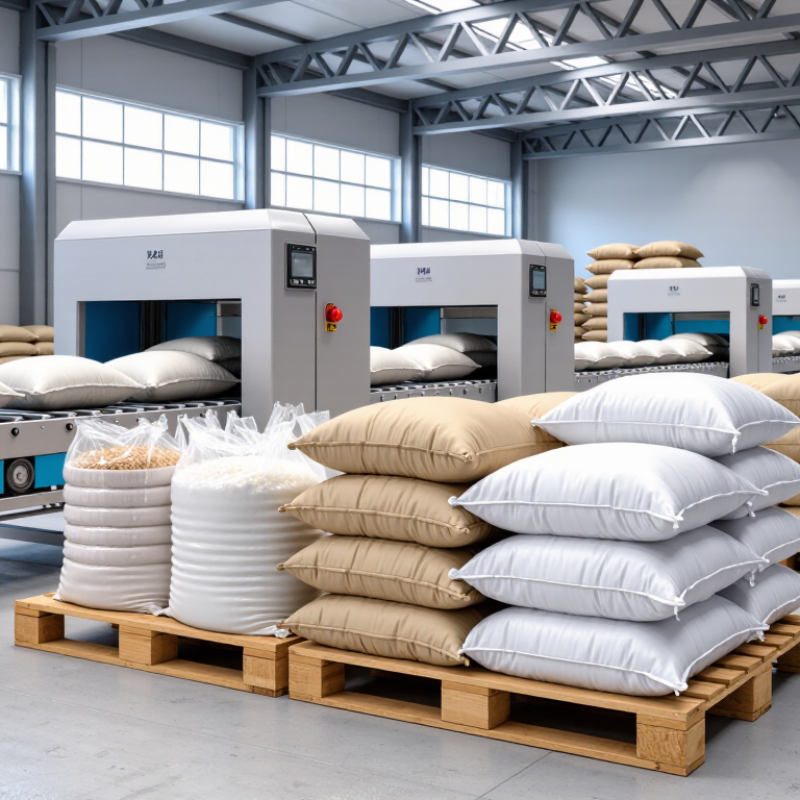
| Agricultural Grains and Seeds | Rice, wheat, maize, barley, beans, and planting seeds | Strong woven construction provides practical protection during storage, stacking, and transport while allowing economical bulk packaging. | Polypropylene or polyethylene woven fabric, stitched seams, optional inner liner, and a secure sewn or heat-sealed closure | 25–50 kg per bag | Contents should be dry before filling. Bags should be stored on pallets and protected from moisture, rodents, and direct sunlight. |
| Flour, Sugar, and Powdered Food Products | Flour, starch, salt, sugar, and similar dry powders | Woven bags can provide high tensile strength and efficient use of storage space when combined with a liner that limits powder leakage. | Fine-weave fabric, polyethylene liner, dust-reducing inner layer, and strong top closure | 20–50 kg per bag | Food-contact materials must comply with the applicable regulations of the destination market. Clean filling equipment is essential. |
| Animal Feed | Pellets, livestock feed, poultry feed, and pet-food ingredients | Woven sacks resist tearing and are suitable for repeated handling through warehouses, trucks, and distribution centers. | High-strength woven fabric, reinforced bottom seam, optional laminated outer surface, and printed handling instructions | 20–50 kg per bag | Use dry, ventilated storage and avoid prolonged exposure to heat or humidity to help preserve feed quality. |
| Fertilizers | Granular, crystalline, or powdered agricultural fertilizers | They offer a lightweight packaging solution with good load-bearing performance and can be designed for moisture protection. | Laminated fabric or liner, corrosion-resistant stitching, strong seams, and a closure suited to the fertilizer type | 25–50 kg per bag | Some fertilizers absorb moisture or may affect packaging materials. Compatibility testing and dry storage are recommended. |
| Construction Materials | Cement, mortar, plaster, sand, gravel, and dry building mixtures | Woven sacks can withstand rough handling and provide a practical format for moving heavy dry materials. | Heavy-duty fabric, reinforced seams, dust-control liner, and optional laminated or coated surface | 25–50 kg per bag | For fine powders, the bag structure must control leakage. Filled bags should not be dragged across abrasive surfaces. |
| Chemicals and Industrial Powders | Mineral powders, pigments, resins, and selected dry chemical products | Custom fabric weight, liners, and closures can be selected to match containment and handling requirements. | Material-compatible liner, laminated fabric, secure closure, batch identification, and clear hazard labeling where required | 10–50 kg per bag | Packaging compatibility, regulatory labeling, static-control needs, and safe handling procedures must be evaluated for each substance. |
| Recycling and Waste Collection | Plastic recyclables, textile scraps, agricultural waste, and non-hazardous debris | Reusable woven sacks can provide high carrying capacity and better tear resistance than many thin film bags. | Durable fabric, reinforced handles or lifting loops, wide opening, and washable or replaceable liner when appropriate | 30–1,000 kg, depending on bag construction | Do not reuse a bag for food or feed after it has contained hazardous, contaminated, or unidentified material. |
| Bulk Handling and FIBC Applications | Large quantities of powders, granules, seeds, and industrial materials | Flexible intermediate bulk containers use woven fabric to move much larger loads efficiently with lifting equipment. | Multiple lifting loops, top filling inlet, bottom discharge outlet, reinforced seams, and a load-rated body design | Approximately 500–2,000 kg per bag | Safe working load, stacking limits, lifting method, and inspection requirements must be followed for every bag design. |
| Retail and Promotional Packaging | Garden soil, charcoal, pet products, grain products, and household materials | Woven fabric provides a printable outer surface and supports packaging designs that are durable during retail handling. | Color printing, laminated surface, easy-open top, carrying handle, and product-specific barrier layer | 1–25 kg per bag | Artwork should remain legible after folding and handling. Product information must meet local labeling requirements. |
| Reusable Shopping and Storage Bags | Groceries, household goods, gardening supplies, and general merchandise | Woven bags can be lightweight, washable, foldable, and reusable when designed for repeated use. | Flat or gusseted body, stitched handles, reinforced stress points, and optional laminated or water-resistant finish | 5–30 kg per bag | Actual carrying capacity depends on fabric weight, handle construction, stitching, and the way the load is distributed. |

.svg)