Food Safety Insights

In Eagle’s Advanced Insights Blog, experts share their know-how by keeping you up-to-date with the latest trends to ensure your inspection equipment keeps your products safe. Eagle is an industry leader when it comes to performance and innovation, and we’ll share the news that’s important to you to enhance your quality assurance program.

Suggest topic you would like to see at:

sale@generalmachinery.org

What Is an IML Container Manufacturer?

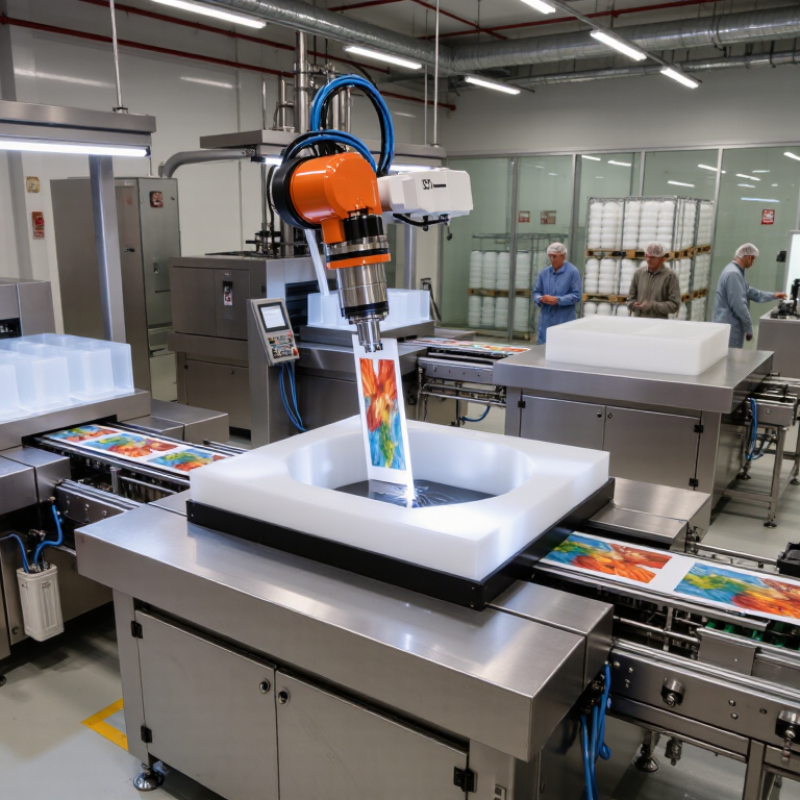
An Iml Container Manufacturer does more than produce plastic containers with attractive graphics. It combines injection molding, label engineering, automation, and quality control within one manufacturing system. During production, a robot places a printed polypropylene label inside an open mold. Molten plastic then fuses with the label, creating a durable, integrated surface. There is no separate labeling line afterward.

According to packaging-process specialist Dr. Marco de Bruin, “In-mold labeling succeeds when the label, resin, mold, and robot work as one process.” This practical observation explains why choosing an IML Container Manufacturer requires more than comparing unit prices. Experienced manufacturers evaluate label adhesion, wall thickness, cycle time, color accuracy, and container performance under real handling conditions. They may inspect a finished tub under bright light, checking for wrinkles, bubbles, or uneven edges. Small defects can damage shelf appeal and increase waste.

A reliable manufacturer should also explain its materials, testing methods, production capacity, and traceability procedures. Food-contact applications demand documented compliance and controlled hygiene practices. Recyclability also deserves careful discussion, because label and container materials must be compatible with local recycling systems. The answer is not always simple. A glossy container may look sustainable, yet its full environmental impact depends on resin choice, decoration, transport, and recovery infrastructure. This article examines what an IML Container Manufacturer actually does, how its process works, and which questions buyers should ask before approving samples. The explanation may not cover every factory variation, but it offers a practical starting point for informed evaluation.

What Is an IML Container Manufacturer?

What Is an IML Container Manufacturer? Definition, Role, and Scope

What Is an IML Container Manufacturer? Definition, Role, and Scope

An IML container manufacturer produces containers using in-mold labeling technology. During molding, a printed label is placed inside the mold before plastic is injected. The label becomes part of the container surface. This creates a clean, durable finish without a separate labeling stage.

The manufacturer’s role extends beyond molding. It may support container design, mold development, label specifications, material selection, production testing, and quality control. Engineers must consider label position, wall thickness, cooling behavior, and stacking strength. Small changes can affect appearance and performance. Practical experience matters here. A container may look correct but fail during filling, transport, or repeated handling.

The scope also includes process coordination. A reliable manufacturer checks artwork dimensions, label adhesion, color consistency, and surface defects. It may perform drop tests, compression tests, and dimensional inspections. Food, household, and personal care containers often require carefully controlled materials and documented production records. Requirements vary by application and market, so assumptions can create costly problems.

The process is not flawless. Static electricity, label movement, or uneven cooling may cause visible defects. These issues require investigation, not quick excuses. Manufacturers should explain their testing methods and acknowledge where their process needs improvement. Customers can then judge capability through samples, technical records, and clear communication. Experience is useful, but measurable evidence is stronger.

How IML Works: 2–10-Second Cycles and ±0.2 mm Label Placement

An IML container manufacturer produces plastic containers with labels placed inside the mold before injection molding. The label bonds to the container during forming. This creates a smooth, durable surface without a separate labeling station. In practice, the process depends on accurate tooling, stable material flow, and careful handling.

Many IML lines complete a cycle in 2–10 seconds. The exact time changes with container size, resin, mold design, and cooling requirements. A robotic system picks each label, positions it against the cavity wall, and holds it through injection. Well-tuned equipment can achieve label placement within ±0.2 mm. That precision requires calibrated sensors, consistent label dimensions, and regular sample checks. Small errors still happen. Dust, static, or slight mold wear can shift the result.

Tips: Ask for measured placement data, not only a production claim. Check samples from different cycles and cavities. Inspect label edges under direct light. Confirm how often operators calibrate the vision system and replace worn tooling. A capable manufacturer should explain these controls clearly. Test runs matter. They reveal problems that a specification sheet may hide.

What Is an IML Container Manufacturer? — How IML Works: 2–10-Second Cycles and ±0.2 mm Label Placement
Process or Technical Dimension Typical Data or Range How It Applies to IML Containers Key Control Factors
In-Mold Labeling Method Label inserted before molding A pre-printed label is placed inside the mold cavity and becomes permanently integrated with the container surface during injection or blow molding. Robot or pick-and-place accuracy, label stiffness, static charge, mold design, and vacuum or electrostatic holding.
Typical Cycle Time Approximately 2–10 seconds The complete molding cycle can include mold closing, label placement, resin injection, cooling, mold opening, and part removal. Container size, wall thickness, resin type, mold temperature, cooling efficiency, number of cavities, and automation speed.
Label Placement Accuracy Up to approximately ±0.2 mm in controlled production Precise placement supports consistent artwork alignment, barcode positioning, and registration around the container. Label dimensions, cavity geometry, gripper repeatability, machine calibration, shrinkage, and label movement during mold closing.
Common Container Processes Injection molding and blow molding Injection molding is widely used for tubs, cups, lids, and thin-wall containers. Blow molding is used for selected hollow packaging formats. Resin compatibility, mold structure, label insertion method, container geometry, and cooling requirements.
Common Container Materials PP, PE, and selected PET grades Polypropylene and polyethylene are frequently used because compatible labels can fuse with the container during molding. Other polymers may require specialized label constructions. Melting temperature, surface energy, shrinkage behavior, food-contact requirements, and recycling objectives.
Common Label Materials PP, PE, and PET films Film labels are selected to match the container material and withstand heat, pressure, and handling during the molding cycle. Film compatibility, thickness, print adhesion, static properties, stiffness, and resistance to heat distortion.
Typical Label Thickness Approximately 40–100 micrometres Thin labels can reduce material use, while thicker labels may improve handling and stiffness during automated placement. Container size, label shape, machine handling, required opacity, print construction, and mechanical strength.
Label-to-Container Bond Integrated during molding; no separate wet adhesive layer required The label and molten polymer form a unified decorated surface, reducing the need for a post-molding labeling step. Polymer compatibility, melt temperature, pressure, label surface treatment, and contact between label and container resin.
Post-Molding Labeling Step Normally eliminated Decoration is completed inside the mold, which can reduce secondary equipment, handling, and queue time after molding. Stable automation, accurate label feeding, reliable demolding, and consistent process monitoring.
Decoration Coverage Single-panel, wraparound, or multi-sided formats Label geometry can be designed for front panels, full circumferential coverage, or selected areas of a container. Container curvature, draft angles, label overlap, cavity access, and artwork registration requirements.
Surface Finish Options Gloss, matte, textured, or metallic effects Surface appearance is created through the label film, printing, coatings, and mold surface rather than by applying a separate label after molding. Film selection, ink system, varnish, mold texture, scratch resistance, and visual inspection standards.
Quality Inspection Points Position, wrinkles, bubbles, print defects, and container dimensions Inspection confirms that the label is correctly positioned and that the molded container meets appearance and dimensional requirements. Camera inspection, sampling frequency, lighting, measurement method, mold wear, and process stability.
Production Advantages Integrated decoration, high repeatability, and reduced secondary handling IML can combine molding and decoration in one automated workflow, supporting efficient production of consistently decorated containers. Initial mold and automation investment, label supply consistency, changeover planning, and operator training.
Recycling Consideration Best results when label and container materials are compatible Using compatible polymer families can simplify material recovery compared with constructions that combine dissimilar materials. Material identification, ink and coating selection, local recycling rules, barrier layers, and package design.
The figures shown are representative industry ranges and engineering targets. Actual cycle time, placement accuracy, materials, and label thickness depend on the container design, mold, equipment, resin, label construction, and production conditions.

Materials and Machinery: PP Containers, 50–80 μm Labels, and Robots

What Is an IML Container Manufacturer?

An IML container manufacturer combines polypropylene resin, printed labels, molds, and automation. The label enters the mold before injection. Heat and pressure then fuse it with the container wall. This process creates a clean, durable surface without a separate labeling station. Polypropylene remains important because it is lightweight, chemically resistant, and suitable for many food and household applications. Plastics Europe’s Plastics—The Facts 2024 report identifies packaging as Europe’s largest plastics-use sector, representing about 40% of demand.

The label is not a minor detail. A 50–80 μm label must balance stiffness, adhesion, print quality, and mold release. Thicker stock may improve handling, but it can increase material use and affect cycle stability. That assumption can fail. Experienced manufacturers test label curl, static behavior, and cavity temperature before approving production. Robots place labels accurately and remove finished containers. According to the International Federation of Robotics’ World Robotics 2024 report, 541,302 industrial robots were installed globally in 2023. This scale shows why robotic handling is becoming practical, even for demanding packaging lines.

Tips: Ask for measured cycle times, label-placement tolerance, scrap rates, and food-contact documentation. Inspect samples under real filling conditions. A perfect sample proves little. Also review mold maintenance records, because small venting problems can create visible defects.

Quality Control: ISO 9001, Dimensional Tolerances, and Defect Rates

An IML container manufacturer produces plastic containers with labels placed inside the mold during forming. This process bonds the label to the container surface, reducing separate labeling steps. The manufacturer manages tooling, materials, molding conditions, decoration, inspection, and shipment. Quality begins before production starts. Engineers review drawings, resin behavior, label placement, and expected use conditions. Small choices matter. A warped rim can affect sealing.

ISO 9001 provides a documented quality management framework, but certification alone does not guarantee perfect containers. Reliable manufacturers control approved materials, machine settings, operator training, traceability, and corrective actions. They record batch numbers and inspect samples at defined intervals. Dimensional tolerances should match the container’s function. Typical checks include height, wall thickness, opening diameter, rim flatness, weight, and label position. Calipers, gauges, vision systems, and coordinate measurement tools may support these checks. Measurements need calibrated equipment and clear acceptance limits. Otherwise, data can look precise while proving little.

Defect rates should be reported honestly, with the inspection method and sample size stated. Common defects include bubbles, wrinkles, color variation, short shots, flash, contamination, and poor label registration. A low rate is useful only when defects are consistently classified. Production teams should isolate suspect lots, investigate causes, and verify corrective actions. In practice, perfection is unrealistic. A rushed changeover can expose a weakness in an otherwise controlled process. That lesson deserves documentation, not concealment. Buyers should request inspection records, tolerance charts, and evidence of ongoing improvement before approving an IML container manufacturer.

Sustainability Metrics: Mono-Material PP, Scrap Reduction, and Recycling

What Is an IML Container Manufacturer?

An IML container manufacturer produces rigid packaging with labels placed inside the mold during injection molding. The label becomes part of the container surface. For sustainability, material compatibility matters more than appearance. A mono-material PP container can simplify sorting and recycling when its label, lid, and additives are also compatible with polypropylene. It is not automatically recyclable.

The OECD reported that only 9% of global plastic waste was recycled in 2019.

That figure exposes a practical problem. Design choices must support real collection systems, not only factory claims. Manufacturers should measure recycled content, container weight, scrap rate, and label rejection rate. A useful plant dashboard might track kilograms of scrap per 1,000 containers and first-pass yield.

Small improvements matter.

Reducing a 6% scrap rate to 3% saves material before recycling begins.

Operational evidence should remain visible. Production teams can weigh startup waste, rejected containers, and trim from every batch. They can also test whether labels separate during grinding and washing. The Association of Plastic Recyclers notes that labels and closures should not interfere with recycling processes.

However, test conditions differ from local facilities. That limitation deserves honesty. A container may pass a laboratory test yet fail in a regional sorting system. Sustainability reporting should therefore include the testing method, recycled-content percentage, and measurement period, rather than using vague claims such as “green” or “fully recyclable.”

Any Questions? We Are Here for You

Contact Us

Contact Us

Request information

Ask us a question
Service Support

Service Support

Available 24 hours a day, 7 days a week.

Get in Touch
Find a representative

Find a representative

Contact your local representative

View Locations