| Vehicle Identity & Documentation | Vehicle identification number, registration records, title status, odometer consistency, import and export documents | Compare identification markings on the vehicle with the available documents and electronic records | Photographs of identification plates, dashboard mileage, registration documents, and service records | Identification details should match across the vehicle, paperwork, and recorded service history | Incorrect identity, undisclosed ownership issues, mileage manipulation, or customs delays | High |
| Exterior Condition | Paint consistency, dents, scratches, corrosion, glass, lamps, mirrors, doors, hood, trunk, and panel gaps | Visual inspection under suitable lighting; paint-thickness measurement where applicable; functional checks of closures and lamps | Close-up photographs, paint readings, gap observations, and lighting-system test results | Panel alignment should be uniform; corrosion, repaired areas, and damaged safety glass should be clearly disclosed | Hidden accident repairs, water entry, reduced resale value, and additional repair or transport costs | Medium |
| Structural Integrity | Frame rails, crumple zones, pillars, roof structure, floor pan, welds, fasteners, and signs of severe impact | Visual and underbody inspection using a lift when available; compare symmetry, weld patterns, sealants, and deformation indicators | Underbody photographs, structural-area images, repair marks, and measurements of visible deformation | Structural members should show no unreported deformation, cutting, rewelding, or corrosion that compromises safety | Reduced crash protection, alignment problems, registration refusal, and difficult insurance approval | High |
| Chassis, Steering & Suspension | Shock absorbers, springs, control arms, bushings, ball joints, wheel bearings, steering components, and alignment condition | Road test, lift inspection, free-play checks, leakage checks, and wheel-alignment measurement when available | Suspension photographs, steering-play notes, alignment printout, and road-test observations | No excessive play, significant leakage, abnormal noise, or unsafe steering response; alignment should be within the vehicle maker’s specified range | Unstable handling, uneven tire wear, premature component failure, and unsafe operation | High |
| Braking System | Brake pads, discs or drums, calipers, hydraulic lines, parking brake, brake fluid, and anti-lock braking operation | Visual inspection, brake-fluid assessment, road test, and roller brake test where available | Brake-component photographs, measured performance results, warning-light status, and fluid-condition notes | Braking should be balanced and free from leaks, abnormal vibration, or persistent warning indicators | Longer stopping distance, loss of control, immediate repair requirements, and transport restrictions | High |
| Powertrain: Engine or Motor | Cold start, idle quality, leaks, abnormal noise, smoke, temperature control, mounts, and operating performance | Cold-start observation where possible, visual inspection, road test, fluid checks, and diagnostic scan | Start-up video, engine-bay photographs, fluid-leak images, diagnostic codes, and road-test notes | Engine or motor should start normally, maintain stable operating temperature, and show no material unreported leak or warning condition | Major mechanical repair, reduced range or performance, overheating, and high ownership cost | High |
| Transmission & Driveline | Gear engagement, clutch operation, torque transfer, driveshafts, differentials, CV joints, and abnormal vibration | Stationary engagement checks, road test across operating conditions, underbody inspection, and electronic diagnosis | Shift-quality notes, fluid-leak photographs, diagnostic results, and vibration observations | Engagement should be smooth and consistent without slipping, harsh impact, abnormal noise, or significant leakage | Expensive drivetrain replacement, limited drivability, and inability to complete long-distance export delivery | High |
| Electric Vehicle Battery & High-Voltage System | Battery state of charge, available capacity indicators, charging operation, high-voltage cables, cooling system, and isolation warnings | Diagnostic scan, charging test where practical, visual inspection of accessible components, and review of battery-related faults | Battery diagnostic report, charging photographs, fault-code records, and high-voltage warning status | Charging should complete normally; there should be no unresolved high-voltage safety warning or visible damage to the battery housing | Reduced driving range, charging incompatibility, battery replacement cost, and safety concerns during shipping | High |
| Fluids, Cooling & Emissions | Engine oil, coolant, brake fluid, transmission fluid, refrigerant-system condition, exhaust smoke, and emissions-related warnings | Fluid-level and leakage inspection, temperature observation, diagnostic scan, and emissions testing where required by local regulation | Fluid-condition notes, leak photographs, diagnostic results, and emissions test documents when available | No critical leak or overheating indication; emissions compliance depends on the destination country’s legal requirements | Import rejection, environmental compliance problems, overheating, and unexpected maintenance expenses | High |
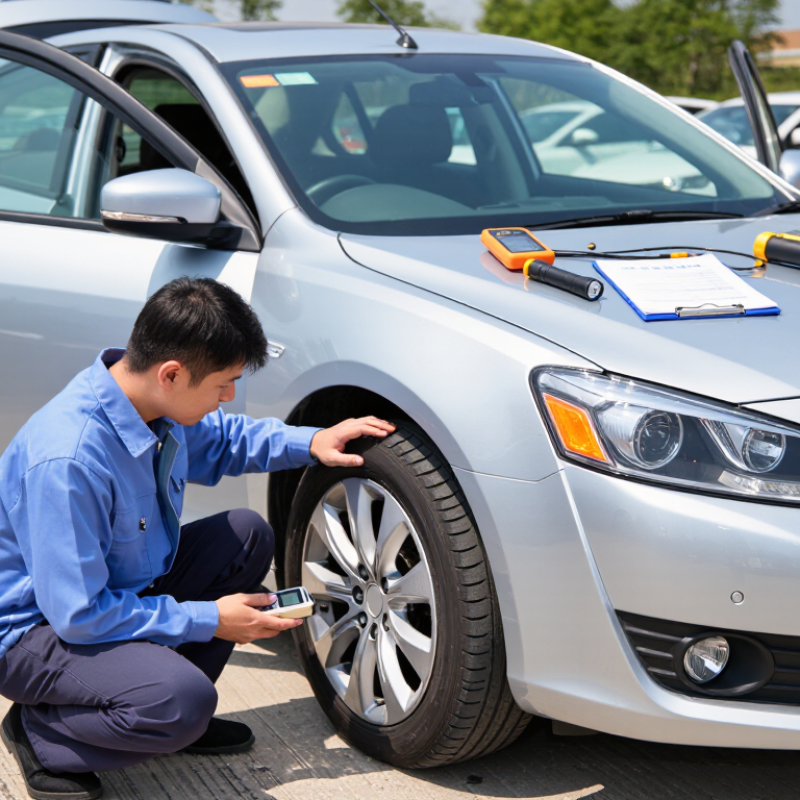
| Tires & Wheels | Tread depth, tire age, sidewall damage, uneven wear, wheel cracks, wheel-bolt condition, and spare-wheel availability | Measure tread depth, inspect sidewalls and wheels, verify tire-size consistency, and check pressure-monitoring status | Tread-depth readings, tire-date-code photographs, wheel images, and pressure-warning observations | Tires should be free from bulges, exposed cords, and severe cracking; legal tread limits vary by destination jurisdiction | Reduced wet-weather grip, vibration, failed inspection, and immediate replacement costs | High |
| Electrical System & Electronics | Battery, alternator or charging system, fuses, wiring, windows, locks, lighting, instrument cluster, cameras, and infotainment | Functional testing of controls and accessories plus electronic scan for stored or active faults | Control-panel photographs, charging-voltage results, fault-code report, and video of major functions | Safety-related functions should operate correctly; persistent warning lights and active fault codes require explanation | Hidden water damage, battery drain, unavailable replacement parts, and compatibility issues in the destination market | Medium |
| Airbags & Passive Safety | Airbag warning light, seat belts, pretensioners, belt buckles, seats, head restraints, and visible evidence of deployment or replacement | Diagnostic scan, visual inspection, warning-light sequence check, and examination of trim and restraint components | Airbag-system scan, dashboard warning-light video, seat-belt photographs, and deployment-related observations | The restraint system should complete its self-check without a persistent warning and should show no undisclosed deployment damage | Severe injury risk, inspection failure, legal liability, and expensive safety-system restoration | High |
| ADAS: Sensors & Functions | Forward camera, radar or other sensors, adaptive cruise control, automatic emergency braking, lane assistance, blind-spot monitoring, and parking sensors | Diagnostic scan, visual sensor inspection, static or dynamic function checks where conditions permit, and warning-status review | Sensor photographs, calibration records, fault codes, dashboard warnings, and controlled road-test observations | Functions should activate without persistent faults; sensor alignment and calibration must follow the vehicle maker’s procedures | Incorrect warnings or missed hazards, restricted driver assistance, and costly post-repair calibration | High |
| ADAS Calibration History | Calibration after windshield replacement, wheel alignment, suspension work, bumper repair, or sensor removal | Review repair records and calibration documentation; verify alignment-related fault codes and system status | Calibration report, windshield or bumper repair evidence, alignment results, and diagnostic screenshots | Calibration may be required after certain repairs; the exact procedure depends on the vehicle system and repair circumstances | ADAS may operate outside its intended detection range even when no obvious physical damage is visible | High |
| Interior, HVAC & Water Damage | Seat condition, odors, carpets, moisture, climate control, ventilation, switches, screens, and evidence of flooding | Visual inspection, moisture and odor assessment, function testing, and examination of low-level wiring and carpet areas | Interior photographs, moisture observations, HVAC test results, and evidence of corrosion or water lines | No unexplained moisture, mold odor, extensive corrosion, or malfunction of essential climate and control functions | Intermittent electronic faults, corrosion progression, health concerns, and poor resale value | Medium |
| Road Test & Final Risk Rating | Starting, acceleration, braking, steering, transmission response, noise, vibration, warning lights, and overall drivability | Controlled road test using safe and legally permitted conditions, followed by a structured defect review | Road-test video or notes, dashboard photographs, defect list, and severity classification | Safety-critical defects should be resolved before purchase or transport; non-critical defects should be priced into the transaction | Unexpected repair bills, delivery delays, reduced usability, and disputes over vehicle condition | High |

.svg)