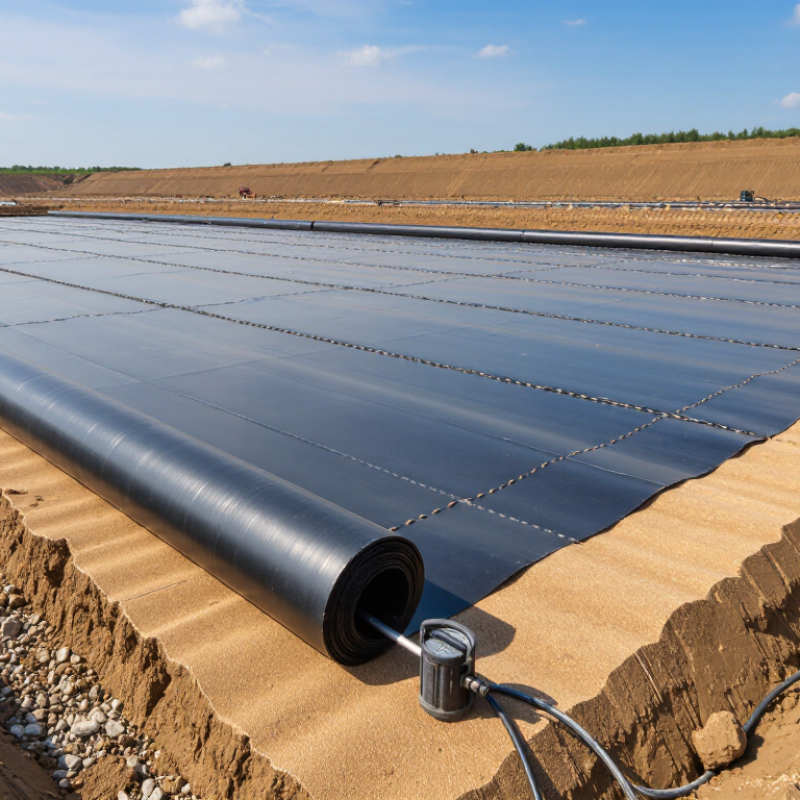
| Landfills and waste containment | Forms a low-permeability barrier beneath or around waste cells and leachate collection areas. | HDPE has low permeability and can provide resistance to many chemicals found in leachate. | Thickness, seam testing, subgrade preparation, drainage layers, and the site’s chemical conditions should be specified by the project design. |
| Mining and tailings facilities | Lines ponds, process-water areas, and selected tailings containment structures. | It is available in large panels and can be field-welded to create continuous lining systems. | Assess the contained solution, slope stability, settlement, abrasion, and protection from puncture. Chemical compatibility must be checked for the actual process fluids. |
| Wastewater and industrial lagoons | Helps limit seepage from treatment ponds, equalization basins, and industrial storage lagoons. | Its low permeability and broad chemical resistance make it a common option for liquid containment. | Confirm compatibility with the wastewater, operating temperature, exposure conditions, and any cleaning or treatment chemicals. |
| Agricultural ponds and irrigation reservoirs | Reduces water loss from farm ponds, storage basins, and irrigation reservoirs. | HDPE geomembranes can be supplied in wide sheets and installed over prepared soil or a protective layer. | Use a suitable cushion or prepared subgrade where needed, and detail edges and penetrations to reduce damage and leakage risks. |
| Canals and water conveyance channels | Provides a lining intended to reduce seepage through canal beds and banks. | Flexible sheets can follow engineered channel profiles and be joined with welded seams. | Design for slope, anchorage, water velocity, ground movement, and protection against puncture or erosion. |
| Secondary containment areas | Lines designated areas beneath tanks or around stored liquids to help contain accidental releases. | HDPE may be suitable for many stored liquids when the specific material and exposure conditions are compatible. | Verify chemical compatibility, local containment requirements, seam details, and the need for a protective surface or cover. |
| Decorative lakes and golf-course ponds | Helps retain water in constructed lakes, ponds, and landscape features. | Can be installed as a continuous geomembrane with welded joints for larger projects. | Consider subgrade smoothness, underliner drainage where required, anchoring, penetrations, and protection from roots or sharp objects. |

.svg)