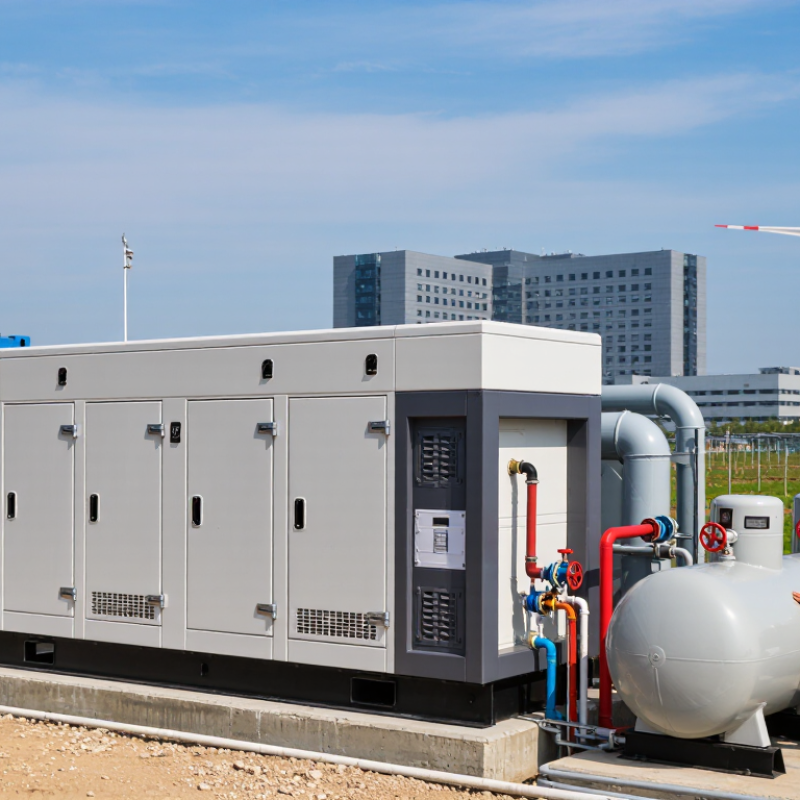
| Why LPG Generators Are Used for Global Power Needs |
| Fuel Characteristics | Lower heating value of LPG | Approximately 46.1 MJ/kg for propane; the exact value varies with LPG composition | LPG contains substantial energy per unit of mass and is suitable for portable, standby, and prime-power applications. | Use the fuel specification supplied for the local LPG blend when calculating consumption and storage capacity. |
| Fuel Conversion | Liquid LPG volume-to-mass relationship | Approximately 1 litre of liquid propane weighs about 0.51 kg; actual density varies with temperature and composition | A 20-litre liquid container may hold roughly 10 kg of propane, subject to the container’s approved filling limit. | Never fill a cylinder beyond its permitted filling limit. Allow expansion space and follow local cylinder regulations. |
| Emissions | Combustion profile | Generally lower particulate and sulfur emissions than diesel, when correctly adjusted and maintained | LPG can support cleaner operation in locations where air quality, noise, or fuel storage conditions are important. | Lower emissions do not eliminate carbon monoxide risk. Operate only in well-ventilated outdoor areas unless a qualified installation is designed for indoor use. |
| Fuel Storage | Storage form | Stored as a liquefied gas under pressure | Large amounts of usable energy can be stored in a relatively compact container. | Keep cylinders upright, secured, protected from impact, and away from heat, ignition sources, drains, and low-lying areas. |
| Power Quality | Voltage and frequency stability | Depends on the generator’s alternator, governor, inverter system, load, and maintenance condition | Proper sizing and load management are essential for sensitive equipment. | Confirm rated voltage, frequency, phase, and maximum starting current before connecting electrical loads. |
| Operating Data and Basic Sizing |
| Generator Efficiency | Typical electrical efficiency | Approximately 25%–35% for many small and medium reciprocating-engine generator sets at suitable load | Actual fuel use depends on generator size, engine design, load percentage, ambient conditions, and LPG composition. | Use the manufacturer’s fuel-consumption curve rather than a single average value when planning runtime. |
| Load Planning | Recommended continuous operating load | Common planning range: 50%–80% of rated continuous capacity | This range generally provides useful operating efficiency while retaining reserve capacity for load changes. | Avoid sustained overloads. Motors, pumps, compressors, and refrigeration equipment may require higher starting current than their running rating. |
| Capacity Calculation | Basic running-load estimate | Required kW ≈ Total running kW × 1.25 | The 25% allowance is a preliminary planning margin, not a substitute for a detailed load study. | Check motor starting current, power factor, harmonics, and simultaneous-load conditions before final selection. |
| Runtime Planning | Runtime formula | Runtime ≈ Usable LPG mass ÷ Fuel consumption per hour | For example, 20 kg of usable LPG at 2 kg/hour would provide approximately 10 hours under comparable conditions. | Actual runtime changes with load, temperature, regulator capacity, cylinder pressure, and engine condition. |
| Fuel Supply | Vaporization capacity | Must be sufficient for the generator’s maximum fuel demand at the lowest expected ambient temperature | A cylinder can contain fuel but still fail to supply enough vapor during high demand or cold weather. | Consult a qualified LPG technician for cylinder quantity, manifold design, regulator sizing, and cold-weather operation. |
| Electrical Connection | Transfer equipment | Use a properly rated manual or automatic transfer switch for backup installations | A transfer switch prevents the generator from energizing utility lines unexpectedly. | Never connect a generator to building wiring through an improvised back-feed connection. |
| Safe Operating Procedure |
| Pre-Start Inspection | Fuel system, oil, coolant, cables, and ventilation | Before every start | Confirms that the generator and fuel system are ready for operation. | Check for LPG odor, damaged hoses, loose fittings, oil leaks, blocked air inlets, damaged cables, and accumulated debris. |
| Leak Detection | Approved leak-test method | Use an LPG-approved leak-detection solution or suitable gas detector | Small leaks may not be visible and should never be located with a flame. | Never use a match, lighter, or other flame to test for leaks. If a leak is suspected, shut off the supply if safe, leave the area, and contact qualified personnel. |
| Starting | Start sequence | Open the fuel supply as specified, start the engine, and allow stabilization before applying load | Stabilization helps the engine and alternator reach normal operating speed and voltage. | Follow the equipment manual. Do not bypass low-oil, over-temperature, or other protective shutdown systems. |
| Load Application | Connection sequence | Connect loads progressively, beginning with essential or low-inrush loads | Gradual loading reduces voltage and frequency disturbances. | Monitor voltage, frequency, engine temperature, oil pressure, and unusual vibration or noise. |
| Ventilation | Operating location | Outdoor operation in a clear, open area is the normal safe arrangement | Engine exhaust contains carbon monoxide, an odorless and potentially fatal gas. | Never operate in a home, garage, basement, shed, or other enclosed or partially enclosed space. |
| Shutdown | Normal shutdown sequence | Remove electrical load, allow a short no-load cool-down if specified, then stop the engine and close the fuel supply when appropriate | Controlled shutdown reduces thermal stress and helps prevent fuel-system hazards. | Do not move or refuel a hot generator. Follow the manual’s instructions for fuel-valve operation and cooldown time. |
| Maintenance Schedule |
| Engine Oil | Level and condition | Check before each use; change according to the manual, commonly after the initial break-in period and then at defined operating-hour intervals | Correct oil level and grade are essential for lubrication and temperature control. | Use the specified oil grade for the expected ambient temperature. Dispose of used oil according to local rules. |
| Air Filter | Inspection and replacement | Inspect regularly; clean or replace when dirty or at the manual’s service interval | A restricted filter can reduce power, increase fuel use, and cause poor combustion. | Do not operate with a damaged or incorrectly fitted filter. |
| Spark Plug or Ignition System | Inspection | Inspect periodically and replace or adjust according to the engine service schedule | Correct ignition supports reliable starting and efficient LPG combustion. | Disconnect the ignition system before servicing and allow the engine to cool. |
| LPG Hose and Regulator | Condition and connection check | Inspect before use and replace damaged, cracked, expired, or incorrectly rated components | Hoses and regulators are critical pressure-control components. | Use only components approved for LPG service and compatible with the operating pressure and connection type. |
| Cooling System | Air passages and coolant | Keep air inlets, outlets, fins, and radiator surfaces clean; check coolant where applicable | Restricted airflow or low coolant can cause overheating and automatic shutdown. | Never remove a pressurized radiator cap while hot. Allow the system to cool first. |
| Battery and Starting System | Terminal condition and charge | Inspect periodically and keep terminals clean and secure | A weak battery can prevent reliable standby starting. | Keep sparks and flames away from batteries and use appropriate eye protection during service. |
| Professional Inspection | Comprehensive service | At least annually for standby equipment, or more frequently in severe, dusty, humid, or high-use conditions | A qualified inspection can identify fuel-system, grounding, exhaust, and control-system problems. | Follow local electrical, fire, pressure-vessel, and emissions requirements. |
| LPG and Carbon Monoxide Safety |
| LPG Vapor Behavior | Relative density | Propane vapor is heavier than air, with a relative vapor density of about 1.5 compared with air | Leaking vapor may collect near floors, pits, drains, and other low points. | Keep cylinders and equipment away from low-lying enclosed spaces and provide suitable ventilation. |
| Flammability | Propane-air flammability range | Approximately 2.1%–9.5% by volume in air; limits vary with composition and conditions | A combustible mixture can form without a visible liquid spill. | Control ignition sources, prohibit smoking nearby, and use electrical equipment suitable for the classified area where required. |
| Odorization | Leak warning | LPG is commonly odorized so leaks may be detected by smell | Odor provides a warning but is not a substitute for inspection or gas detection. | Do not assume there is no leak because no odor is noticed; odor fatigue and ventilation can reduce detection. |
| Carbon Monoxide | Exhaust hazard | Carbon monoxide is colorless and odorless and can accumulate rapidly in enclosed or partially enclosed areas | Symptoms may include headache, dizziness, weakness, nausea, confusion, and unconsciousness. | Install carbon-monoxide alarms where required, keep exhaust away from openings, and leave the area immediately if symptoms or an alarm occur. |
| Emergency Response | Suspected leak or fire | Evacuate, avoid ignition sources, and call emergency services | Personal safety takes priority over equipment recovery. | Close the cylinder valve only if it can be done without risk. Do not re-enter until qualified responders declare the area safe. |

.svg)