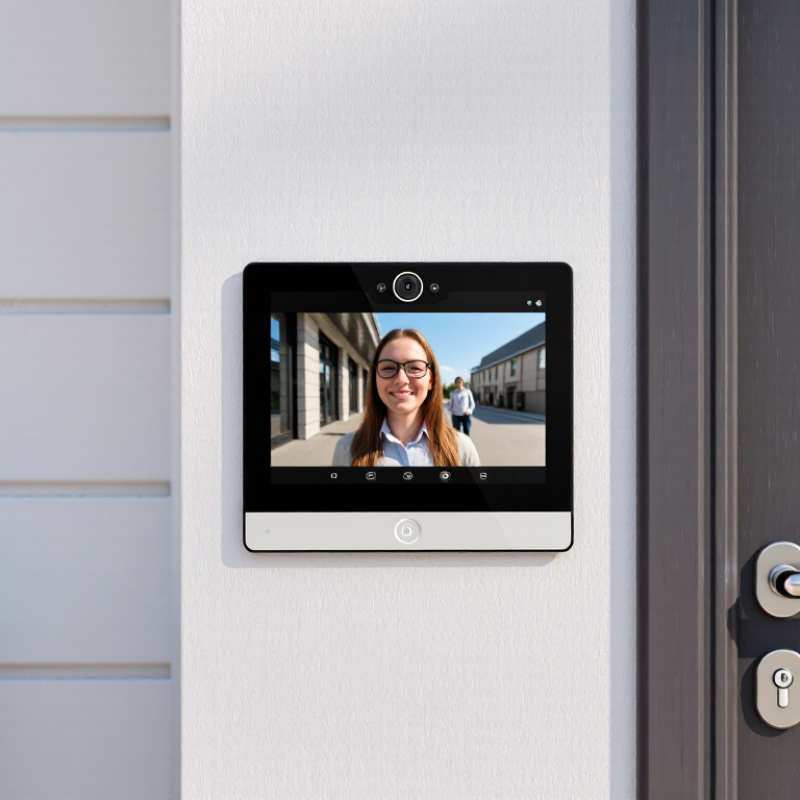
| Outdoor station | Captures visitor video and audio, provides a call button, and may include a keypad or card reader. | Camera field of view, night-time visibility, weather resistance, mounting position, and access-control options. | Provides the visitor-facing entry point and sends calls to indoor or mobile devices. |
| Indoor monitor | Displays the visitor, supports two-way communication, and can provide controls such as door release. | Screen size, interface clarity, hands-free or handset operation, and compatibility with the outdoor station. | Lets occupants identify and speak with visitors before deciding whether to grant entry. |
| Camera and microphone | Capture video and audio at the entrance for live visitor identification and conversation. | Lighting conditions, image framing, audio pickup, echo control, and the installation environment. | Affects the clarity of the interaction and the usefulness of visitor identification. |
| Door lock interface | Provides a control connection for an electric door lock or other compatible entry device. | Lock type, electrical ratings, wiring method, release behavior, and local safety requirements. | Connects visitor communication with controlled door release; the lock itself may be supplied separately. |
| Power supply and cabling | Deliver power and carry data or audio/video signals between system components. | Power requirements, cable distance, wiring topology, installation conditions, and applicable electrical codes. | Correct planning supports reliable operation and helps avoid installation or compatibility issues. |
| Network connection and mobile access | Where supported, connects the system to a local network and enables calls or notifications on mobile devices. | Network coverage, router configuration, app support, account security, and internet availability for remote features. | Can extend visitor communication beyond the indoor monitor, depending on the system design. |
| System integration and compatibility | Ensures stations, monitors, locks, and network features work together as intended. | Supported wiring standards, device capacity, integration requirements, and compatibility documentation. | A well-matched system is easier to install, operate, and expand. |
| Manufacturer support and quality control | Covers product documentation, testing processes, technical assistance, and warranty terms. | Availability of installation guides, clear specifications, responsive support, and defined warranty coverage. | Helps installers and buyers assess product suitability and address issues throughout the product lifecycle. |

.svg)