Food Safety Insights

In Eagle’s Advanced Insights Blog, experts share their know-how by keeping you up-to-date with the latest trends to ensure your inspection equipment keeps your products safe. Eagle is an industry leader when it comes to performance and innovation, and we’ll share the news that’s important to you to enhance your quality assurance program.

Suggest topic you would like to see at:

sale@generalmachinery.org

Why Choose Stainless Steel Pipe for Global Projects?

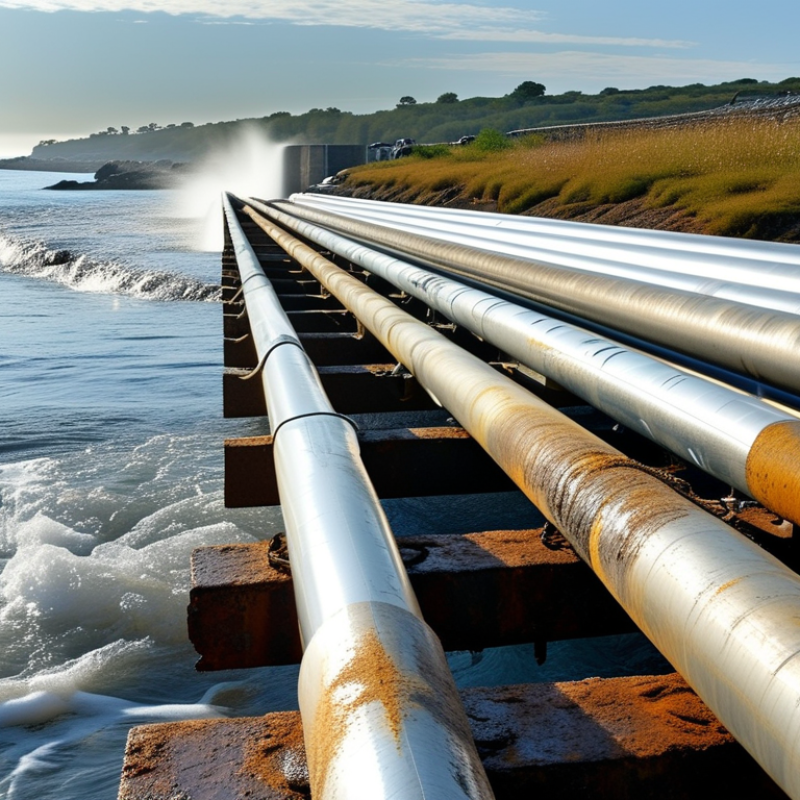
Global projects demand materials that perform reliably across changing climates, regulations, and installation conditions. Stainless Steel Pipe often meets these demands through corrosion resistance, structural strength, and consistent fabrication quality. From coastal desalination plants to food-processing facilities, it helps protect fluid systems from rust, contamination, and costly interruptions.

Its value becomes clearer during procurement and installation. Experienced engineers evaluate grade selection, wall thickness, pressure ratings, temperature exposure, and weldability before approving a specification. A 316L pipe may suit chloride-rich environments better than a general 304 grade. However, the right choice depends on actual chemistry, operating conditions, and maintenance plans. A polished surface can support hygiene, while accurate dimensions reduce cutting and alignment work on site.

Traceable mill certificates, inspection records, and qualified welding procedures strengthen confidence across international supply chains. Reputable suppliers should explain material standards, testing methods, tolerances, and delivery controls without hiding technical limitations. These details matter when pipes travel thousands of kilometers and face storage delays, rough handling, or unfamiliar installation teams.

No material is perfect. Stainless steel can suffer from pitting, stress corrosion, or poor weld contamination when specifications are ignored. Its initial price may also exceed carbon steel. Still, lifecycle performance can justify the investment when downtime, replacement labor, and environmental exposure are considered. This article examines why Stainless Steel Pipe remains a practical option for global projects, while recognizing that sound engineering—not material preference alone—determines long-term success.

Why Choose Stainless Steel Pipe for Global Projects?

What Is Stainless Steel Pipe and How Is It Made?

Why Choose Stainless Steel Pipe for Global Projects?

What Is Stainless Steel Pipe and How Is It Made?

Stainless steel pipe is a hollow product made from iron, chromium, and other alloying elements. Chromium content usually reaches at least 10.5%, forming a thin protective oxide film. That film repairs itself when exposed to oxygen. Nickel can improve toughness, while molybdenum strengthens resistance against chlorides.

The manufacturing route begins with melting and refining alloyed steel in an electric furnace. Continuous casting produces billets or slabs. Mills then pierce, roll, or weld the material into pipe. Heat treatment adjusts strength and internal structure. Pickling removes surface oxides, while passivation supports corrosion resistance. Every stage matters.

Pipe dimensions are checked with gauges, ultrasonic systems, or hydrostatic testing. Imperfections still occur. Welding can create local weakness if heat input is poorly controlled. Surface damage may also shorten service life. Good inspection is not optional.

The World Stainless Stainless Steel in Figures 2024 report recorded 58.4 million tonnes of global stainless crude steel production in 2023. This scale reflects demand across water systems, energy facilities, construction, and chemical processing. However, higher production does not guarantee suitable performance. Engineers still match alloy grade, wall thickness, temperature, pressure, and chloride exposure to project conditions. A pipe that looks polished may be wrong inside.

Which Properties Make Stainless Steel Pipe Suitable for Global Projects?

Why Choose Stainless Steel Pipe for Global Projects?

Which Properties Make Stainless Steel Pipe Suitable for Global Projects?

Global projects face salt air, temperature swings, long shipping routes, and uneven maintenance access. Stainless steel pipe handles these demands through corrosion resistance, mechanical strength, and stable performance. In field inspections, properly selected grades often retain smooth internal surfaces after years of service. That matters offshore.

Its chromium-rich passive layer protects against ordinary atmospheric moisture and many process environments. Molybdenum-bearing grades can improve resistance to pitting in chloride exposure, although they are not immune. Design teams should check fluid chemistry, temperature, pressure, and weld conditions before choosing a grade. Not always. A cheaper option may fail earlier, while an expensive grade may be unnecessary. This trade-off needs evidence, not assumptions.

Stainless steel also supports hygienic systems because its nonporous surface is easier to clean and inspect. It tolerates heat, pressure cycling, and repeated fabrication when welding procedures are controlled. Dimensional accuracy helps installers align prefabricated sections across borders. Clear certificates, inspection records, and traceable heat numbers strengthen procurement reliability. Yet installation details can undermine good material: contaminated tools, poor drainage, and unprotected welds may trigger localized corrosion. I would not call stainless steel maintenance-free. Site conditions still deserve regular review, especially where seawater, chemicals, or trapped moisture are present.

How Does Stainless Steel Pipe Perform in Different Environments?

Why Choose Stainless Steel Pipe for Global Projects?

Stainless steel pipe performs differently as climate, water chemistry, and operating temperature change. In coastal facilities, airborne salt can trigger pitting, especially around welds, supports, and stagnant joints. A suitable molybdenum-bearing grade usually offers better resistance than standard stainless steel. However, “corrosion-resistant” does not mean corrosion-proof.

In hot process systems, the pipe must tolerate temperature, pressure, and repeated expansion. Poorly planned supports can create stress at elbows and welded connections. In cold regions, stainless steel remains useful because many grades retain toughness at low temperatures. Engineers still need verified impact data and correct insulation details. Condensation under insulation can quietly damage the outside surface.

For drinking water, food processing, and clean industrial service, smooth internal surfaces help reduce deposits and simplify cleaning. Yet water with high chlorides may demand a different grade or treatment strategy. Duplex stainless steel can provide higher strength, but fabrication and welding require tighter control. Installation quality matters as much as material selection.

Field inspections often reveal the same weakness: good pipe, careless details. I have seen avoidable staining near carbon-steel clamps and unsealed crevices. That experience deserves more attention. Project teams should review chloride levels, pH, temperature cycles, weld procedures, passivation, and inspection records before shipment. Standards support decisions, but local environmental data should guide them.

What Standards and Specifications Govern International Stainless Steel Pipe?

Why Choose Stainless Steel Pipe for Global Projects?

What Standards and Specifications Govern International Stainless Steel Pipe?

Stainless steel pipe supports demanding global projects because it resists corrosion, heat, and changing outdoor conditions. Yet material selection cannot rely on appearance alone. International projects usually follow several standards at once, depending on service, country, and client requirements.

ASTM A312 commonly covers seamless and welded austenitic stainless steel pipe for process systems. ASTM A358 addresses electric-fusion-welded pipe, often used for larger diameters. ASME B36.19M controls stainless steel pipe dimensions, including wall thickness and nominal sizes. European projects may specify EN 10216-5 for seamless pipe or EN 10217-7 for welded pipe. ISO 1127 can define dimensions and tolerances. JIS G3459 is also relevant in some Asian markets.

The standard is only one part of compliance. Project documents should confirm grade, heat treatment, hydrostatic testing, weld inspection, surface condition, and positive material identification. Mill test certificates should match heat numbers stamped on the pipe. Small gaps here create expensive delays. I have seen drawings mention one standard while purchase documents quietly use another. That needs review, not assumption.

Tips: Confirm the governing standard before ordering. Check whether the project requires ASTM, EN, JIS, or dual compliance. Match pressure calculations with ASME B31.3 or the applicable local code. Verify certificates, dimensions, and inspection records before shipment. Standards improve reliability, but they do not replace engineering judgment.

Why Choose Stainless Steel Pipe for Global Projects? - What Standards and Specifications Govern International Stainless Steel Pipe?

Standard or Specification Primary Scope Typical Stainless Grades Key Requirements Governed Common International Project Applications Important Compliance Considerations
ASTM A312 / ASME SA312 Seamless, welded, and heavily cold-worked austenitic stainless steel pipe 304 / 304L
316 / 316L
321
347
  • Chemical composition
  • Tensile and yield strength
  • Elongation
  • Hydrostatic or nondestructive electrical testing
  • Heat treatment and workmanship
Process piping, chemical plants, food-processing systems, water treatment, power facilities, and general industrial services. Product marking, dimensions, and supplementary tests must be specified together with the applicable purchase order and project requirements.
ASTM A790 / ASME SA790 Seamless and welded ferritic/austenitic duplex stainless steel pipe Duplex 2205
Super duplex 2507
  • Chemical composition
  • Mechanical properties
  • Solution heat treatment
  • Hydrostatic or nondestructive testing
  • Ferrite-related requirements for duplex products
Offshore facilities, seawater systems, desalination plants, chemical processing, and high-chloride services. Duplex material selection should consider chloride concentration, temperature, corrosion mechanism, welding procedure, and phase balance requirements.
ASTM A789 / ASME SA789 Seamless and welded ferritic and austenitic stainless steel tubing 304L
316L
Duplex 2205
Other listed ferritic and austenitic grades
  • Tube chemistry and mechanical properties
  • Heat treatment
  • Hydrostatic or nondestructive testing
  • Dimensional and surface requirements
Heat exchangers, condensers, instrumentation systems, and services requiring corrosion-resistant tubing. This specification is for tubing; the purchaser should confirm whether the project requires pipe, tube, or heat-exchanger tubing dimensions.
ASTM A358 / ASME SA358 Electric-fusion-welded austenitic chromium-nickel alloy steel pipe for high-temperature and general service 304 / 304L
316 / 316L
321
347
  • Plate material requirements
  • Welding and weld repair controls
  • Radiographic and other nondestructive examinations
  • Hydrostatic testing when specified
  • Heat treatment and dimensional tolerances
Large-diameter process lines, high-temperature services, power generation, and fabricated industrial piping. The selected class determines examination and testing requirements; the required class should be stated clearly in the purchase specification.
ASTM A928 / ASME SA928 Ferritic/austenitic duplex stainless steel pipe welded with filler metal Duplex 2205
Other grades listed by the specification
  • Base-metal chemistry and mechanical properties
  • Qualified welding procedures
  • Filler-metal requirements
  • Radiographic examination
  • Hydrostatic testing
Pressure piping, offshore systems, seawater handling, and corrosive process services. Welding qualification, heat input, interpass temperature, and post-weld condition are critical to duplex corrosion performance.
ASTM A999 / ASME SA999 General requirements for alloy and stainless steel pipe Applies to grades covered by the referenced product specification.
  • General material and manufacturing requirements
  • Heat treatment
  • Mechanical testing
  • Hydrostatic and nondestructive testing provisions
  • Dimensions, repair, marking, and certification
Used as a supplementary general-requirements document for many ASTM stainless steel pipe specifications. ASTM A999 does not replace the specific product standard; both documents may apply to the same order.
ASME B36.19M Dimensions of stainless steel pipe Stainless steel pipe in applicable nominal sizes and schedules
  • Nominal pipe size
  • Outside diameter
  • Wall thickness
  • Schedule designations
  • Approximate mass per unit length
Dimensional reference for process, utility, pressure, and mechanical piping systems. ASME B36.19M controls dimensions, not the complete material, welding, testing, or corrosion-resistance requirements.
ISO 1127 Dimensions and tolerances for stainless steel tubes for general purposes Austenitic, ferritic, martensitic, and duplex stainless steels, depending on the product standard.
  • Outside diameter ranges
  • Wall thickness ranges
  • Permissible dimensional tolerances
  • Mass-related dimensional information
Internationally coordinated dimensional reference for equipment, fabrication, and piping components. ISO 1127 should be paired with a material and manufacturing standard that defines grade, testing, heat treatment, and acceptance criteria.
EN 10216-5 Seamless steel tubes for pressure purposes made from stainless steels 1.4301 / 304
1.4307 / 304L
1.4401 / 316
1.4404 / 316L
Selected duplex grades
  • Technical delivery conditions
  • Chemical composition
  • Mechanical properties
  • Heat treatment
  • Inspection and testing
  • Surface and dimensional requirements
Pressure equipment and piping projects designed to European standards. The EN material number and designation should be matched with the design code, inspection category, and required certificate type.
EN 10217-7 Welded steel tubes for pressure purposes made from stainless steels 1.4301 / 304
1.4307 / 304L
1.4404 / 316L
Selected austenitic and duplex grades
  • Welding and manufacturing conditions
  • Chemical and mechanical requirements
  • Nondestructive testing
  • Hydrostatic testing
  • Dimensional tolerances and inspection documents
European pressure piping, process plants, energy systems, and fabricated equipment. Weld quality, test category, and inspection document requirements should be defined before procurement.
JIS G3459 Stainless steel pipes for general piping SUS 304
SUS 304L
SUS 316
SUS 316L
Other grades listed in the standard
  • Chemical composition
  • Tensile properties
  • Dimensions and tolerances
  • Hydrostatic or nondestructive testing
  • Appearance and marking
Piping systems and equipment manufactured or specified according to Japanese industrial standards. JIS grade designations should not be assumed to be automatically interchangeable with ASTM, EN, or other grades without an engineering equivalency review.
EN 10204 Types of inspection documents for metallic products Applicable to stainless steel pipe and related metallic products.
  • Certificate type and inspection responsibility
  • Traceability of heat and product information
  • Results of specified tests and inspections
  • Validation and document control
International procurement requiring documented material verification and supply-chain traceability. A 3.1 inspection certificate is commonly requested for manufacturer-issued test results; a 3.2 document involves additional purchaser or independent inspection involvement when required by contract.
Project note: A compliant international stainless steel pipe order normally identifies the product standard, grade, manufacturing route, nominal size, wall thickness or schedule, end finish, heat-treatment condition, nondestructive examination, hydrostatic test requirements, surface condition, inspection document, and applicable design code. Standards are not automatically interchangeable; final acceptance should follow the project specification and the governing jurisdiction.

How Should Global Buyers Select, Transport, and Maintain Stainless Steel Pipe?

Global buyers should select stainless steel pipe by service conditions, not bright appearance. Grade 316L generally resists chloride exposure better than 304. However, welding, temperature, pressure, and water chemistry still matter. Request mill test certificates, heat numbers, dimensions, surface finish, and inspection results. ASTM A312 and EN 10204 3.1 provide useful reference points for many industrial orders. The International Stainless Steel Forum reported global stainless crude steel production of about 58.4 million tonnes in 2023. Good selection starts here.

Transport needs equal attention. Seal pipe ends, use non-metallic separators, and support bundles evenly during loading. Keep it dry. Avoid direct contact with carbon steel, which can leave rust contamination on the surface. In containers, ventilation and desiccants help control condensation. At arrival, inspect dents, wet packaging, salt deposits, and missing identification before signing delivery documents. The NACE IMPACT study estimated global corrosion costs at about 3.4% of worldwide GDP, showing why small handling failures deserve attention.

Tips: Rinse chloride deposits with clean water, then dry the pipe completely. Use cleaners approved for stainless steel, and avoid bleach or carbon-steel brushes. Schedule inspections according to exposure, not habit. Coastal sites may need more frequent checks. I would not treat a flawless factory certificate as a maintenance plan; site conditions can change, and that assumption often needs review.

Why Choose Stainless Steel Pipe for Global Projects?

How Should Global Buyers Select, Transport, and Maintain Stainless Steel Pipe?

The chart compares the minimum specified mechanical properties of common stainless steel pipe grades. Austenitic grades 304 and 316 provide reliable general corrosion resistance, while duplex 2205 offers substantially higher strength for demanding applications and can reduce wall-thickness requirements. For global projects, buyers should confirm the applicable ASTM or EN standard, protect pipe surfaces during handling and sea transport, prevent contact with carbon-steel contamination, and use regular inspections and suitable cleaning methods during service.

Values shown are minimum specified requirements in MPa: ASTM A312 TP304 and TP316, and ASTM A790 S31803 duplex 2205. Actual properties depend on production and testing conditions.

Any Questions? We Are Here for You

Contact Us

Contact Us

Request information

Ask us a question
Service Support

Service Support

Available 24 hours a day, 7 days a week.

Get in Touch
Find a representative

Find a representative

Contact your local representative

View Locations