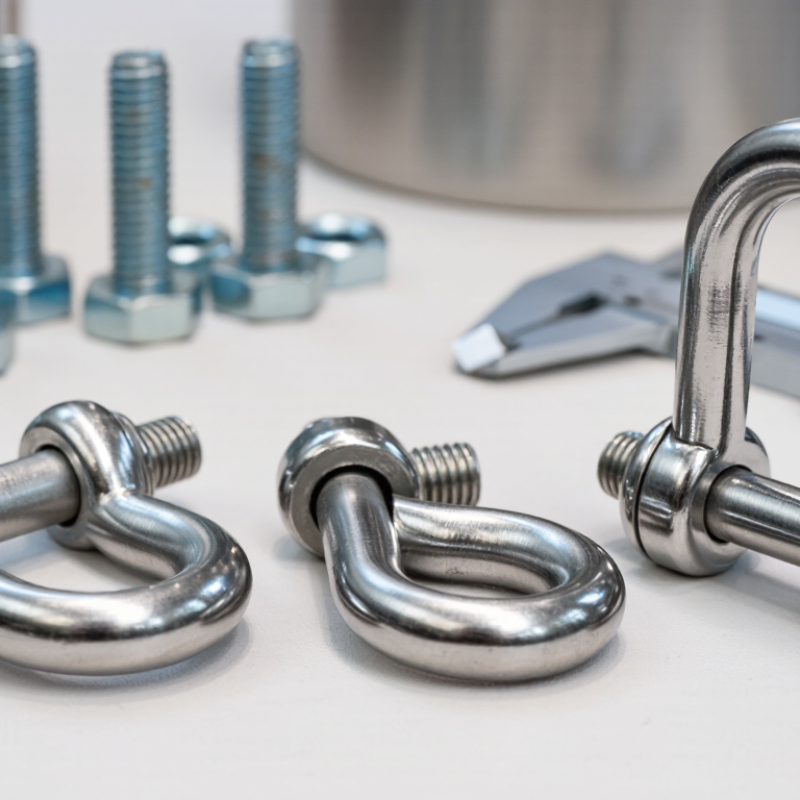
| Material Selection | Stainless-steel grade | Select the grade according to the service environment. Austenitic grades commonly used for general corrosion resistance include 304 and 316. Grade 316 generally provides better resistance to chlorides because it contains molybdenum, but it is not immune to corrosion in severe marine or chemical conditions. | Material certificate, heat or batch number, chemical composition report, and positive material identification when required. |
| Load Performance | Working Load Limit (WLL) | Confirm that the marked WLL is suitable for the complete lifting or rigging arrangement. Never use a shackle above its stated WLL, and account for sling angles, side loading, shock loading, and unequal load sharing. | Product marking, rated-load table, dimensional drawing, and test certificate. WLL must not be confused with breaking load. |
| Design | Shackle type and pin | Bow shackles offer more room for connecting multiple components, while dee shackles are suited to more direct loading. Screw pins are convenient for temporary connections; bolt-type pins are generally preferred where vibration or permanent installation is a concern. | Technical drawing showing bow or dee geometry, pin style, thread details, and component dimensions. |
| Dimensional Control | Critical dimensions and tolerances | Check body diameter, pin diameter, inside width, inside length, thread engagement, and hole alignment. Dimensional compatibility is essential when the shackle is used with hooks, lifting eyes, wire rope assemblies, or chain fittings. | Approved drawing, inspection report, calibrated measuring equipment, and agreed acceptance tolerances. |
| Surface Quality | Finish and visible defects | The surface should be clean and free from cracks, laps, sharp burrs, deep scratches, significant pits, and trapped processing residue. A smooth passivated or polished surface can improve cleanability and corrosion resistance, but appearance alone does not prove structural quality. | Visual inspection under adequate lighting, surface-finish specification, and photographs of production samples. |
| Corrosion Control | Passivation and contamination prevention | Stainless steel relies on a protective chromium-rich oxide film. Passivation may remove free iron and processing contaminants, but it cannot correct poor alloy selection or eliminate corrosion caused by chloride exposure, crevices, or chemical attack. | Passivation process record, treatment specification, cleanliness criteria, and test results where the application requires them. |
| Quality Inspection | Sampling and traceability | Establish a written inspection plan before production. Use lot or batch traceability so that dimensions, material records, test results, and corrective actions can be linked to the delivered goods. | Inspection and Test Plan, sampling method, batch identification, nonconformance procedure, and retained inspection records. |
| Mechanical Testing | Proof or load testing | Where required by the applicable lifting-equipment standard, verify proof testing at the specified load and method. Testing should be performed by competent personnel using calibrated equipment; a proof test does not authorize use above the marked WLL. | Test certificate stating shackle identification, test load, test date, equipment details, result, and authorized signatory. |
| Standards | Applicable technical requirements | Identify the destination-market and application-specific requirements before purchase. Commonly referenced frameworks include standards for forged steel shackles, lifting accessories, and safe use of hardware, but the correct standard depends on the product design and intended service. | Purchase specification naming the applicable edition, conformity statement, test reports, and product marking requirements. |
| Import Planning | Shipping and customs data | Confirm product description, material, quantity, net and gross weight, package dimensions, country of origin, tariff classification, and agreed Incoterms before shipment. Accurate data reduces customs delays and unexpected landed costs. | Commercial invoice, packing list, transport document, certificate of origin when required, and customs classification review. |
| Packaging | Protection during transport | Use packaging that prevents impact damage, thread damage, moisture accumulation, and contact with carbon-steel particles. Keep stainless-steel components separated from contaminated tools or untreated steel where practical. | Packaging specification, loading photographs, moisture-control measures, and pre-shipment inspection records. |
| Receiving Inspection | Incoming acceptance checks | On receipt, compare quantities and markings with the order, inspect packaging damage, verify dimensions and thread operation, check for corrosion or contamination, and quarantine items with missing identification or suspected structural damage. | Goods-receipt checklist, dimensional results, photos, quantity reconciliation, and nonconformance report where applicable. |
| Operating Safety | Correct loading practice | Load the shackle in line with its design and keep the pin fully engaged. Avoid side loading, point loading, bending, shock loading, and contact with edges that can damage the body or pin. Use compatible components and follow the rated configuration. | User instructions, lifting plan, operator training record, and pre-use inspection checklist. |
| Routine Maintenance | Cleaning and lubrication | Rinse salt, chemicals, dirt, and other deposits with clean fresh water, then dry thoroughly. Clean threads and inspect the pin regularly. Use a lubricant compatible with the environment and application; avoid products that introduce contaminants or create a slipping hazard. | Maintenance schedule, cleaning procedure, lubricant specification, and service records. |
| Periodic Inspection | Wear, deformation, and corrosion | Inspect for elongation, bending, damaged threads, pin distortion, excessive wear, cracks, deep pitting, heat damage, and illegible markings. The inspection interval should reflect usage frequency, load severity, environment, and applicable regulations. | Competent-person inspection report, measurement records, defect photographs, and inspection history by identification number. |
| Retirement Criteria | Removal from service | Remove a shackle from service if it has cracks, significant deformation, unapproved welding or modification, unreadable markings, damaged threads, severe corrosion, suspected overload, or any defect that prevents reliable operation. Do not attempt unauthorized repair. | Quarantine tag, disposal or replacement record, failure investigation, and corrective-action documentation. |
| Long-Term Value | Total cost of ownership | Compare more than the purchase price. Consider material suitability, inspection requirements, corrosion exposure, expected service life, replacement frequency, downtime risk, documentation quality, and the cost of maintaining traceability. | Landed-cost model, maintenance history, replacement rate, warranty terms, and supplier quality-performance records. |

.svg)