Food Safety Insights

In Eagle’s Advanced Insights Blog, experts share their know-how by keeping you up-to-date with the latest trends to ensure your inspection equipment keeps your products safe. Eagle is an industry leader when it comes to performance and innovation, and we’ll share the news that’s important to you to enhance your quality assurance program.

Suggest topic you would like to see at:

sale@generalmachinery.org

Why Food Inspection Equipment Matters for Global Buyers?

For global food buyers, quality cannot depend on appearance alone. A sealed package may look perfect while hiding metal fragments, broken glass, excess moisture, or incorrect weight. Food inspection equipment helps detect these risks before products leave the factory. It also supports consistent production across different suppliers, facilities, and export markets.

In practical operations, buyers may review metal detectors, X-ray systems, checkweighers, vision cameras, and seal inspection tools. Each system answers a different question. Is the product complete? Is the package sealed? Does the weight match the label? Can the inspection result be traced to a production batch? Reliable equipment should provide clear records, stable performance, and understandable calibration procedures. Operators also need suitable training, because advanced machinery cannot correct careless setup. Small details matter. A missed test piece can weaken confidence in an entire shipment.

Global sourcing adds further pressure. Buyers must consider product type, packaging material, line speed, environmental conditions, and destination-market requirements. Equipment that performs well in one factory may fail in another. This point is often underestimated. No inspection system is flawless, and technology alone does not guarantee safe food. Regular verification, maintenance, documented procedures, and human review remain essential. A thoughtful purchasing decision therefore examines more than price. It considers evidence, service support, data integrity, and long-term reliability. For international buyers, food inspection equipment is not merely a production accessory. It is part of a broader quality system that protects consumers, strengthens supplier trust, and reduces avoidable shipment problems.

Why Food Inspection Equipment Matters for Global Buyers?

What Food Inspection Equipment Is and How It Works

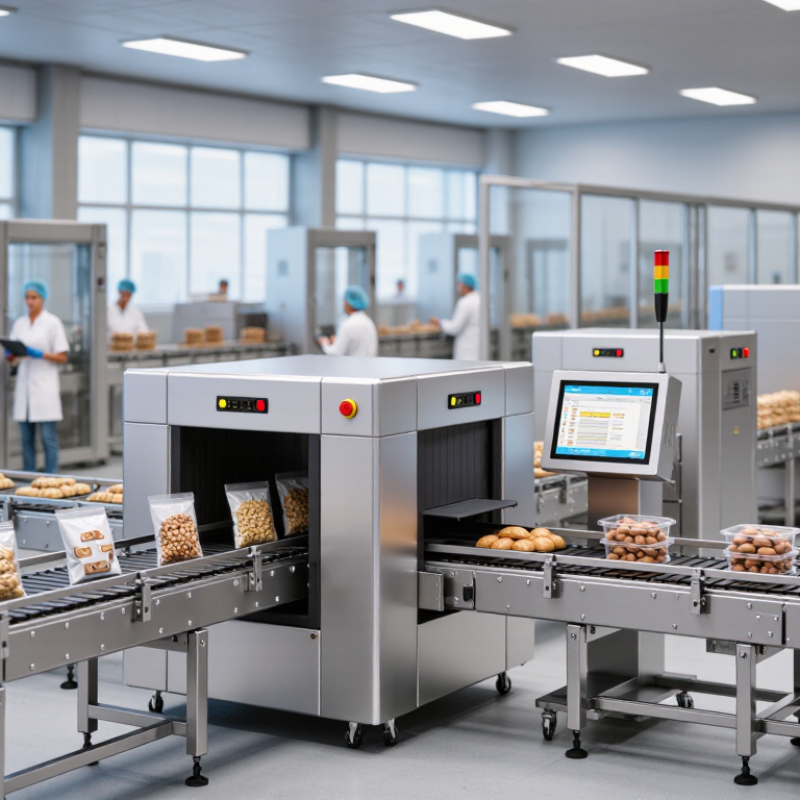
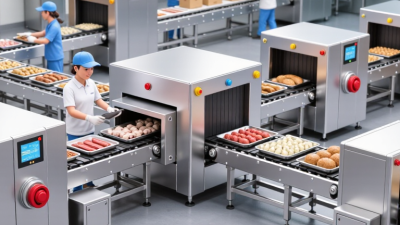
Food inspection equipment is a group of machines that checks products during production. It may detect metal, glass, stones, missing pieces, incorrect weights, or damaged packaging. Common systems use sensors, cameras, X-ray imaging, scales, and automatic reject devices. Each tool addresses a different risk.

A metal detector creates an electromagnetic field around the product. When conductive material interrupts that field, the system sends a signal.

An X-ray unit reads density differences inside sealed packs. This can reveal dense fragments or missing products without opening the package.

Vision equipment captures images under controlled lighting. Software compares each image with programmed standards, checking labels, seals, shape, and color. A checkweigher measures every pack while it moves across a conveyor. If a result falls outside the set range, a reject mechanism removes it.

Operators should verify rejected items, not trust the alarm alone. That habit protects production records and catches setup errors. False rejects also waste good food.

Inspection accuracy depends on product moisture, packaging, speed, and machine sensitivity. A test piece may pass in one product and fail in another.

Global buyers should examine hygienic design, cleaning access, data records, and service support. Stainless surfaces and sealed components matter in wet processing rooms.

Ask how often calibration is required. Ask how results are stored.

Performance claims need practical trials with real products. No system is perfect. A rushed trial can hide weaknesses, especially when products vary by season. Practical experience shows that clear procedures matter as much as advanced sensors.

Why Food Inspection Equipment Matters to Global Buyers

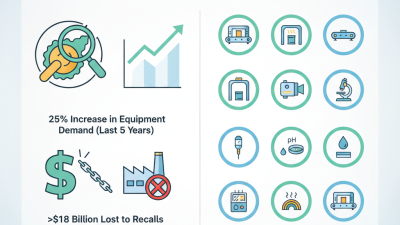
Global buyers treat food inspection equipment as a risk-control investment, not merely a factory accessory. The World Health Organization estimates that contaminated food causes 600 million illnesses and 420,000 deaths annually. These figures make reliable inspection essential across borders, suppliers, and production environments. A metal detector, X-ray system, or vision unit can identify threats before products reach warehouses or retail shelves. However, equipment alone cannot create food safety.

Experienced buyers examine detection sensitivity, calibration records, software traceability, and operator training. They also ask whether the system performs consistently with wet, salty, frozen, or irregular products. The Food and Agriculture Organization reports that 13.2% of food is lost globally between harvest and retail. Inspection equipment cannot solve every loss, but early defect detection can reduce rejected batches, recalls, and unnecessary disposal. Small improvements matter.

No machine is perfect. Poor installation, unstable power, or rushed cleaning can weaken results. This is where supplier expertise becomes practical: documented validation, responsive maintenance, spare-part planning, and clear technical support reduce operational uncertainty. Buyers should compare total ownership costs, not only purchase prices. The better question is often simple: Can this system produce trustworthy evidence every day? Industry reports provide useful direction, yet each facility still needs site-specific testing. That uncomfortable step is easy to skip. It should not be.

Why Food Inspection Equipment Matters to Global Buyers

Foodborne hazards affect every major market. Reliable inspection systems help buyers identify physical, chemical, and biological risks before products reach consumers.

Estimated annual foodborne illness cases by WHO region, in millions. Source: World Health Organization, WHO Estimates of the Global Burden of Foodborne Diseases (2015).

Key Technologies Used in Food Inspection Systems

Why Food Inspection Equipment Matters for Global Buyers?

Key technologies used in food inspection systems determine product safety, consistency, and export readiness. Metal detectors identify ferrous and non-ferrous fragments moving through production lines. X-ray systems can detect dense contaminants, missing components, and uneven product structures. Vision inspection checks seal quality, label placement, color, shape, and surface defects. These tools reduce manual errors, especially during fast production.

Weight control matters too. Checkweighers compare every package with preset limits and remove underfilled units. Optical sorting systems use cameras, lighting, and sensors to separate products by size, color, or quality. Modern software records inspection results, helping teams trace failures and adjust processes. However, technology is not magic. A poorly calibrated camera may miss a defect under changing light. Dust, vibration, and product moisture can also affect accuracy.

Tips: Match the equipment to the product, package, and line speed. Ask for test samples using real production materials. Check calibration procedures, data records, cleaning access, and operator training. Regular verification is essential. Small details matter. Buyers should also review false rejection rates, because excessive rejection wastes good products and hides process weaknesses. Good equipment supports informed decisions, but trained people still interpret the evidence.

How to Evaluate Equipment for Safety, Compliance, and Quality

Global buyers should judge food inspection equipment by evidence, not impressive brochures. The right system protects consumers, supports compliance, and preserves product quality. Begin with the hazard profile of each product and production line. A metal detector may suit one application, while an X-ray system may handle another. Match detection capability to product density, moisture, packaging, and line speed. Use real samples.

Ask suppliers to demonstrate performance under realistic operating conditions. Request test results for different contaminant sizes, product temperatures, and packaging materials. Review detection sensitivity, false rejection rates, and automatic reject performance. A machine that performs well in a showroom may struggle beside steam, vibration, or frequent washdowns. I have seen evaluations overlook these details.

Compliance also depends on documentation and daily control. Request calibration records, validation procedures, cleaning instructions, and operator training materials. Check whether software records inspection results securely and supports traceability. Confirm that critical components are suitable for the facility’s hygiene environment. Easy access matters when workers must inspect belts, sensors, and reject bins. Service response is equally important. Delayed repairs can interrupt production and weaken quality controls. No checklist is perfect. Buyers should revisit their criteria after installation, compare actual results with promised performance, and correct weak points before they become routine.

Factors Affecting Selection, Installation, and International Support

For global buyers, inspection equipment is not chosen by detection accuracy alone. Product type, packaging material, line speed, and factory conditions shape the decision. A metal detector may suit one dry product, while an X-ray or vision system may fit another application. Moisture, temperature, vibration, and dust can change performance. Small details matter. Buyers should request tests using real products and packaging. Results should be recorded at normal production speeds, not ideal laboratory settings. This practical step often exposes weaknesses early.

Installation requires more than placing a machine beside the conveyor. Engineers must check electrical supply, belt height, drainage, access space, and reject-bin design. Hygienic construction also affects cleaning time and contamination control. Acceptance criteria should cover sensitivity, false rejects, alarms, and data records. Site acceptance testing provides useful evidence, but it is not perfect. Product variation can still create unexpected results. Teams should leave room for adjustment after operators gain experience.

International support can determine whether equipment remains reliable after delivery. Buyers need clear manuals, remote troubleshooting, spare-parts planning, and trained local technicians. Response times should be written into the service agreement. Calibration guidance must be practical, with traceable records and defined intervals. Time-zone differences can delay simple decisions. A backup contact helps. Reliable suppliers explain limitations instead of promising universal performance. That honesty may feel inconvenient during procurement, especially when production deadlines are tight.

Why Food Inspection Equipment Matters for Global Buyers? – Factors Affecting Selection, Installation, and International Support

Selection Dimension Why It Matters Relevant Data or Typical Requirement Installation Considerations International Support Checkpoint
Hazard Type The inspection technology must match the physical characteristics of the possible contaminant. Metal detectors identify conductive and magnetic metal contaminants. X-ray systems can identify many dense foreign materials, including metal, glass, mineral stone, and calcified bone. Define the product, packaging, temperature, moisture level, and expected contaminant size before choosing the inspection point. Confirm that application testing can be performed using samples representative of the actual product and packaging.
Product Effect Moisture, salt, temperature, and product conductivity can reduce metal-detection stability and increase false rejects. Wet or salty products generally require product-specific calibration and a controlled inspection frequency. Product effect should be evaluated at the actual production temperature and speed. Install the system after the product has reached a reasonably consistent condition. Avoid placing sensors near unnecessary vibration or electromagnetic interference. Request multilingual operating instructions covering product changeover, sensitivity setup, and false-reject troubleshooting.
Packaging Material Packaging may limit or improve inspection performance and can affect the choice between metal detection and X-ray inspection. Aluminum foil and metallized films can interfere with conventional metal detection. X-ray inspection is often considered when the product uses foil or other metal-containing packaging. Validate the complete finished pack, including trays, clips, labels, seals, and multipack configurations. Check whether local service personnel can support all packaging formats used at the destination plant.
Throughput and Line Speed An unsuitable inspection system can become a production bottleneck or fail to inspect every unit consistently. The required capacity should be calculated from packs per minute, product spacing, pack dimensions, and conveyor loading. The system should be tested at the maximum validated operating speed. Allow sufficient conveyor length for stable product presentation, reject confirmation, and safe access to the inspection and reject areas. Verify remote diagnostic capability, spare-part availability, and response procedures for production-critical failures.
Hygienic Design Food-contact and nearby surfaces must support effective cleaning and reduce the risk of microbial or allergen cross-contamination. Important features include smooth, accessible surfaces, minimal dirt traps, suitable corrosion-resistant materials, and construction compatible with the site’s cleaning method. Provide drainage, cleaning clearance, protected electrical connections, and appropriate separation from high-pressure water streams unless the equipment is designed for that environment. Ask for cleaning instructions, material declarations, hygienic-design documentation, and replacement procedures for seals and protective covers.
Detection and Reject Performance Reliable rejection prevents contaminated products from continuing through the process and provides evidence that controls are operating as intended. Performance should be expressed using validated test pieces or test samples, not a universal sensitivity number. Results depend on aperture size, product effect, orientation, packaging, and line speed. The reject mechanism should be fail-safe where appropriate, physically separated from accepted product, and equipped with reject confirmation or line-stop functionality when required by the risk assessment. Confirm availability of documented challenge-test procedures and records that can be used during customer, regulatory, or third-party audits.
Data Integrity and Traceability Inspection records help demonstrate that critical control or preventive measures were monitored and that rejected products were controlled. Useful records may include date and time, product code, operator identification, test results, alarms, reject events, access history, and calibration status. Integrate the equipment with the site’s network, printer, manufacturing system, or quality database only after cybersecurity and user-access requirements are defined. Check data-export formats, user permissions, backup procedures, software update policies, and support across different time zones.
Electrical and Environmental Conditions Voltage, frequency, humidity, temperature, dust, and washdown conditions can affect equipment safety and operating stability. Confirm the destination country’s electrical supply, protective-device requirements, ambient temperature range, ingress-protection needs, and compressed-air quality where pneumatic rejection is used. Complete a site survey before delivery. Include earthing, cable routing, ventilation, floor loading, access routes, and safe isolation points in the installation plan. Request destination-specific electrical drawings, conformity documents, installation checklists, and technician training materials.
Regulatory and Food-Safety Alignment Food businesses must show that foreign-material controls are risk-based, documented, verified, and maintained. The equipment should fit the site’s HACCP-based food-safety plan, prerequisite programs, internal standards, and applicable customer or market requirements. Define inspection points, test frequency, escalation rules, product-release authority, and corrective-action procedures before commissioning. Ensure manuals, declarations, validation reports, and training records are available in the languages required by the operating site and auditors.
Total Cost of Ownership The purchase price is only one part of long-term cost; downtime, consumables, calibration, training, and service travel can materially affect operating value. Compare energy use, compressed-air demand, cleaning time, planned maintenance, software or service fees, spare parts, warranty coverage, and expected equipment availability. Plan for preventive maintenance access without disrupting production. Keep critical spare parts and approved test standards available at the site. Ask for service-level targets, escalation contacts, local inventory arrangements, training options, and the estimated cost of international visits.
Commissioning and Verification A properly commissioned system provides objective evidence that the equipment performs under actual production conditions. The verification plan should cover normal products, worst-case products, maximum line speed, product changeover, test-piece detection, reject control, alarms, and record retention. Use documented installation qualification, operational checks, and performance verification before routine production release. Confirm who is responsible for site acceptance, operator training, final documentation, follow-up support, and periodic revalidation.

Note: Actual inspection performance must be established through application testing and documented validation using the intended product, packaging, operating speed, and site conditions.

Any Questions? We Are Here for You

Contact Us

Contact Us

Request information

Ask us a question
Service Support

Service Support

Available 24 hours a day, 7 days a week.

Get in Touch
Find a representative

Find a representative

Contact your local representative

View Locations