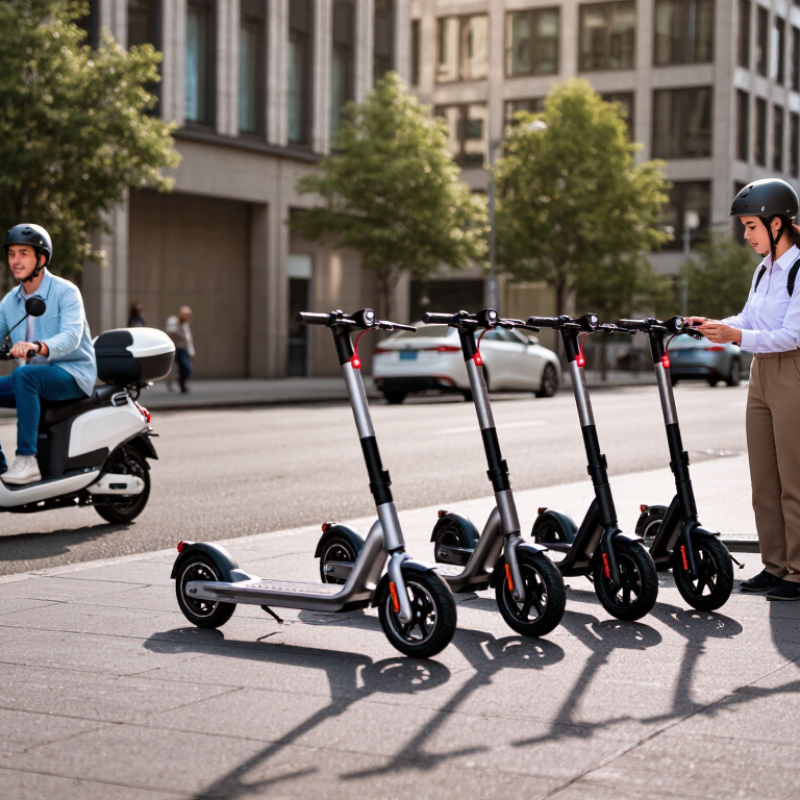
| Primary Use Case | Short-distance urban commuting, last-mile travel, campus mobility, and leisure riding | Supports flexible transportation where conventional cars are inefficient for short trips |
| Typical Product Positioning | Portable personal electric vehicle positioned between walking, cycling, and low-speed urban transport | Offers a practical balance of portability, operating cost, and travel speed |
| Common Maximum Speed Range | Approximately 20–32 km/h for many consumer-oriented models; local legal limits may be lower | Buyers should match vehicle settings and documentation with the destination market’s road rules |
| Typical Advertised Range | Approximately 20–60 km per charge, depending on battery capacity, rider weight, speed, temperature, terrain, and riding mode | Range claims should be evaluated under clearly stated test conditions rather than as a single guaranteed distance |
| Battery Technology | Rechargeable lithium-ion battery packs are widely used because of their high energy-to-weight ratio | Battery certification, transport documentation, protection circuitry, and replacement availability are key purchasing factors |
| Charging Time | Common charging periods are approximately 4–8 hours, depending on battery capacity and charger output | Overnight charging can support daily commuting, while removable batteries can improve convenience |
| Motor Configuration | Hub motors are common; output levels frequently range from approximately 250 W to 800 W for consumer products | Motor output should be selected according to rider weight, gradients, climate, and local power regulations |
| Braking System | Mechanical or electronic braking is common; disc brakes generally provide stronger heat management than basic friction systems | Dual braking and progressive control are important for wet roads, slopes, and frequent urban stops |
| Tire and Ride Comfort | Solid tires reduce puncture risk; pneumatic tires generally provide better shock absorption but require pressure checks | Tire selection should reflect road quality, maintenance preferences, and expected riding distance |
| Weather Resistance | Ingress protection ratings vary by model; an IP rating describes resistance to solids and water under defined test conditions | A stated and verifiable IP rating helps buyers assess suitability for rain and outdoor storage |
| Portability | Foldable designs commonly weigh about 12–25 kg, although performance-oriented models may be heavier | Weight, folded dimensions, and lifting points should be checked before selecting a product for mixed-mode travel |
| Safety and Compliance | Requirements differ by country and may cover electrical safety, electromagnetic compatibility, battery transport, speed, lighting, and road use | Compliance documents and market-specific configurations reduce import, registration, and distribution risks |
| Operating Cost | Electricity consumption is generally low compared with petrol-powered transport; tires, brakes, and batteries remain routine replacement items | Low energy use can support economical daily mobility when maintenance and battery replacement are planned |
| Global Buyer Checklist | Verify local speed limits, road-use eligibility, charger compatibility, battery shipping requirements, spare parts, warranty terms, and after-sales support | A complete pre-purchase review improves product-market fit and helps avoid unexpected compliance or service costs |

.svg)