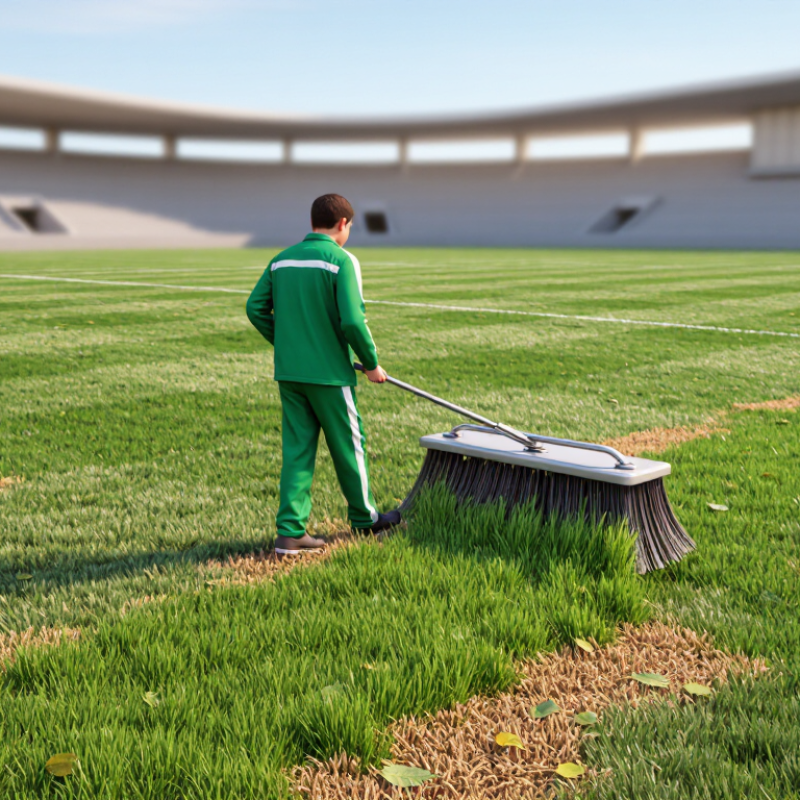
| Lift flattened grass blades | A turf brush with firm, synthetic bristles | Brush against the direction in which the blades are leaning, using steady, moderate strokes. | Useful on areas compressed by foot traffic or garden furniture. Avoid excessive force. |
| Choose bristle stiffness | Medium-firm bristles for general cleaning and grooming | Test the brush on a small, inconspicuous area before treating the whole lawn. | Very stiff or abrasive bristles may damage grass fibers or backing; check the turf maker’s care instructions. |
| Remove leaves and loose debris | A soft-to-medium synthetic-bristle brush or a leaf rake designed for artificial turf | Sweep debris gently toward an edge, then collect and dispose of it. | Regular removal helps prevent organic debris from accumulating among the fibers. |
| Work around infill | A brush suitable for the turf system and its infill type | Use light, even strokes and avoid aggressively sweeping infill out of the lawn. | Some artificial lawns contain sand or other infill. Follow the installation and maintenance guidance for that system. |
| Refresh high-traffic areas | A hand brush for small spots or a suitable turf brush with a long handle for larger areas | Brush in several directions where needed, then finish with strokes that lift the blades. | Treat visibly flattened sections as needed; brushing frequency depends on traffic, debris, and the turf’s condition. |
| Select a handle and brush head | A comfortable handle length and a head sized for the area | Choose a tool that lets you work without straining or applying uneven pressure. | A compact brush offers control around edges; a wider head can cover open areas more quickly. |
| Care for the brush | A clean, undamaged brush with intact bristles | Remove trapped leaves and dirt after use; rinse the brush when appropriate and let it dry. | Do not use a brush with broken or sharp parts that could snag or scratch the turf. |

.svg)