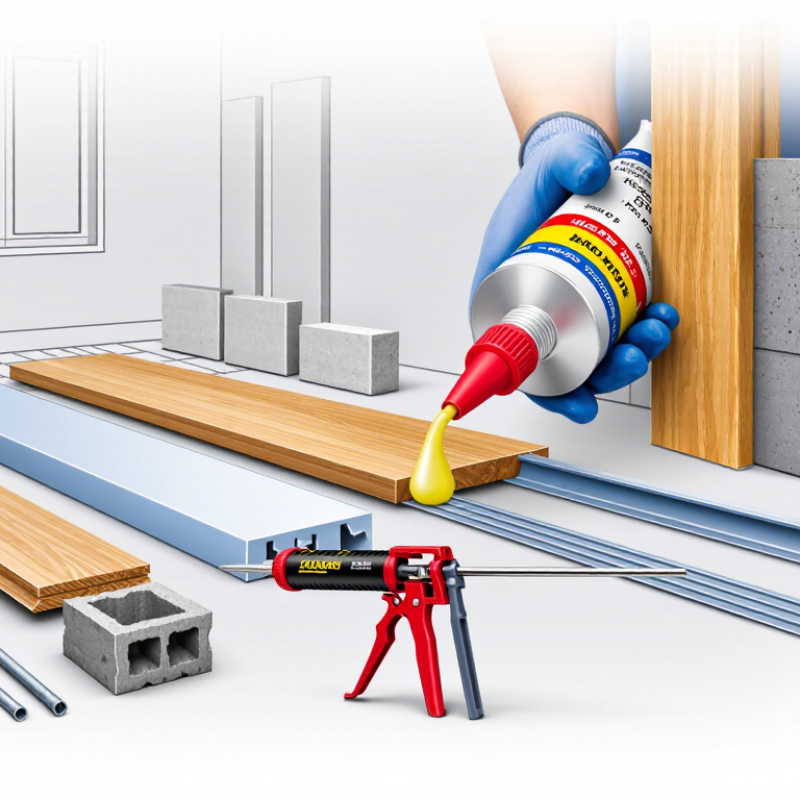
Construction adhesive can spread a load across a broader area than a screw or nail, which may help reduce stress around a single fastening point. It can also join materials without visible heads or drilled holes.
No drilled holes. On a trim board, for example, adhesive can keep the surface smooth and avoid small dents from hammering. Some formulations remain slightly flexible after curing, helping accommodate minor movement between materials.
The trade-off is time: a bond may need clamps or temporary support while it sets. It is not an instant fix.
Compared with many general-purpose glues, construction adhesives are made for building materials and may fill small gaps or bond porous surfaces. Performance varies by formula and substrate, so check the product directions for material compatibility, cure time, and load limits.
Clean, dry surfaces matter. Dust, paint, or moisture can weaken the bond. A small test area can reveal problems, though it cannot prove a joint is suitable for every load.
For heavy or safety-critical connections, adhesive may need to work alongside mechanical fasteners rather than replace them. That extra step can feel inconvenient, but skipping it is a poor gamble.

.svg)