Food Safety Insights

In Eagle’s Advanced Insights Blog, experts share their know-how by keeping you up-to-date with the latest trends to ensure your inspection equipment keeps your products safe. Eagle is an industry leader when it comes to performance and innovation, and we’ll share the news that’s important to you to enhance your quality assurance program.

Suggest topic you would like to see at:

sale@generalmachinery.org

China Best Food Safety Inspection Equipment Manufacturers

Choosing China’s best food safety inspection equipment manufacturers requires more than comparing prices or polished catalogs. Reliable suppliers support safer production with practical, verifiable technology. Their equipment may include metal detectors, X-ray inspection systems, checkweighers, vision systems, and laboratory testing instruments. Each solution should match the product, packaging, production speed, and contamination risks.

Experienced manufacturers usually explain detection limits clearly. They also provide test samples, calibration records, installation guidance, and operator training. These details matter on a busy production line, where vibrations, moisture, dust, and temperature changes can affect results. A strong supplier should demonstrate performance under realistic factory conditions. Ask for documented quality controls, traceable components, responsive technical support, and evidence of successful installations. Claims alone are not enough.

Accuracy matters. So does consistency. This guide examines leading Chinese manufacturers through product capability, engineering experience, certifications, service quality, and customer feedback. It also considers whether suppliers understand international food safety expectations and different processing environments. However, no manufacturer is perfect for every application. Some companies may offer advanced systems but limited local support. Others may provide flexible customization but less independent performance data. That distinction deserves attention. Careful buyers should test equipment with real products before making a final decision. A small package of frozen food, powders, or bottled goods can reveal problems that brochures hide. The goal is not to find the loudest brand. It is to identify a dependable partner that can protect product quality, support compliance, and improve inspection confidence over time.

China Best Food Safety Inspection Equipment Manufacturers

What Food Safety Inspection Equipment Includes

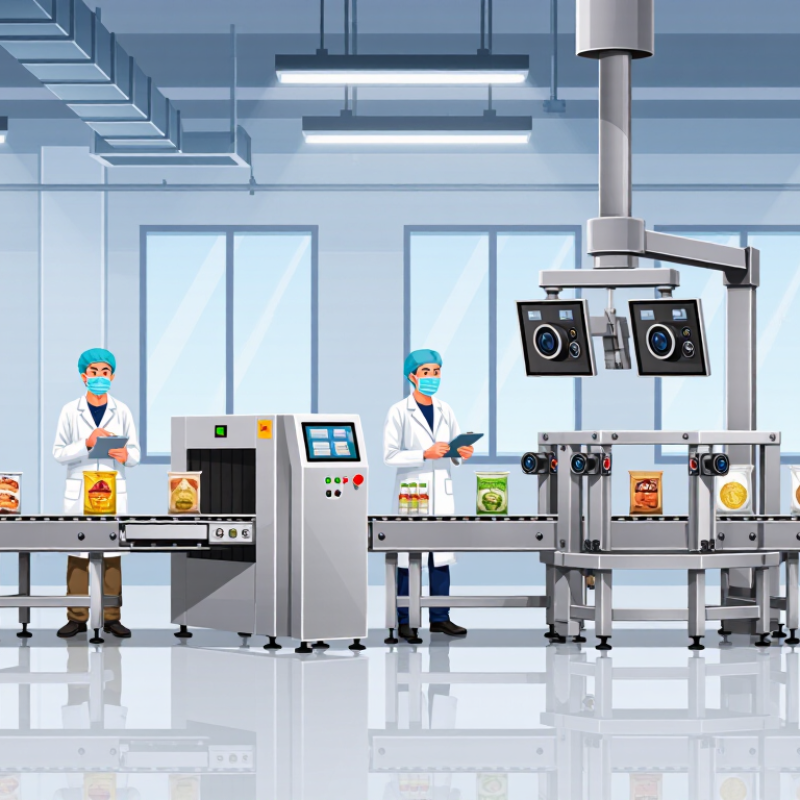
Food safety inspection equipment covers more than one machine on a production line. It includes tools for detecting physical hazards, measuring product conditions, and recording evidence.

Metal detectors identify ferrous and non-ferrous fragments inside packaged food.

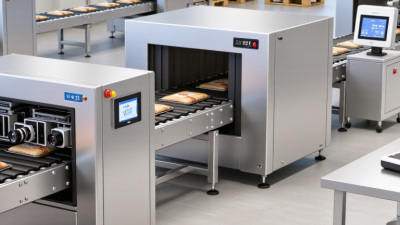
X-ray systems can locate dense materials, such as small stones or bone pieces.

Checkweighers verify package weight and help remove underfilled products.

Vision inspection systems examine labels, seals, caps, date codes, and surface defects. A camera can catch a crooked label within milliseconds.

Temperature probes, data loggers, and infrared devices monitor chilled rooms, cooking areas, and transport containers. These measurements support accurate control of cold-chain conditions.

However, infrared readings may become unreliable on reflective or wet surfaces. Staff should confirm unusual results with calibrated contact probes.

Testing equipment also includes pH meters, water-activity meters, sampling tools, and rapid microbiological kits. These tools help evaluate conditions that may support microbial growth.

They do not replace laboratory confirmation when a result is uncertain.

Good inspection depends on calibration, clean sampling, trained operators, and complete records. A detector may perform well during a morning check but drift later. That possibility deserves attention.

Practical teams test equipment with known samples, inspect rejected products, and review trends rather than trusting one reading. Clear maintenance logs make findings easier to verify during internal audits or regulatory inspections.

Why China Is a Leading Manufacturing Base

China Best Food Safety Inspection Equipment Manufacturers

China’s manufacturing depth supports rapid development of food safety inspection equipment. The UNIDO International Yearbook of Industrial Statistics 2024 reports that China produced about 31.6% of global manufacturing value added in 2023. This scale creates dense supply networks for sensors, stainless-steel components, cameras, control systems, and laboratory accessories. Shorter sourcing distances can reduce replacement delays and support customized equipment for different production lines.

Research investment strengthens this ecosystem. China’s National Bureau of Statistics reported 3.3 trillion yuan in research and development spending in 2023, equal to 2.64% of GDP. Manufacturers can therefore improve optical detection, metal inspection, X-ray imaging, and automated data recording with local engineering support. A practical buyer should examine calibration records, software traceability, and test results under ISO/IEC 17025 conditions. Not just the catalog.

China also benefits from large and varied food-processing demand. Equipment can be tested around high-speed packaging, humid workshops, frozen products, and uneven raw materials. Real factory conditions expose weaknesses early. Yet scale is not proof. Some specifications look impressive but lack independent validation or clear maintenance procedures. The UNIDO data measures manufacturing strength, not every supplier’s reliability. Buyers should request sample reports, acceptance criteria, operator training details, and documented after-sales response times before installation. Small details matter.

China Best Food Safety Inspection Equipment Manufacturers - Why China Is a Leading Manufacturing Base
Manufacturing-Basis Dimension Verified Data Point or Industry Fact Relevance to Food Safety Inspection Equipment Reference
Large domestic food market China's population was approximately 1.408 billion at the end of 2024, creating a very large domestic market for food production, processing, packaging, and inspection. High equipment demand supports product development, application testing, service networks, and continuous improvement in inspection technologies. National Bureau of Statistics of China
Scale of manufacturing China has remained the world's largest manufacturing country by added value for more than a decade, according to official industrial statistics. A broad industrial base makes it easier to source fabricated metal parts, conveyors, sensors, control cabinets, machine housings, and precision assemblies. Ministry of Industry and Information Technology
Research and development capacity China's research and development expenditure reached approximately RMB 3.33 trillion in 2023, equal to 2.64% of GDP. Investment in electronics, optics, automation, software, materials, and industrial control supports the development of metal detectors, X-ray systems, optical analyzers, and traceability equipment. National Bureau of Statistics of China
Mandatory food-safety regulation China's Food Safety Law establishes requirements covering food production, processing, distribution, testing, supervision, and liability. Mandatory national food-safety standards use the “GB” standard system. Manufacturers can design equipment around defined compliance requirements such as contaminant limits, pesticide-residue limits, additive rules, labeling, hygiene, and testing procedures. National Health Commission of China
Extensive food inspection activity National and local authorities operate recurring food-safety supervision and sampling programs across agricultural products, processed foods, beverages, catering, and packaged food. Regular inspection activity creates demand for both inline systems used during production and laboratory instruments used for confirmation testing. State Administration for Market Regulation
Integrated electronics supply chain China has extensive production capabilities in printed circuit boards, displays, sensors, industrial computers, power electronics, motors, and automation components. A mature component ecosystem can shorten procurement cycles and support cost-effective customization of inspection machines and control systems. Ministry of Industry and Information Technology
Packaging and processing ecosystem China has large-scale capabilities in food processing, flexible packaging, rigid packaging, filling, sealing, weighing, coding, and production-line automation. Inspection equipment can be engineered to integrate with conveyors, checkweighers, filling lines, sealing machines, coding systems, and automated rejection units. National Bureau of Statistics of China
Export-oriented industrial infrastructure China's total import and export value of goods was approximately RMB 41.76 trillion in 2023, reflecting extensive international logistics and manufacturing infrastructure. Established ports, freight services, export documentation systems, and international supply-chain links support overseas delivery of inspection equipment and spare parts. General Administration of Customs of China
Broad equipment application range Common food inspection technologies include metal detection, X-ray foreign-body inspection, optical sorting, weight verification, seal inspection, moisture analysis, and laboratory chemical or microbiological testing. A diverse application base encourages modular equipment design for meat, seafood, dairy, bakery, snacks, grains, beverages, frozen foods, and ready-to-eat products. Food and Agriculture Organization of the United Nations
Customization capability China's manufacturing sector includes extensive contract manufacturing, mechanical fabrication, automation integration, and engineering-support services. Buyers can often request customized apertures, conveyor widths, inspection speeds, enclosure materials, software interfaces, voltage configurations, and production-line layouts. Ministry of Industry and Information Technology
Cost-performance advantages Large production volumes, domestic component sourcing, concentrated industrial clusters, and mature logistics help reduce manufacturing and procurement costs. Food processors may obtain a lower total acquisition cost while still selecting equipment with automation, data logging, remote support, and compliance-oriented functions. World Bank: China Economic Data
After-sales and service potential China's large domestic market and export network support regional service, spare-parts distribution, technical training, and equipment maintenance capabilities. Accessible service resources can reduce downtime and support calibration, preventive maintenance, software updates, and replacement of wear components. Ministry of Commerce of the People's Republic of China
Data references are based on publicly available information from Chinese government departments and international organizations. Regulatory requirements should be checked against the latest applicable national, regional, and destination-market standards before equipment procurement.

Main Types of Chinese Inspection Equipment Manufacturers

China Best Food Safety Inspection Equipment Manufacturers

Chinese food safety inspection equipment manufacturers generally fall into several practical categories. Metal detector and X-ray equipment makers target foreign-object control on production lines. Vision inspection manufacturers check seal integrity, label accuracy, color, and package damage. Checkweigher suppliers verify weight consistency at high speed. Other specialists produce rapid microbiological testing systems, near-infrared analyzers, and laboratory instruments for raw materials.

The need is substantial. The World Health Organization estimates that contaminated food causes about 600 million illnesses and 420,000 deaths worldwide each year. The FAO and WHO also emphasize preventive control, traceability, and risk-based monitoring.

These findings explain why Chinese manufacturers increasingly combine sensors, software, and automatic rejection units. A factory may use X-ray inspection after filling, then vision inspection before carton packing.

Market reports show continued expansion. MarketsandMarkets estimated the global food safety testing market at about 24.6 billion US dollars in 2023, with strong growth expected through 2028. However, equipment capacity alone does not prove reliability.

Testing accuracy depends on product density, moisture, packaging material, calibration, and operator training. No detector is perfect.

Some suppliers publish impressive sensitivity figures, but factory trials may reveal different results.

Buyers should request sample testing, maintenance records, validation procedures, and clear data-export functions. This step is often underestimated. Chinese manufacturers with engineering teams, documented quality systems, and responsive after-sales service usually offer stronger long-term value than suppliers focused only on low purchase prices.

How to Evaluate Manufacturer Quality and Compliance

Choosing China’s best food safety inspection equipment manufacturers requires more than comparing prices or glossy brochures. Ask for documented experience with your product type, such as bottled drinks, grains, or packaged meat. A capable manufacturer should explain detection limits, testing speed, maintenance needs, and likely false-positive risks in clear language. Vague answers are warning signs.

Inspect the quality system behind the equipment. Request calibration records, material certificates, factory acceptance test reports, and traceable serial numbers. Check whether critical sensors are tested under production-like conditions, including dust, moisture, vibration, and temperature changes. Review the manufacturer’s quality management procedures and relevant food safety compliance knowledge. Independent audits can provide stronger evidence than self-written claims. Small details matter.

Visit the production site if possible. Watch how technicians assemble control cabinets, label components, and record inspection results. Ask to test a retained sample with known defects. The result should be repeatable, not merely impressive once. Confirm software security, user permissions, data export, and service response times before signing an agreement. A reliable supplier also provides practical training and readable manuals.

No system is perfect. Even experienced manufacturers may underestimate cleaning time or operator learning curves. I would record these gaps instead of accepting optimistic promises. Compare the corrective action plan with actual follow-up evidence. Quality becomes more credible when a manufacturer admits limitations, explains root causes, and improves the equipment through verified testing.

How to Evaluate Food Safety Inspection Equipment Manufacturer Quality and Compliance

Suggested audit weighting based on commonly used quality-management, calibration, traceability, validation, and regulatory documentation requirements.

The highest priorities are measurement accuracy, calibration traceability, and documented quality controls. Buyers should verify certificates, test records, equipment validation evidence, software controls where applicable, and after-sales technical support before approving a manufacturer.

Customization, Procurement, and After-Sales Support

Selecting China-based food safety inspection equipment manufacturers requires more than comparing prices. Procurement teams should define product type, line speed, package material, detection target, and cleaning conditions. Metal detection, X-ray inspection, checkweighing, and vision systems each require different validation methods. A practical specification includes sensitivity targets, reject confirmation, data records, IP rating, and installation space. Ask for sample testing with your own products. Real samples reveal problems that brochures often hide. Reliable manufacturers provide test reports, factory acceptance procedures, and clear delivery milestones.

Customization should improve fit, not add complexity. Engineers may adjust conveyor width, sensor height, reject timing, software languages, or washdown materials. However, every change can affect validation and maintenance. We once saw a project where an oversized reject bin blocked routine cleaning. It worked technically, but not operationally. That mistake matters. Request drawings, utility requirements, risk assessments, and operator training before approval. Procurement contracts should define spare parts, calibration tools, documentation, warranty scope, and response times. Keep a written change-control record.

After-sales support becomes visible when production stops. Choose a supplier offering commissioning, remote diagnostics, and practical troubleshooting guides. Technicians should explain alarm causes, not simply reset the machine. Ask how quickly engineers respond and whether critical parts are stocked. Confirm how calibration is verified after repairs. Service quality can be measured through response time, first-time fix rate, and training completion. Local language support helps. Technical clarity matters more. Some suppliers promise broad support without naming responsibilities. Treat that as a warning. A reliable partnership grows from documented service commitments and honest discussion of limitations.

Any Questions? We Are Here for You

Contact Us

Contact Us

Request information

Ask us a question
Service Support

Service Support

Available 24 hours a day, 7 days a week.

Get in Touch
Find a representative

Find a representative

Contact your local representative

View Locations