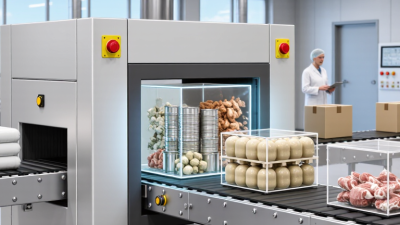
High-Speed Packaged Food Systems
Designed for continuous conveyor production lines. |
Canned foods, cartons, pouches, trays, frozen meals, and multipacks. |
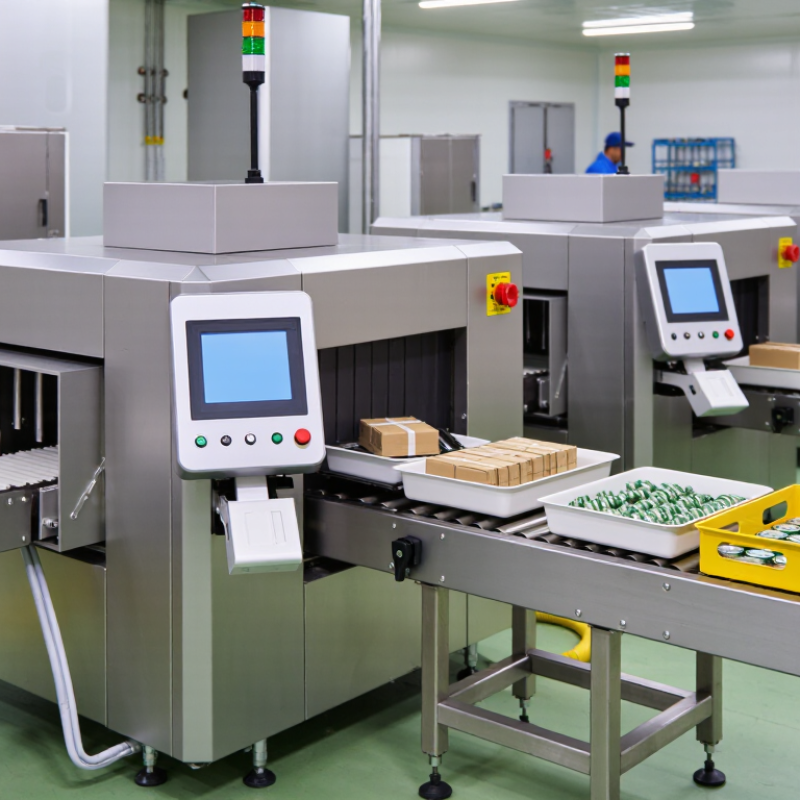
Shielded cabinet system with conveyor, reject device, guarding, and production-line controls. |
Detection of dense foreign material, missing products, broken parts, fill-level abnormalities, and package-count errors. |
Cabinet shielding, safety interlocks, warning indicators, control-system safeguards, and radiation leakage verification must be addressed in accordance with 21 CFR 1020.40. |
Factory acceptance test, radiation survey, interlock test records, installation qualification, operating procedures, and preventive-maintenance logs. |
Multi-Energy Inspection Systems
Configured for improved material discrimination. |
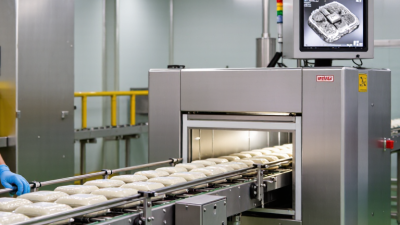
Low-density packaged foods, products with overlapping layers, and mixed-density items. |
Dual-energy or multi-energy detector architecture with software-based image analysis. |
Foreign-material detection in products where conventional single-energy imaging may have reduced contrast. |
Additional imaging capability does not replace cabinet radiation protection, interlocks, warning systems, or leakage testing required for the x-ray system. |
Energy-setting records, image-performance validation, test-piece results, software-version control, and documented radiation-safety checks. |
Large-Format and Bulk Product Systems
Used where product dimensions require a wider inspection tunnel. |
Bulk ingredients, large cases, meat and poultry packs, sacks, and palletized cartons. |
Large-aperture shielded cabinet with heavy-duty conveyor and higher inspection coverage. |
Foreign-material detection, product integrity checks, and case-level inspection. |
The larger aperture must still maintain effective shielding and prevent access to the x-ray beam during operation through compliant guarding and interlocks. |
Site radiation survey, conveyor and guarding inspection, emergency-stop verification, operator training records, and service documentation. |
Compact Systems for Small and Medium Producers
Designed for limited floor space and lower throughput. |
Baked goods, snacks, dairy products, ready-to-eat foods, and small packaged products. |
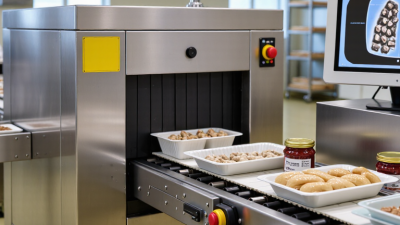
Compact cabinet x-ray unit with integrated conveyor and reject confirmation. |
Detection of metal, glass, stone, calcified material, and other high-density contaminants. |
Small physical size does not reduce the applicable radiation-safety obligations for a cabinet x-ray system. |
Installation records, radiation-leakage survey, alarm and interlock tests, calibration records, and documented cleaning procedures. |
Hygienic Washdown Systems
Configured for demanding sanitation environments. |
Meat, poultry, seafood, dairy, sauces, and other wet or high-care food applications. |
Stainless-steel hygienic enclosure, sealed conveyor components, sloped surfaces, and washdown-compatible construction. |
Foreign-material inspection while supporting frequent sanitation and contamination-control procedures. |
Water-resistant construction must not compromise shielding, access protection, interlock operation, or warning indicators. |
Ingress-protection specifications, sanitation validation, electrical-safety checks, radiation survey after installation, and maintenance procedures. |
Checkweighing and X-Ray Combination Systems
Combines inspection and weight-control functions. |
Retail packs, multipacks, pouches, cartons, and finished consumer products. |
X-ray inspection module integrated with checkweigher, reject station, and line-control software. |
Foreign-material detection, underweight or overweight rejection, missing-item checks, and production data capture. |
Integrated controls must preserve the x-ray system's safety interlocks, warning functions, and controlled access to the cabinet. |
Combined-system validation, reject verification, electronic-record controls, radiation-safety survey, and line-integration test results. |
Standalone Batch Inspection Systems
Suitable for intermittent or laboratory-style production. |
Pilot batches, specialty foods, quality laboratories, and low-volume production. |
Standalone cabinet unit with manual or semi-automatic product loading. |
Contaminant screening, product-development testing, complaint investigation, and verification sampling. |
The operator must not be exposed to the primary x-ray beam; cabinet access controls and interlocks must function before x-ray generation is permitted. |
User training, operating instructions, radiation survey, interlock challenge tests, test-piece records, and corrective-action logs. |
Compliance-Focused Supplier Capability
Emphasis on regulatory documentation and service support. |
Food plants requiring documented validation, audit readiness, and controlled equipment lifecycle management. |
Cabinet x-ray equipment supplied with technical files, safety procedures, service support, and validation templates. |
Inspection performance monitoring, reject confirmation, audit-trail support, and change-control management. |
For systems placed on the U.S. market, review applicable FDA requirements, including cabinet x-ray system provisions in 21 CFR 1020.40, and any applicable state radiation-control rules. |
Declaration of conformity where applicable, radiation-leakage results, safety-circuit diagrams, manuals, service records, and documented corrective actions. |
Validation and After-Sales Service Capability
Focused on long-term inspection reliability. |
All food categories where inspection performance and equipment uptime are critical. |
Remote diagnostics, preventive-maintenance program, spare-parts support, software controls, and documented service procedures. |
Routine sensitivity verification, reject-system monitoring, trend analysis, fault detection, and performance revalidation after repairs. |
Any modification that may affect shielding, x-ray generation, controls, or interlocks should trigger documented safety evaluation and, when appropriate, a new radiation survey. |
Service reports, calibration or verification certificates, software-change records, radiation-safety reassessment, and annual review of preventive maintenance. |

.svg)